Evidence-Based Strategies for Selecting Safe, Enriching Toys for Companion Parrots
Practical, evidence-based steps to choose toys that keep companion parrots safe, mentally engaged, and physically healthy, designed for owners, rescue volunteers, and small sanctuaries.
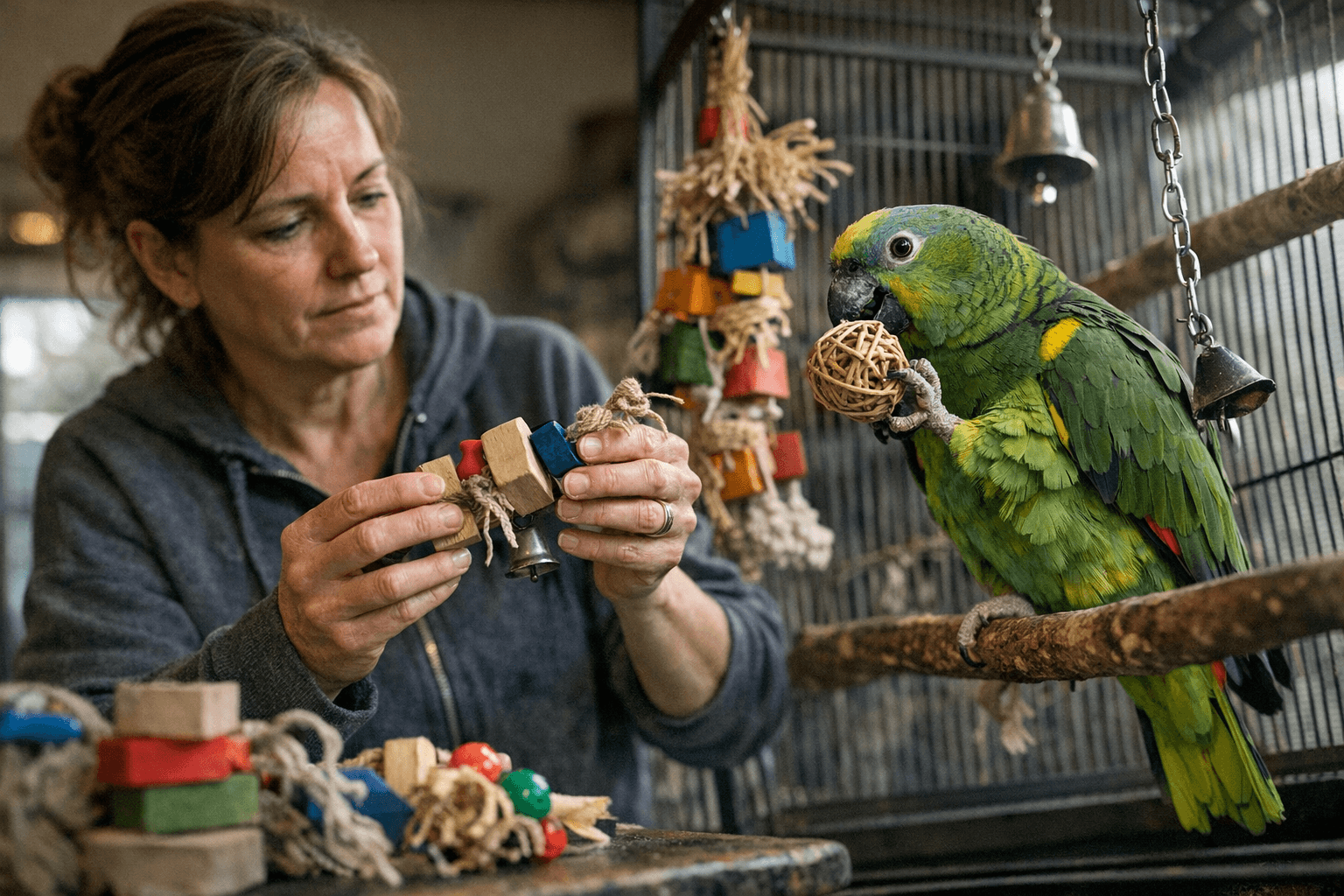
This evergreen guide summarizes practical, evidence-based best practices for choosing toys and enrichment for companion parrots. It is written for new and experienced bird owners, rescue volunteers, and small sanctuaries and focuses squarely on safety, mental stimulation, and durable enrichment that fits your bird’s species and situation. Today's date is February 25, 2026; use this as a living checklist you can return to as your bird and flock evolve.
1. Know your bird: species, age, and chewing strength
Companion parrots range from tiny parrotlets to large macaws, and species differences matter for toy selection. Assess your bird’s bite force, typical playstyle, and age, juveniles need tougher, safer parts and more supervision, while seniors may prefer gentler manipulatives. Rescue volunteers and small sanctuaries should make a short profile for each bird (species, approximate age, known destructiveness) to match toys consistently across shifts.
2. Prioritize materials that are proven safe
Choose materials that are non-toxic and withstand chewing: stainless steel, untreated hardwoods (like manzanita and aspen), and tightly braided cotton are commonly used in parrot toys. Avoid unknown plastics, painted surfaces with flaking paint, lead-containing metal alloys, and thin soft plastics that shred into ingestible pieces. When in doubt, opt for uncoated metals and natural fibers; these reduce chemical exposure and persistent hazards for birds kept in rescue or sanctuary rotations.
3. Size and shape must fit the bird
A safe toy is proportionate to the bird’s size and beak. Small parts or beads that fit into a bird’s beak become choking hazards for medium and large species; conversely, contraptions designed for large macaws are clumsy and dangerous for cockatiels. Evaluate toys by holding them next to the bird’s head and beak, the toy should offer secure grasping without loose attachments that could be swallowed.
4. Inspect attachment points and fasteners
The weakest link in toy safety is usually the hardware: loose split rings, rusting wires, or plastic clips that snap under pressure. Use heavy-gauge stainless steel hardware for larger birds, and check for burrs, frayed strands, or corrosion every week in high-use settings like rescues. Replace compromised attachments immediately and log replacements if you manage multiple birds to track wear patterns.
5. Avoid small, detachable pieces and glued joints
Toys constructed from glued layers or with small detachable parts (bells with thin hanging wires, glued wood blocks, or riveted plastic charms) present ingestion risks when glue fails or parts loosen. Prefer toys that are mechanically fastened with visible, serviceable hardware, this is especially important in volunteer-run sanctuaries where toys are reused across birds. If a toy uses glue, reserve it for supervised play only and discard at first sign of separation.
6. Rotate toys with purpose and record outcomes
Rotation prevents boredom and reduces destructive intensification; rotate a bird’s toys on a predictable schedule (for example, swap two to three toys weekly). Keep a simple log for each bird noting which toys produced healthy engagement (long play sessions, foraging behavior) and which led to over-chewing, feather plucking, or ingestion episodes. For rescue programs, a rotation log also helps identify toys that trigger stress behaviors in particular birds.
7. Design toys for foraging and problem-solving
Enrichment should encourage natural behaviors like shredding, chewing, and problem solving; favor foraging toys that hide treats in secure compartments or require deliberate manipulation to access food. Ensure that food-bearing compartments are easy to clean and that hidden items are non-perishable or replaced frequently to avoid mold. For sanctuaries, standardize forage puzzles to a few safe designs that are known to withstand repeated cleaning and heavy use.
8. Sanitation: cleanability and disease control
Toys used for foraging or that contact food must be easy to sanitize, dishwasher-safe metals and tightly woven natural fibers that stand up to hot-water cleaning work best. In rescue settings, establish cleaning protocols (for example, hot-water wash and air-dry between bird uses) and quarantine newly donated toys until inspected and cleaned. Track toys by color or tag to prevent cross-contamination between birds with different health statuses.
9. DIY toys: what’s safe to make and what to avoid
Homemade toys can be economical and tailored to individual birds, but follow strict material rules: use untreated wood, natural sisal or cotton rope, and stainless steel hardware. Avoid construction using glue, painted pieces, elastic bands, or household strings that can fray into tangles. For volunteer workshops in rescues and small sanctuaries, teach crafters to test every DIY item under force to ensure attachments don’t fail under a bird’s bite.
10. Supervision, monitoring, and signs to retire a toy
Always supervise new toys for the first 48 hours of introduction and check weekly thereafter for shredding, fraying, or loose parts. Retire any toy that produces sharp splinters, exposed metal wires, or isolated small pieces; in multi-bird environments, remove and isolate compromised toys immediately to prevent accidental ingestion. Log retirements and replacements, this documentation helps volunteers and staff identify patterns (for example, a certain type of bead failing in cockatoos) and informs safer procurement.
11. Source wisely: trusted manufacturers and donations
Buy from manufacturers known for avian-grade materials and visible hardware specifications; when accepting donations, inspect each item against the standards above before adding it to rotation. In rescue or sanctuary contexts, make a receiving checklist for donated toys: material check, hardware check, cleanability check, and an initial supervised trial. Where budgets are tight, prioritize well-built staples over novelty items that fail quickly.
12. Cost, durability, and sustainability trade-offs
Durability often trumps low price, cheap toys that fall apart create more hazards and waste in the long run. Evaluate the cost-per-month by estimating expected useful life under your bird’s play habits; stainless steel and solid wood may cost more upfront but provide better safety and longevity, especially for strong-chewing species. Consider sustainability by choosing natural, biodegradable fibers and recycling or safely disposing of irreparably damaged toys.
Conclusion Selecting safe, enriching toys for companion parrots comes down to matching species-specific needs, insisting on durable, non-toxic materials, and maintaining vigilant inspection and rotation routines. This guide is built for new and experienced bird owners, rescue volunteers, and small sanctuaries who need practical, repeatable steps to reduce hazards while boosting mental and physical stimulation. Apply these strategies consistently, keep simple logs for each bird, and treat toy safety as an ongoing part of caretaking, your parrots will show the payoff in healthier behavior and livelier enrichment.
Know something we missed? Have a correction or additional information?
Submit a Tip