Experts Disagree on What Mindfulness Is and How to Measure It
Learn why experts disagree about mindfulness and how that impacts choosing practices, apps, and research-backed programs.
1. The rise and the wrinkle
Mindfulness is everywhere, from wellness apps and social media to workplaces, schools, sports teams and the military, often shown as staying calm and paying attention to the moment. That ubiquity has popularized a simple image of the practice, but underneath the glow there’s a core problem: scientists, clinicians and educators don’t agree on what “mindfulness” actually is or how to measure it. That mismatch means headlines citing a study may not tell you which skill (attention, calm, compassion, ethics) was actually tested.
2. Deep roots behind modern practice
Mindfulness didn’t spring from a single source; it has deep roots across Asian contemplative traditions. The Buddhist Satipatthana Sutta: The Foundations of Mindfulness emphasizes moment-to-moment observation of body and mind, the Hindu dhyāna cultivates steady focus on the breath or a mantra, Jain samayika develops calm balance toward all beings, and Sikh simran aims at continuous remembrance that dissolves self-centered thought. Knowing these lineages helps communities appreciate that “mindfulness” in modern programs may be only one strain of a much larger family.
3. How mindfulness became secular and widespread
In the late 20th century teachers and clinicians adapted contemplative methods for secular settings, most famously through mindfulness-based stress reduction and other therapeutic programs. Since then mindfulness migrated into psychology, medicine, education and corporate wellness, and large companies such as Google have rolled out programs to help employees manage focus and stress. Hospitals use mindfulness tools to support pain management and mental health, and millions rely on apps promising better sleep, less stress, or improved focus.
4. Researchers emphasize different components
A major reason for disagreement is that academics and clinicians stress different elements: attention and present-moment awareness; emotional management; self-compassion; or moral and ethical awareness. Each emphasis implies different training methods and different outcomes to look for, so two studies labeled “mindfulness” can portray very different effects depending on which component was targeted. For communities this matters because the program you pick should map to the change you actually want.
5. Measurement instruments don’t all measure the same thing
Researchers use different tools, for example, the MAAS, the Freiburg Mindfulness Inventory, and the CHIME, and those instruments operationalize “mindfulness” in different ways. Because measurement tools focus on different facets, comparing studies becomes like comparing apples and oranges: one instrument may spotlight attention while another highlights attitudinal or relational aspects. That measurement variation explains why evidence about mindfulness can look inconsistent even when researchers are sincere and rigorous.
6. Why this matters for practice and program selection
If you choose an app, class, or clinical program based on a study’s results, you need to check what was actually measured. A study showing reduced stress may have trained emotional regulation rather than sustained attention; a program claiming increased focus might not increase self-compassion. That gap creates real-world consequences for people looking for specific benefits, athletes, students, clinicians and managers all need to match the goal to the method and evidence.
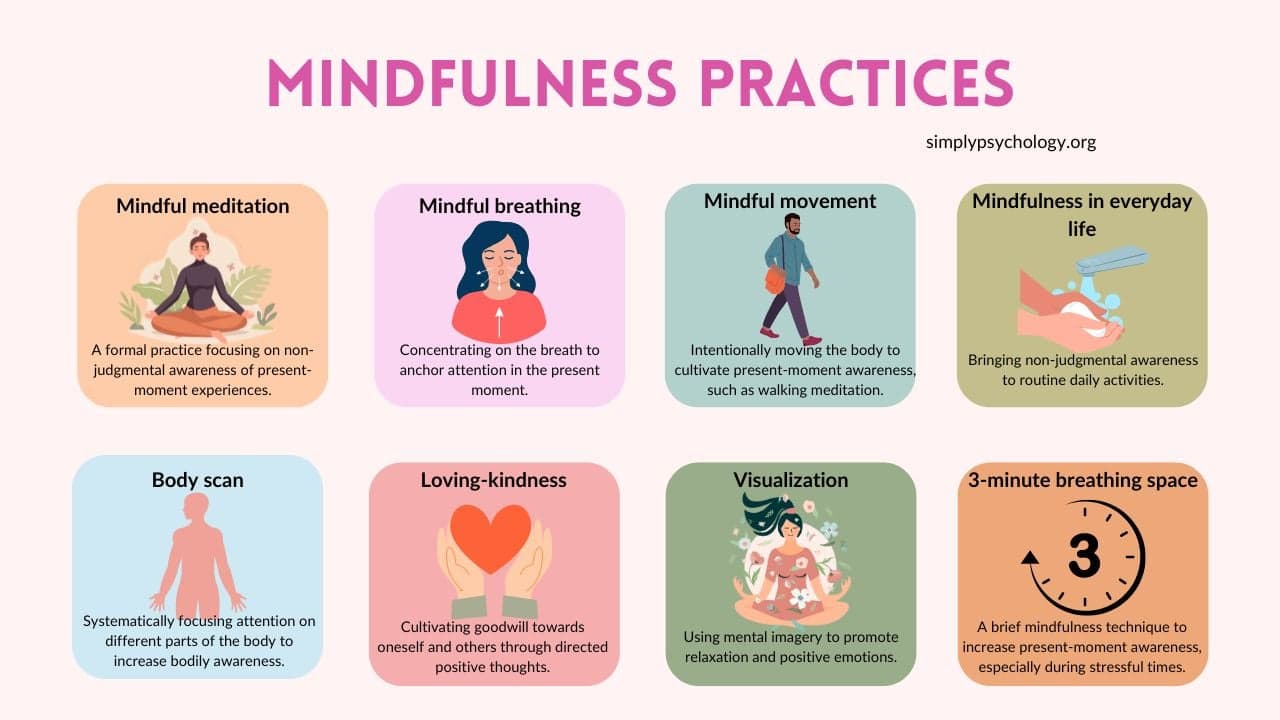
- Check whether an app or course trains formal practices (like breath-focused attention) or informal practices (like compassion exercises), because form maps to outcome.
- Look for programs that align with your context, schools, sports teams and clinical settings often need tailored approaches.
7. Practical steps to choose the right mindfulness approach
1. Identify the target outcome you care about (attention, emotional regulation, self-kindness, ethical awareness). Be specific: “better focus at work” is different from “less reactivity with my partner.”
2. Read program descriptions or study abstracts to see which skill the training emphasizes and which measures were used.
3. Prefer programs that explicitly state their aims and the instruments they use to assess progress.
8. Guidance for teachers, clinicians and researchers
Teachers and clinicians should name the skill they intend to cultivate and choose training methods and outcome measures that map onto that skill. Researchers can help by specifying which component of mindfulness they are studying and by choosing validated instruments that match that component. This clarity improves practice, helps communities compare interventions, and makes research findings more actionable for real-world use.
9. Community relevance and sector examples
Different community settings have different priorities: schools often need attention and self-regulation skills for learning; hospitals focus on pain management and mental health; workplaces may prioritize concentration and stress reduction; sports programs want performance-focused attention training. A community center deciding whether to run a drop-in “mindfulness” class should ask which outcome matters most to members and pick or design a program that explicitly trains that skill.
10. The case for clearer definitions and measurements
Because mindfulness is not a single unified construct in either research or practice, the field benefits from clearer definitions and more precise measurement. That doesn’t strip mindfulness of its richness; it helps match teaching to goals and research to claims. Clearer language and measurement let teachers, clinicians and users make informed choices and hold programs accountable to the outcomes they promise.
- Ask what specific skill the program trains and what outcomes are measured.
- Verify whether the measure used in supporting research aligns with your goal.
- Choose practices whose methods (breath focus, loving-kindness, ethical reflection) logically train the outcomes you want.
- Consider context, group classes, apps, clinical programs and team-based training deliver different levels of support and accountability.
11. Quick checklist before you commit to a practice
12. Closing practical wisdom
Mindfulness can do a lot, but not every mindfulness practice trains every benefit. Be explicit about the change you want, check which facet of mindfulness a program targets, and use that alignment to make community programs, workplace initiatives, and personal practice actually work. The clearest path forward is simple: name the skill, pick the right method, and measure what you value.
Know something we missed? Have a correction or additional information?
Submit a Tip