Experts Say Current Oil Crisis Could Be Worse Than the 1970s
Iranian counterattacks on energy infrastructure after U.S. and Israeli strikes have sparked what experts call the worst oil supply disruption in history, eclipsing the 1970s crisis.
The 1973 oil embargo removed roughly 7 percent of global oil consumption and targeted only a handful of nations. Analysts say that figure now looks modest.
After the United States and Israel attacked Iran in March 2026, Iranian forces launched counterattacks on energy shipping and infrastructure. The chain of events produced what experts are calling the worst disruption to oil supplies in history, a designation that places the current crisis in a different league than the one that sent Richard Nixon to the podium more than fifty years ago.
Bob McNally, president of Rapidan Energy Group, a research firm, put the comparison bluntly: "Many of the hallmarks of the 1973 shock were a result of poor domestic policy decisions, and the hit to supply is far greater now." McNally also argued that much of the 1970s damage was self-inflicted. "Policies like rationing set off panic buying, creating shortages instead of easing the problem," he said.
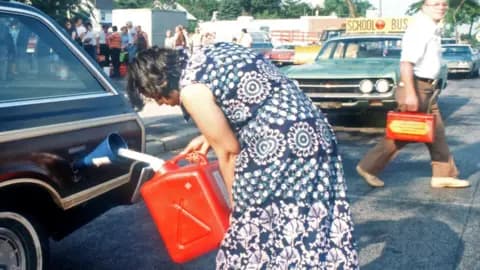
The 1970s crisis had its own grim tableau. Gasoline prices skyrocketed, and Nixon took emergency measures to limit consumption. Gas stations rationed supplies, producing long lines, complaints of price gouging, and what The New York Times described at the time as "chaotic" situations. In Europe, some countries banned driving on Sundays. Japan, heavily dependent on oil imports, declared a state of emergency. In a November 1973 speech, Nixon called on Americans to make sacrifices that would "include reductions in home heating, reductions in driving speeds, elimination of unnecessary lighting."

None of that political machinery has engaged yet in the United States. Oil and gasoline prices are soaring, but there is no sign that American drivers will have to queue for fuel or that the government will enact distribution controls modeled on the Nixon-era response. That distinction matters, given McNally's point that rationing in 1973 compounded the very problem it was designed to solve.
The structural difference between the two crises runs deeper than policy choices. The 1973 embargo was geographically bounded; because it targeted only a handful of nations, the United States retained the ability to source oil from outside the embargo's reach. The current disruption, rooted in military conflict and its cascading effects on shipping lanes and energy infrastructure across the Middle East, carries no equivalent escape valve. The supply hit, according to McNally's assessment, is simply larger, and the geopolitical trigger is of a different order entirely than a coordinated export embargo.
Whether the United States avoids the lines, the rationing, and the Sunday driving bans that defined the 1970s experience will depend in part on how long Iranian counterattacks on energy infrastructure continue, and in part on whether Washington resists the policy impulses that McNally credits with turning a supply shock into a full-blown consumer crisis half a century ago.
This article was produced by Prism’s automated news system from verified source data, official records, and press releases, then run through automated quality and moderation checks before publishing. The system is built and supervised by the people who set the standards it runs under. Read our full AI policy.
Did this article answer your question?


