Experts say green bananas may offer a gut-health boost
Green bananas can deliver resistant starch that may aid blood sugar and gut bacteria, but the benefit shrinks as ripeness and processing change the starch profile.
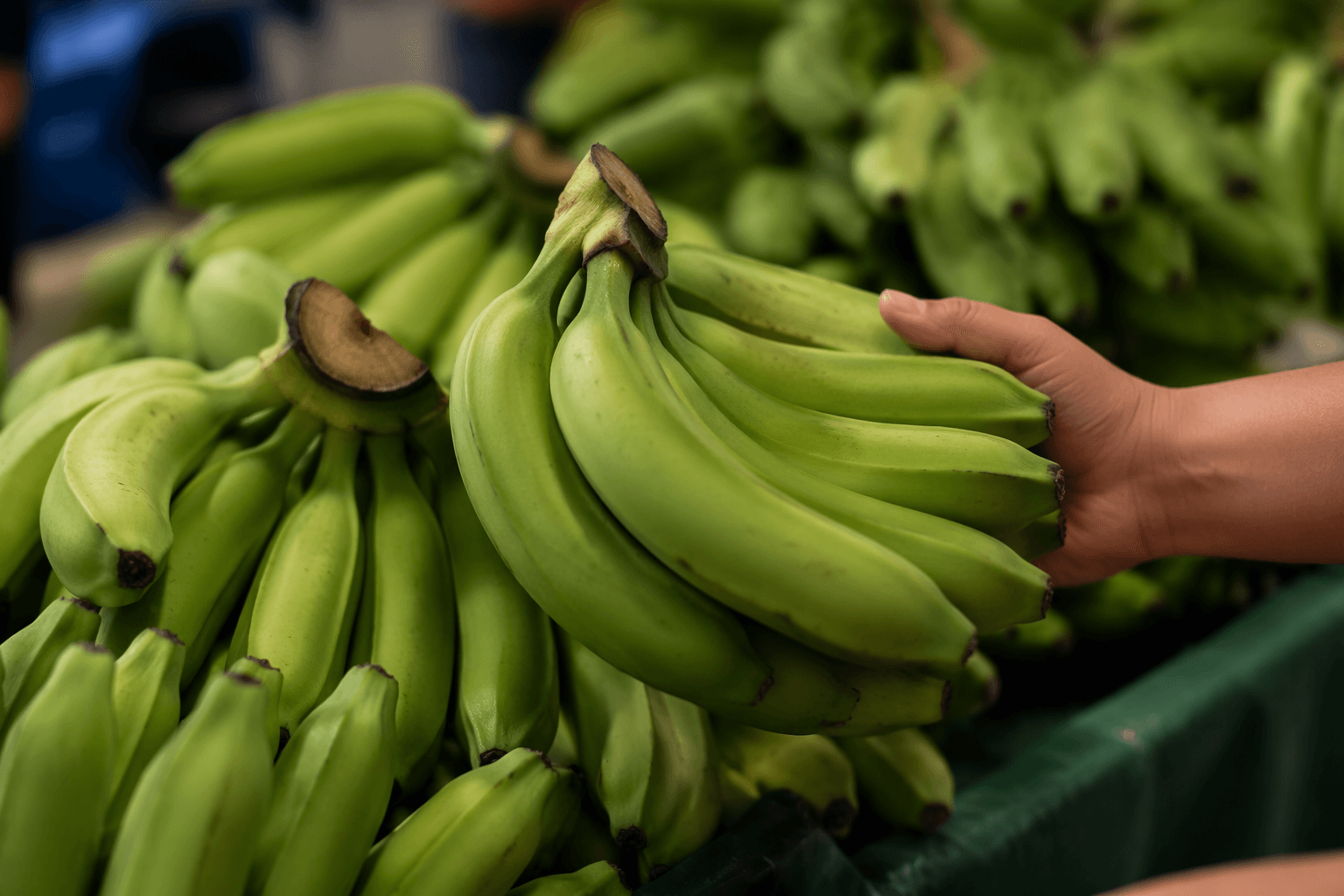
A green banana carries more resistant starch, a carbohydrate that resists digestion in the small intestine and reaches the colon, where gut bacteria ferment it into compounds such as butyrate that are linked to digestive health. The mechanism is real, but it is not a free pass to wellness hype: the strongest evidence is still uneven, and the size of the effect depends on banana type, ripeness and processing.
What resistant starch changes in the body
Resistant starch behaves differently from the fast-digesting starch in a ripe banana. Because it is less available to enzymes in the small intestine, it is less likely to act like a quick sugar load and more likely to function like fiber once it reaches the large intestine. Green bananas are often discussed in connection with steadier blood sugar, gut comfort and, by extension, fullness after eating.
Evidence on satiety is limited. The main literature tied to green bananas has focused more on gastrointestinal symptoms, glycemic and insulin metabolism, and body weight than on precise appetite testing in controlled human meals.
What the research actually shows
A 2019 systematic review by Ana Luisa Falcomer, Roberta Figueiredo Resende Riquette, Bernardo Romão de Lima, Verônica C. Ginani and Renata Puppin Zandonadi screened 1,009 articles and ended with 18 studies on green banana products. Most of those studies examined gastrointestinal symptoms and diseases, followed by glycemic and insulin metabolism, weight control, and renal or liver complications associated with diabetes. The review also made the central limitation plain: more work is needed to standardize dose and effect by age, banana variety and ripeness level.
The current evidence base is not broad enough to flatten all green bananas into the same claim. A 2024 study in Molecules, led by researchers including Yasmeen M. Bashmil, Frank R. Dunshea, Rudi Appels and Hafiz A. R. Suleria, examined Cavendish, Ladyfinger and Ducasse bananas grown in Australia. The team found substantial resistant starch, dietary fiber and phytochemicals, and it linked antioxidant capacity mainly to polyphenols while measuring short-chain fatty acid production during in vitro digestion and colonic fermentation. It was mechanistic laboratory evidence, not proof that every serving produces the same effect in a person eating a normal meal.
A separate 2024 review put green banana flour at about 30 percent resistant starch and roughly 70 percent starch on a dry basis, which is why the ingredient has attracted food-industry interest. Green banana flour is a starch source with a fiber-like fraction that product developers can use in formulations, but its nutritional behavior still depends on how much survives processing and cooking.
Why ripeness and preparation matter
The reviews do not support a blanket claim that any banana, in any form, delivers the same benefit. Ripeness changes the starch profile, and the 2019 review explicitly called for better standardization across banana variety and ripeness level. Processing and cooking also matter, which means the resistant-starch advantage is most believable when the fruit stays green and is handled in ways that do not erase that structure.
That does not mean cooked or processed banana products are useless. It means the benefit may be smaller, harder to quantify and more product-specific than wellness marketing suggests. A green banana eaten plain is not nutritionally identical to a ripe banana in a smoothie, a baked dessert or a flour-based product, and the research so far has not pinned down one universal dose that survives every kitchen method.
Where green bananas fit in a real diet
Green bananas can help a diet move closer to basic public-health targets. The World Health Organization recommends at least 400 grams of fruits and vegetables a day for adults and at least 25 grams of naturally occurring dietary fiber a day. That recommendation sits against a stark backdrop: the WHO has estimated that inadequate fruit and vegetable intake was linked to 3.9 million deaths worldwide in 2017, and earlier pegged the toll at 6.7 million deaths in 2010.
This article was produced by Prism’s automated news system from verified source data, official records, and press releases, then run through automated quality and moderation checks before publishing. The system is built and supervised by the people who set the standards it runs under. Read our full AI policy.
Know something we missed? Have a correction or additional information?
Submit a Tip