Experts say Iran’s shipping threats may outpace its control in Hormuz
Iran’s latest shipping threats have met a hard limit: at least 26 vessels have already used an IRGC-cleared route, but the strait remains too busy to fully police.
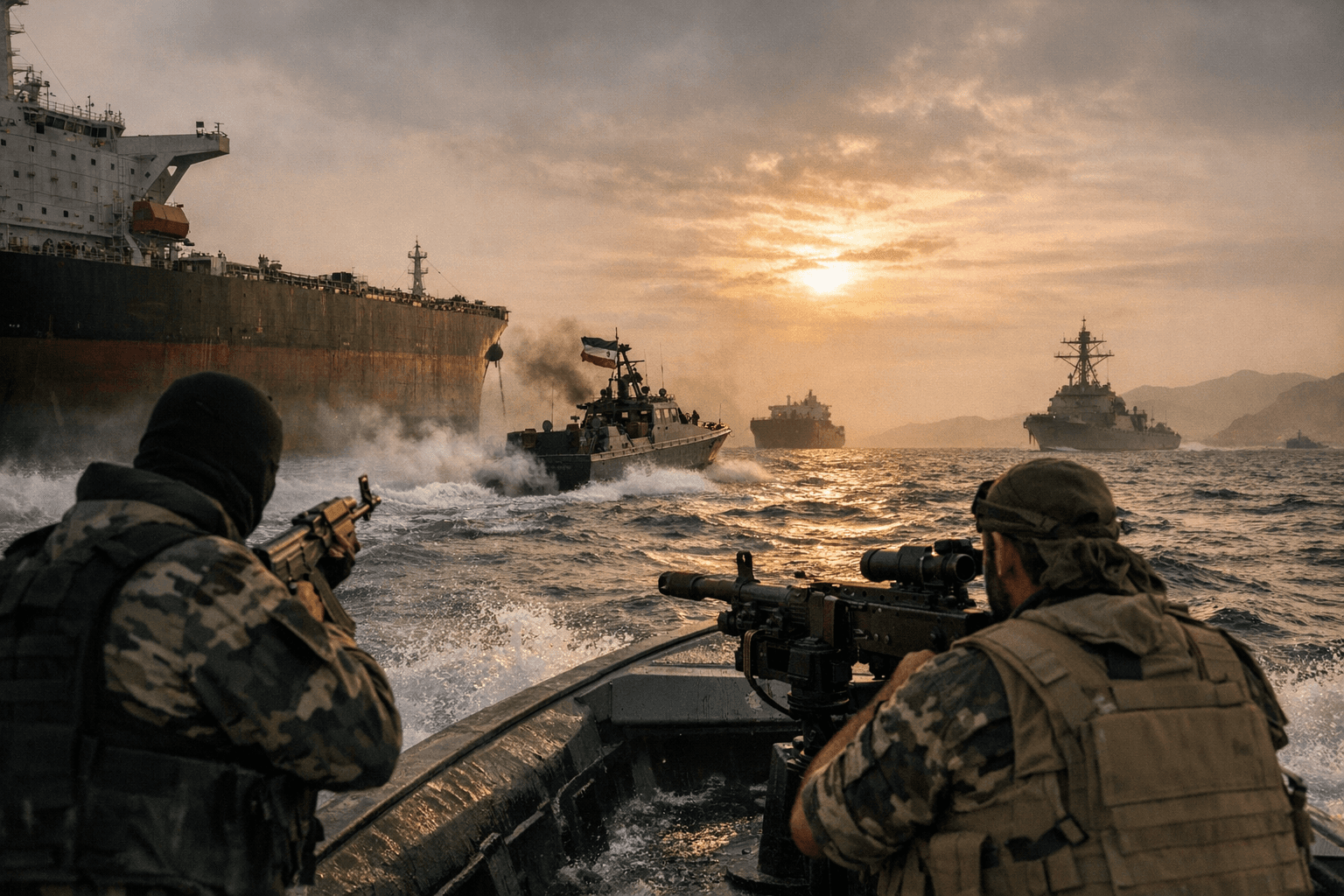
Iran is showing it can pressure shipping in the Strait of Hormuz without truly sealing it. Maritime analysts say Tehran has been steering traffic through a narrow, pre-approved route near Qeshm Island and Larak Island, where the Islamic Revolutionary Guard Corps verifies vessel details, issues clearance codes and, in some cases, collects fees for safe passage.
Since March 13, Lloyd’s List Intelligence said at least 26 transits have followed that channel under what shipping analysts call Iran’s de facto toll booth system. Late-March reports said at least two vessels had paid Iran for safe passage, underscoring how selective enforcement can create leverage even short of a full blockade.
The pressure campaign intensified after U.S. and Iranian negotiators failed to reach agreement in Islamabad on April 11-12 over Iran’s control of the Strait of Hormuz, its highly enriched uranium stockpile and frozen assets. On April 12, President Donald Trump announced that the U.S. Navy would begin blocking ships entering or leaving the strait. U.S. Central Command later clarified that the measure targeted vessels entering or departing Iranian ports and coastal areas, not every ship passing through the waterway. CENTCOM said the restrictions took effect on April 13 at 1400 GMT, or 10 a.m. EDT.
The immediate effect was visible in the traffic patterns. Maritime analysts tracking movements said at least seven ships reversed course after the announcement, while CENTCOM said six vessels complied with directions to turn around and re-enter an Iranian port. Shipping-data firms and operational reports indicated that traffic through the strait fell sharply as tankers weighed whether to continue or seek a safer route.
The environment around the chokepoint had already grown more dangerous. UKMTO said it received 28 incident reports between February 28 and April 9, including 17 attack reports and 11 suspicious-activity reports. The International Maritime Organization has previously recorded at least 18 ships hit and at least seven crew members killed in the region, a reminder that the risk to crews is not theoretical.
Experts say the gap between threat and capability matters. The Strait of Hormuz carries roughly a fifth of the world’s oil flows, and more than 90% of Iran’s $109.7 billion in annual seaborne trade transits the waterway, making any attempt to control every vessel a costly and open-ended undertaking. Ships can maneuver, turn off AIS tracking or reroute through different channels, which gives Iran ways to raise costs and unsettle markets without fully controlling the strait. For now, Tehran appears to be reaching for leverage, not perfect closure.
This article was produced by Prism’s automated news system from verified source data, official records, and press releases, then run through automated quality and moderation checks before publishing. The system is built and supervised by the people who set the standards it runs under. Read our full AI policy.
Did this article answer your question?