Trump Claims Victory as Iran Retains Grip on Hormuz Strait
Trump declared "total and complete victory," but Iran still controlled Hormuz, the chokepoint for one-fifth of global oil and gas.
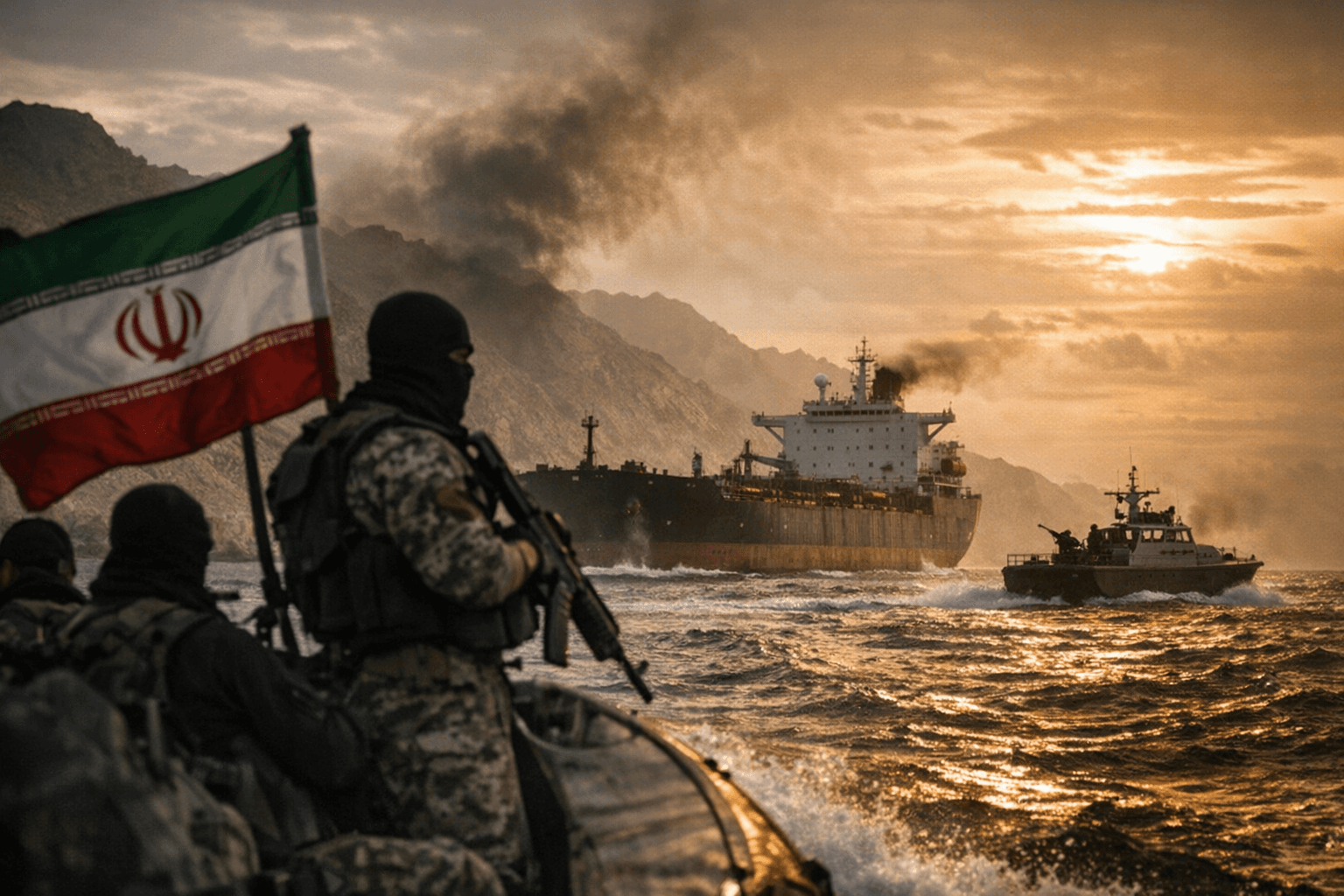
President Donald Trump declared “total and complete victory” after nearly six weeks of war with Iran, but the ceasefire left Tehran still gripping the Strait of Hormuz, the narrow passage that carries about one-fifth of the world’s oil and gas. The gap between the White House’s triumphal message and the conditions on the ground was immediate: Iran remained in power, and it still held a pressure point that could rattle energy markets from the Gulf to the United States.
The battlefield damage was real. U.S. and Israeli strikes severely hit Iran’s naval, air force and air-defense systems, and more than 10,000 military targets inside Iran were destroyed. Defense Secretary Pete Hegseth called Operation Epic Fury a “historic and overwhelming victory.” But the more consequential question was whether that military campaign produced lasting strategic change. It did not remove Iran’s government, and highly enriched uranium remained under Iranian control.
The ceasefire also did not end Iran’s reach beyond its borders. Tehran had moved from shadowing tankers to acting as the de facto gatekeeper of Hormuz, a shift that gave it new leverage over shipping and energy flows. Iran also retained the ability to escalate through Hezbollah in Lebanon, Shi’ite militias in Iraq and the Houthis in the Red Sea. That network meant the war had paused, but the machinery for regional pressure remained intact.
Trump tried to soften concerns by saying Iranian leaders were “much more reasonable” in meetings than in public, but the wider region quickly tested that claim. Israel kept striking Hezbollah positions in Lebanon after the ceasefire announcement, drawing anger from Tehran and calls for de-escalation from Egypt and France. The United States also faced its own toll, with 13 military personnel dead and hundreds more injured, while the Pentagon confronted the slower problem of replacing depleted munitions and stockpiles.
For Fawaz Gerges, the outcome reflected a “grave strategic miscalculation” because it did not deliver regime change, nuclear containment or an end to Iran’s proxy network. That judgment matched the basic reality now facing Washington: the war ended, but Iran still controlled one of the world’s most consequential chokepoints, and the fight over what comes next had only begun.
This article was produced by Prism’s automated news system from verified source data, official records, and press releases, then run through automated quality and moderation checks before publishing. The system is built and supervised by the people who set the standards it runs under. Read our full AI policy.
Did this article answer your question?