Experts to Present Research at Stony Brook Harbor Water Quality Forum
Experts and community groups presented water-quality research at a Stony Brook Yacht Club forum, highlighting risks and next steps for local health, habitat, and shoreline communities.
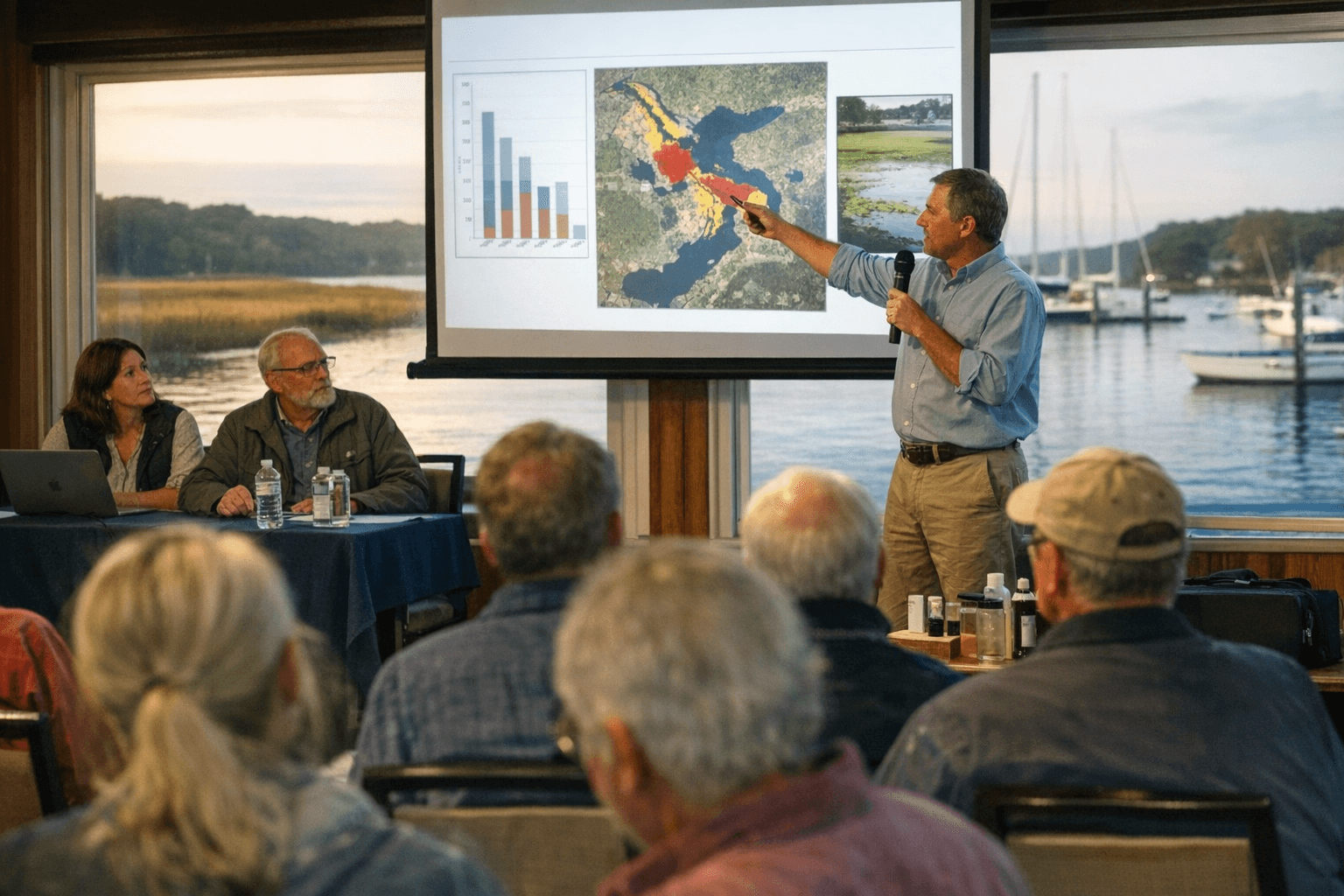
Researchers, advocates, and local residents gathered at the Stony Brook Yacht Club to review ongoing science aimed at protecting and improving water quality in Stony Brook Harbor, Long Island Sound, and West Meadow Creek. The forum brought academic research into direct conversation with community concerns about public health, coastal habitat resilience, and equitable access to safe waters.
Christopher Gobler, PhD, Distinguished Professor and Endowed Chair of Coastal Ecology and Conservation at Stony Brook University’s School of Marine and Atmospheric Sciences, was among the presenters. Participating organizations included Citizens Campaign for the Environment, Sea Grant New York, Long Island Sound Partnership, Save the Sound, Setauket Harbor Task Force, and Stony Brook University SOMAS. The event was intended as a public information and conversation opportunity for residents and stakeholders and took place from 7 p.m. to 9:30 p.m. on Jan. 26.
The presentations translated technical monitoring and experimental work into locally relevant implications. Water quality trends influence recreational swimming, commercial and recreational fishing, shellfishing access, and the health of wetlands that buffer storm surge. For Suffolk County residents, those connections have immediate public health and economic consequences, from exposure to pollutants and harmful algal blooms to impacts on small businesses that depend on clean water.
Beyond environmental science, the forum emphasized policy pathways and community-led solutions. Collaboration between Stony Brook University researchers and organizations such as Citizens Campaign for the Environment and Sea Grant New York creates a pipeline for science to inform local management decisions, including monitoring priorities, restoration projects, and stormwater controls. Long Island Sound Partnership and Save the Sound framed regional coordination as essential to ensure that local interventions in Stony Brook Harbor and West Meadow Creek align with broader watershed goals.
The forum also centered equity and access. Community groups highlighted that neighborhoods with fewer resources often face disproportionate exposure to degraded water and have less capacity to influence remediation plans. Linking data from academic research to community advocacy increases pressure on municipal and county leaders to prioritize investments that protect public health and shoreline livelihoods.
For residents, the forum offered a direct way to hear current research and to raise priorities with scientists and advocates. Ongoing monitoring and community engagement are likely to shape the next round of policy discussions at the town and county level. Continued attendance at public forums, participation in local task forces such as Setauket Harbor Task Force, and engagement with Stony Brook University SOMAS research will be critical for translating scientific findings into cleaner water and healthier communities across Suffolk County.
Sources:
Know something we missed? Have a correction or additional information?
Submit a Tip