Explore Gallup's Native Arts, Trading Posts, Route 66 and Outdoor Adventures
Gallup is a regional hub for Native American arts, trading posts, Route 66 attractions and outdoor recreation, drawing markets and visitors that support McKinley County's economy.
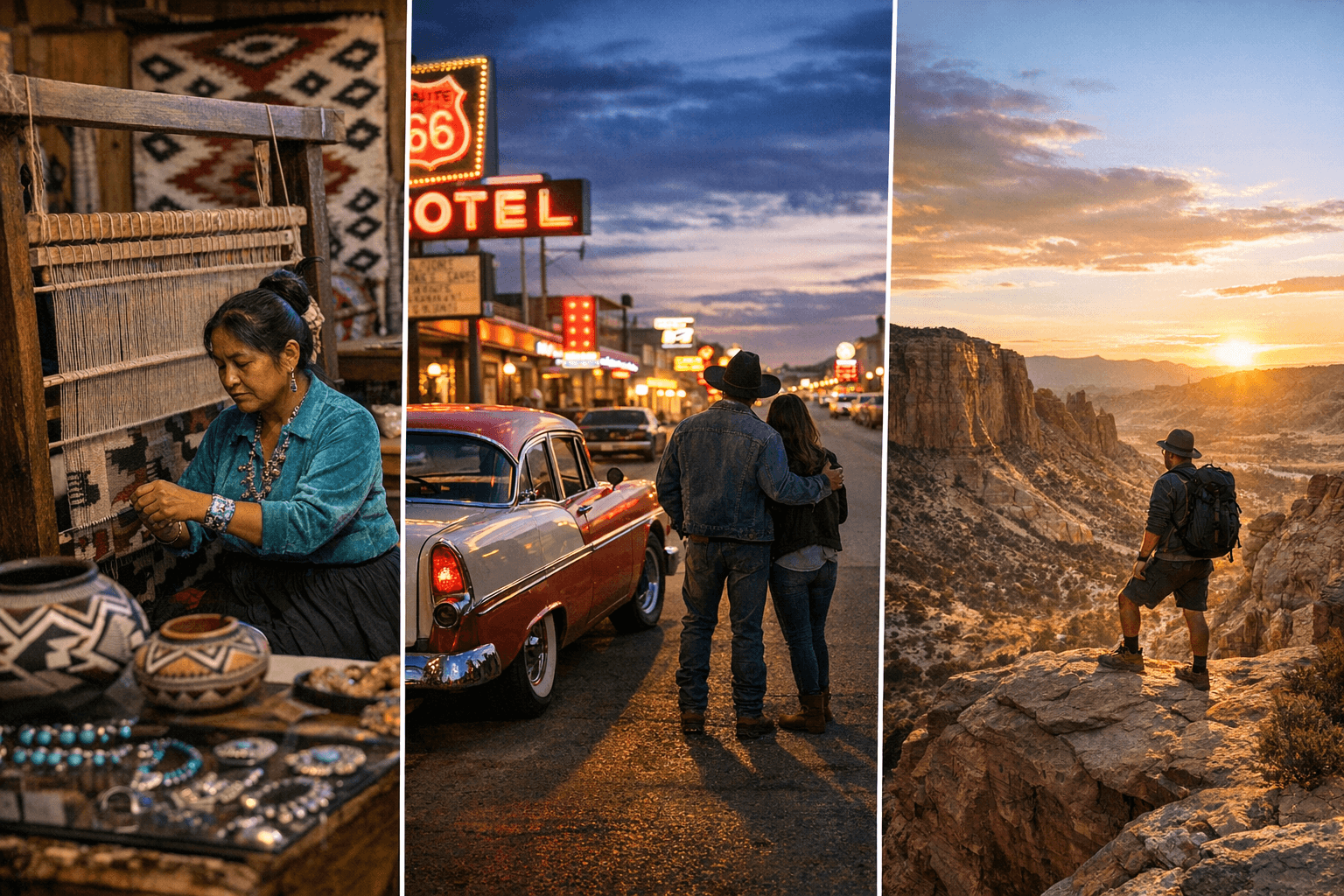
Gallup’s galleries, trading posts and outdoor landscapes form a concentrated cultural and economic engine for McKinley County, offering residents and visitors markets, artisan income and recreational options across Route 66 and the surrounding high desert.
At the core of the city’s draw are dozens of longstanding trading posts and more than 100 shops and galleries that sell turquoise and silver jewelry, rugs, pottery, Kachina dolls and other Native-made crafts. One source counts 110 trading posts, shops and galleries in Gallup, and Visit Gallup describes the town as a gateway to the Native American experience. Route 66 and Coal Avenue remain the principal sites of most gallery and trading post activity, making a downtown stroll a practical way to connect with local artisans and traders.
Weekend markets are the economic backbone for many artisans. The Gallup 9th Street Flea Market operates every Saturday year-round and, according to local listings, welcomes upwards of 10,000 visitors weekly and showcases more than 500 Native artisans. Nearby Window Rock hosts a large Navajo Flea Market on Sundays. Annual events amplify those flows: every August Gallup hosts the Gallup Inter-Tribal Indian Ceremonial, bringing together tribes from across the nation and featuring Native American dancers and nightly performances.
Historic trading posts anchor educational and authenticity claims. The Hubbell Trading Post, founded in 1878 by John Lorenzo Hubbell and operated as a National Historic Site, is described as the oldest continuously operating trading post on the Navajo Nation and is recommended as an introductory stop to “understand the art and craft items and the trading process, [as it] is still active and is operated by the National Park Service.” Other named stops include Perry Null Trading, founded in 1939 by Tobe Turpen Sr., Richardson’s Trading Inc. (also referred to in some sources as Richardson’s Cash Pawn, which offers free guided tours for groups of eight to 40 that last about 2.5 hours), Ellis Tanner Trading Company (appearing under variant spellings), Griswold’s and Gallup Trading Company.
Buyers and residents should note consumer-protection guidance before purchasing. “Real trading posts deal in local jewelry, rugs, pottery, and art and are not a place to find souvenirs made in other countries,” one advisory states. “Ask for certificates of authenticity and ask if the items are Native American-made, which family or artisan made the item, and where they live. You should be able to get that information from the trader. Real trading posts conduct ongoing business with local Native Americans. Beware that many souvenir shops use the term ‘trading post.’ There is a real difference between them.” A complementary tip from local listings urges visitors at Richardson’s to “ask to see their Rug and Painting collections!”
Outdoor offerings broaden Gallup’s appeal. Red Rock Park sits at roughly 7,000 feet elevation, covers 640 acres and includes a campground with electrical and water hookups, picnic areas, restrooms and showers. The region markets hundreds of miles of hiking, biking and singletrack trails - from the rolling mesa High Desert Trail System to tree-lined Zuni Mountain trails - and offers hot-air balloon rides highlighted during the Red Rock Balloon Rally.
For planning and verification, the Gallup Visitors Center can be contacted at 800-380-4989 or by email at vanessa@thegallupchamber.com; Visitor Information is available at 1-800-242-4282 and (505) 863-3841. Sources vary on claims such as which trading post is the single “oldest” in local jurisdictional terms; residents and reporters seeking historical precision should confirm business histories with local records or the National Park Service. For McKinley County readers, the combination of markets, events and trails means ongoing opportunity for local merchants, seasonal employment and tourism revenue — and a continuing imperative to buy authentically and support long-standing trader-artisan relationships.
Know something we missed? Have a correction or additional information?
Submit a Tip