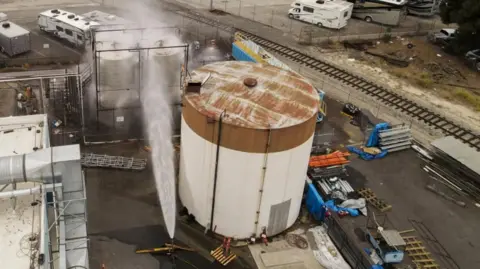
Explosion risk eases at Garden Grove chemical tank, 16,000 evacuated
A crack in a Garden Grove tank cooled a volatile chemical and pushed a feared blast off the table, but 16,000 people stayed under evacuation orders.
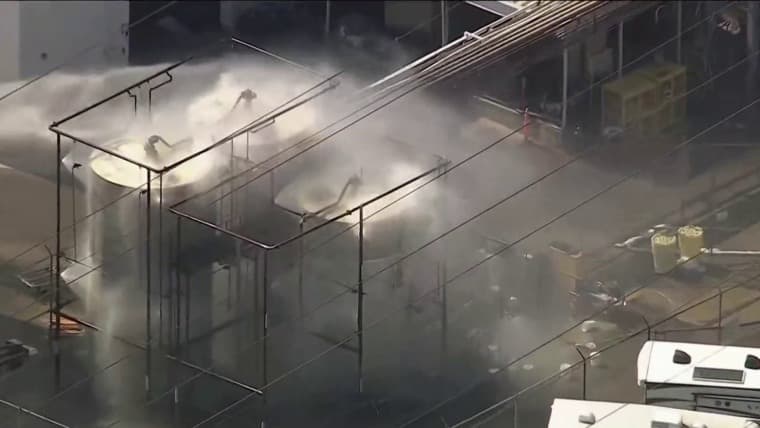
A crack in a methyl methacrylate tank at GKN Aerospace in Garden Grove cooled a volatile chemical enough to avert the feared catastrophic blast, but officials still kept about 16,000 residents under evacuation orders Monday as they warned that smaller explosion or toxic-release risks had not been fully ruled out.
The Orange County Fire Authority said the worst-case BLEVE threat, a boiling liquid expanding vapor explosion, was “off the table” after a close overnight inspection found the crack had relieved pressure inside the tank. Even so, crews urged people in the reduced evacuation zone to stay away while they continued monitoring the site, where the chemical had been overheating and venting vapors since Thursday.
The incident briefly forced roughly 50,000 people out of their homes over Memorial Day weekend before the evacuation area was cut back. The new zone stretched roughly from Orangewood Avenue on the north to Garden Grove Boulevard on the south, with Dale Street to the east and Knott Street to the west. Garden Grove sits about 38 miles south of downtown Los Angeles and next to Anaheim, home to Disneyland Resort, though the theme park was not under evacuation orders.
Gov. Gavin Newsom declared a state of emergency in Orange County on Saturday, opening the door to additional state resources and shelter support. No injuries had been reported as of the latest updates, and officials said areas outside the evacuation zone were safe for normal activity.
The tank contained methyl methacrylate, a highly flammable chemical used in plastics production. Early reporting on the amount inside the tank varied sharply, with one estimate putting the volume at about 7,000 gallons and another at 34,000 gallons, underscoring the uncertainty that surrounded the first hours of the emergency.
Federal monitoring found no sign that toxic chemicals had been released into the environment, and Orange County health officials later said there was no contamination and no harmful fumes in the air for residents returning home. Still, the sequence of overheating, vapor venting and emergency evacuation raised uncomfortable accountability questions about maintenance, oversight and whether the plant’s emergency planning was adequate before the situation reached the point of a near-disaster.
Know something we missed? Have a correction or additional information?
Submit a Tip