Explosions rock Kyiv as Ukraine braces for Russia’s next strike
A central Kyiv hotel burned, debris hit two districts, and officials warned the drone assault could widen into a missile barrage overnight.

A hotel on Shevchenko Boulevard burned and debris fell across central Kyiv late Wednesday as Russian drones struck the capital and officials warned a wider barrage could follow. Kyiv residents moved into underground metro stations, some with tents for the night, while air defenses fought drones on the city’s outskirts.
Kyiv Mayor Vitali Klitschko said drone fragments hit the city center and a northeastern suburb. The Kyiv City Military Administration head, Tymur Tkachenko, warned that attack drones could keep moving toward Kyiv and that a combined attack could hit in the coming days. He later said drones were attacking from all directions, a sign that the assault was designed to keep defenders guessing and stretch air defenses across a broader perimeter.
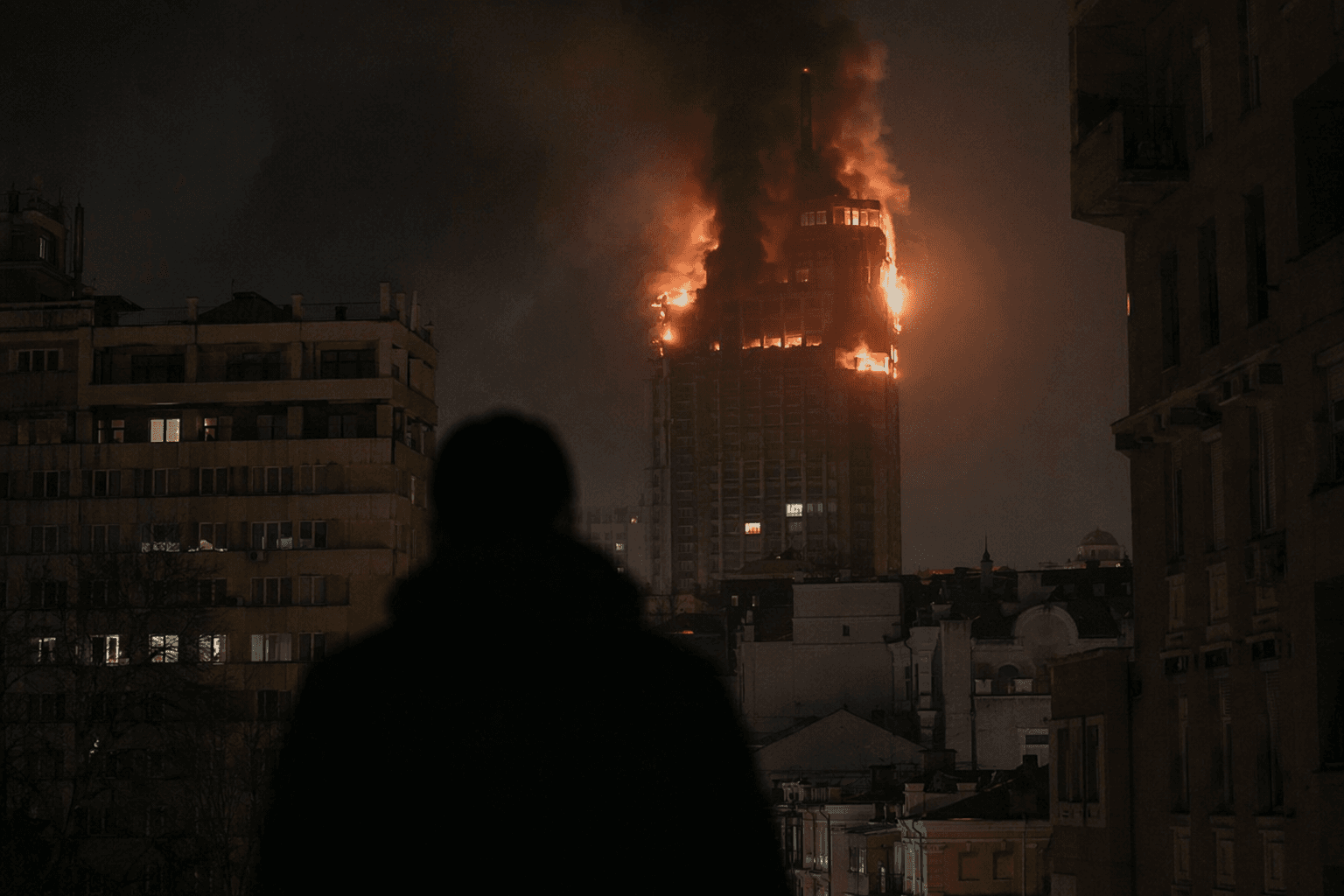
The attack began after President Volodymyr Zelensky warned in Dublin earlier in the day that Russia was preparing another large-scale strike against Ukraine. Before the explosions in Kyiv, Ukraine’s Air Force had warned of Russian drones headed toward Kyiv, Mykolaiv, Konotop and Kherson. As the night wore on, officials in Kyiv warned of a ballistic missile threat, and open-source monitoring channels said up to 10 Russian strategic bombers were airborne, raising the prospect of another mass missile strike.
Kyiv Independent journalists heard loud explosions and air defense activity around 9:40 p.m. local time, as the city’s defenses engaged incoming drones. Later reporting said a residential building in central Kyiv was destroyed and another multistory building in Holosiivskyi district was damaged. The central hotel fire and scattered debris across two districts showed how repeated Russian strikes now work in layers, combining drones, possible cruise missiles and ballistic threats to wear down civilians and probe the gaps in Ukraine’s air shield.

Kyiv has lived under this pressure throughout the full-scale war, including major barrages in July 2025 and June 2026 that killed and wounded civilians and damaged homes, businesses and public infrastructure. The latest attack fit that pattern of attrition: a night of alarms, sheltering and moving threats, with the next wave still in the air.
This article was produced by Prism’s automated news system from verified source data, official records, and press releases, then run through automated quality and moderation checks before publishing. The system is built and supervised by the people who set the standards it runs under. Read our full AI policy.
Did this article answer your question?


