F-16s intercept planes violating restricted airspace over New Jersey
F-16s escorted multiple planes out of restricted airspace over Bedminster and East Rutherford, as NORAD again warned pilots to check NOTAMs before flying.

F-16 fighter jets intercepted multiple general aviation planes that violated temporary flight restrictions over Bedminster and East Rutherford, New Jersey, and NORAD said all of the aircraft were safely escorted out of the area.
The military response put another spotlight on the fragile enforcement around the Bedminster airspace tied to Trump National Golf Club Bedminster, where temporary no-fly restrictions are activated when President Donald Trump is in residence. NORAD told pilots to check their Notice to Airmen and FAA guidance before taking off, a reminder that the restrictions are not optional and that civilian flights can quickly trigger a military intercept.
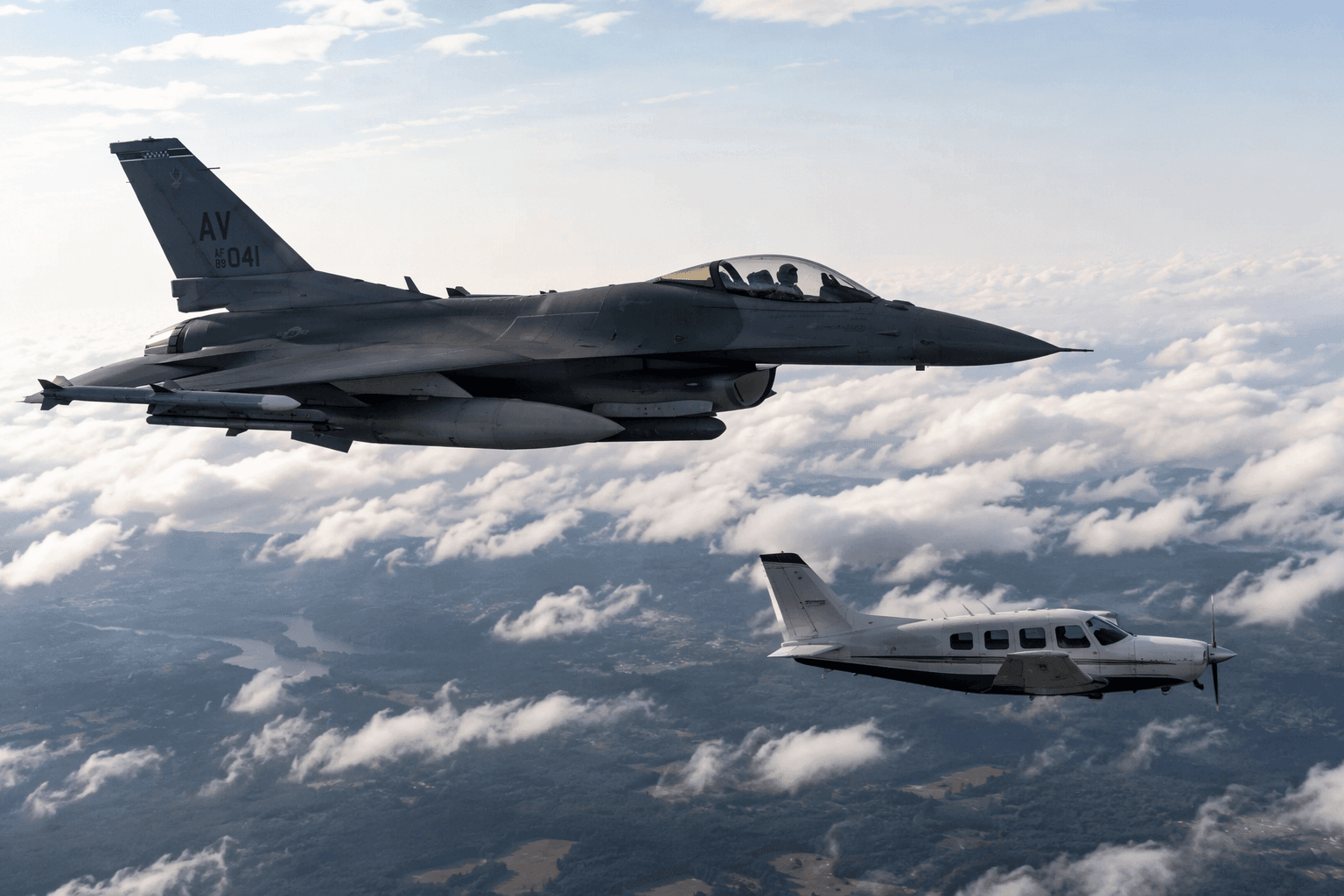
The incident was not isolated. NORAD previously said multiple general aviation planes violated TFRs over Bedminster on June 20 and 21, 2025, and a separate DVIDS item dated Aug. 3, 2025, also documented a Bedminster TFR violation. In the latest episode, later reporting around the same restricted airspace pointed to as many as 11 aircraft in a related Bedminster violation, underscoring how often pilots have come close to, or crossed into, the protected zone.
Those repeated incursions matter because every unauthorized plane in restricted airspace creates the risk of a fast-moving response over a populated area. Fighter-jet scrambles can include visual signals such as flares as pilots identify and escort the aircraft away, a process designed to avoid a worse outcome but one that still places people on the ground and in the air near a possible hazard.
NORAD has also announced enforcement of temporary flight restriction airspace over New York, New York, and other interceptions in the Northeast region, showing the Bedminster response is part of a broader security posture around presidential movements and major events. Even when intercepts end without injury, the repeated need for them signals a persistent gap between the rules pilots are supposed to review before departure and the reality of aircraft entering protected airspace anyway.
This article was produced by Prism’s automated news system from verified source data, official records, and press releases, then run through automated quality and moderation checks before publishing. The system is built and supervised by the people who set the standards it runs under. Read our full AI policy.
Did this article answer your question?