FAA Bans U.S. Civil Flights Over Venezuela Amid Military Activity
The Federal Aviation Administration issued an emergency NOTAM prohibiting U.S. civil operators from flying in the Maiquetía Flight Information Region (SVZM) beginning 06:00 UTC on Jan. 3, 2026, citing ongoing military activity and safety-of-flight risks. The move has emptied Venezuelan airspace of commercial traffic, forced reroutes across the Caribbean, and raised immediate costs and logistical challenges for carriers, shippers and regional economies.
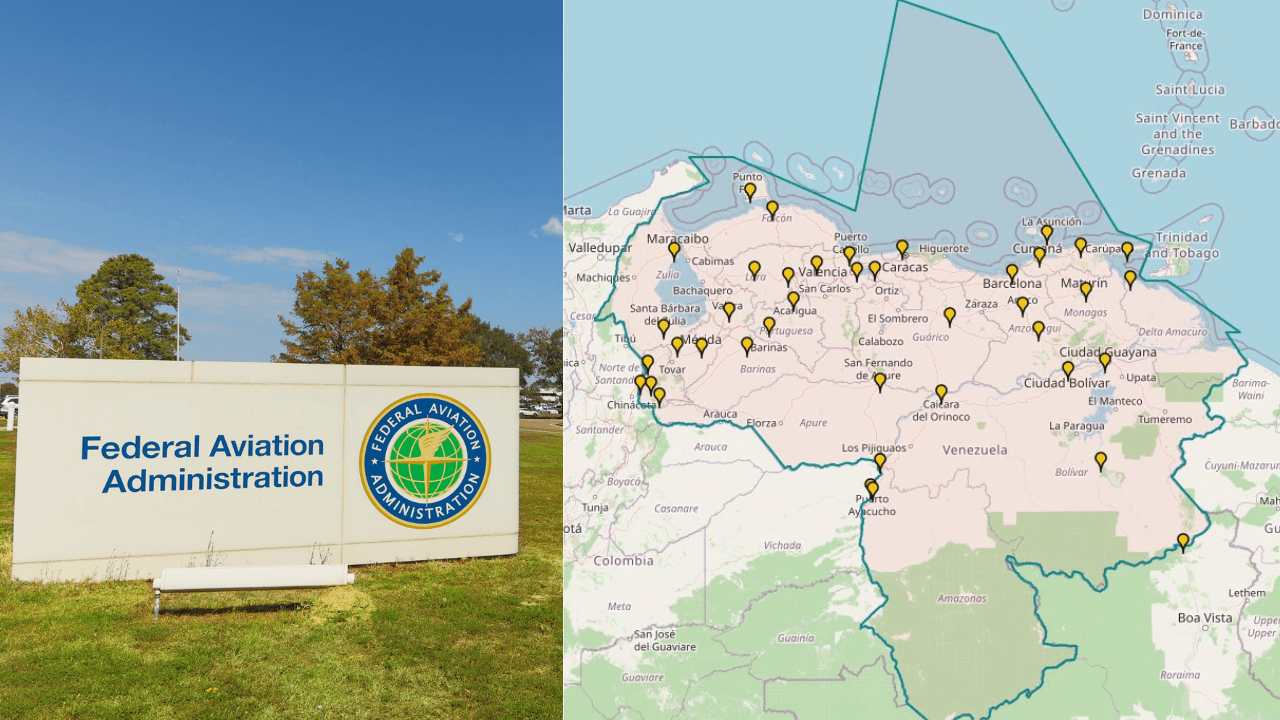
The U.S. Federal Aviation Administration on Jan. 3 issued an emergency NOTAM barring U.S. commercial airlines and U.S.-registered private aircraft from operating within the Maiquetía Flight Information Region (SVZM) at all altitudes beginning at 06:00 UTC, citing “ongoing military activity” and associated safety risks. The prohibition explicitly exempts U.S. military and other U.S. state aircraft, leaving the ban targeted at civilian operators.
Flight-tracking provider Flightradar24 showed commercial traffic absent from Venezuelan airspace after the NOTAM took effect, and several U.S. carriers including American Airlines, Delta Air Lines and Southwest Airlines said they were complying with the FAA restriction. Operators were urged to avoid the FIR and follow current NOTAMs; the FAA also advised caution in parts of the surrounding Caribbean, and Luis Muñoz Marín International Airport in San Juan confirmed a temporary airspace restriction imposed by federal authorities linked to the Venezuela situation.
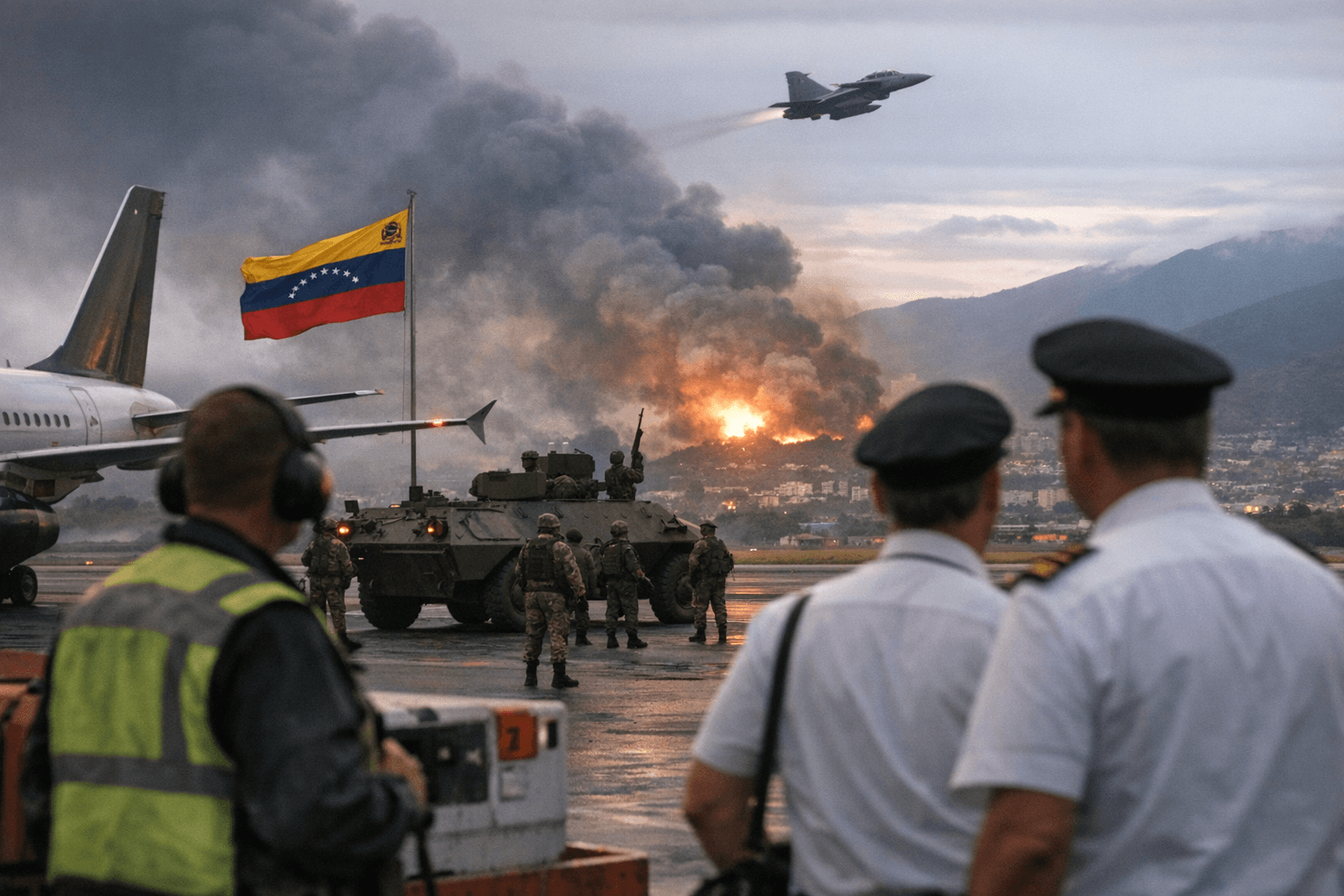
The NOTAM follows a period of escalating warnings. In November 2025 the FAA issued an advisory for the Maiquetía FIR highlighting increased military activity, GPS interference and a deteriorating security environment, and required U.S. operators to provide 72 hours notice before entering the FIR. European regulators and states including Spain and Portugal issued similar advisories last year. Media and tracking outlets reported explosions, low-flying aircraft and helicopter activity over Caracas and Maracay on Jan. 3, with at least seven explosions cited in accounts; those reports are being treated as unconfirmed by official U.S. agencies, while the FAA text cited only generalized military activity.
Operational impacts were immediate. Airlines rerouted North-South overflights that formerly crossed Venezuela via Colombia and other neighboring flight information regions, effectively severing some of the most direct routings between the U.S. mainland and the eastern and southern Caribbean as well as portions of South America. The detours increase block times, fuel burn and crew costs and complicate slot management for carriers operating thin margins. Cargo operators face longer transit times and potential cascading delays for supply chains that link U.S. ports to South American markets.
The economic effects are likely to be felt in several ways. For carriers, sustained rerouting raises operating costs that can translate into higher fares or reduced capacity on marginal routes. For shippers, longer routes and possible capacity constraints could increase freight rates and delivery times for exports and imports to Venezuela and nearby markets. Regional tourism corridors, notably routes into the eastern Caribbean that previously used Venezuelan overflight corridors, may see higher prices and reduced connectivity in the near term.
Policy implications extend beyond immediate safety concerns. The FAA action represents a clear escalation from advisory guidance to an operational prohibition for U.S. civil operators, reinforcing a trend of regulators restricting access to airspace affected by military activity and electronic interference. The Pentagon directed airspace questions to the FAA and the White House, while the FAA limited public comment to the NOTAM text and general safety principles. Analysts will watch whether the restriction remains temporary or becomes prolonged, a factor that will determine how deeply carrier networks and regional trade patterns are altered. Verification of on-the-ground military incidents remains incomplete; verifiable facts at this stage are the NOTAM effective at 06:00 UTC Jan. 3, the SVZM designation, the exemption for U.S. state aircraft, the observed vacuum of commercial traffic in tracking feeds and airline compliance statements.
This article was produced by Prism’s automated news system from verified source data, official records, and press releases, then run through automated quality and moderation checks before publishing. The system is built and supervised by the people who set the standards it runs under. Read our full AI policy.
Did this article answer your question?