Pakistan Ends Blanket Fuel Subsidy, Hiking Petrol and Diesel Prices Over 40 Percent
Pakistan scrapped its blanket fuel subsidy overnight, sending petrol up 42.7% to Rs458 per litre and diesel surging 55% in one of the country's sharpest fuel price shocks in years.
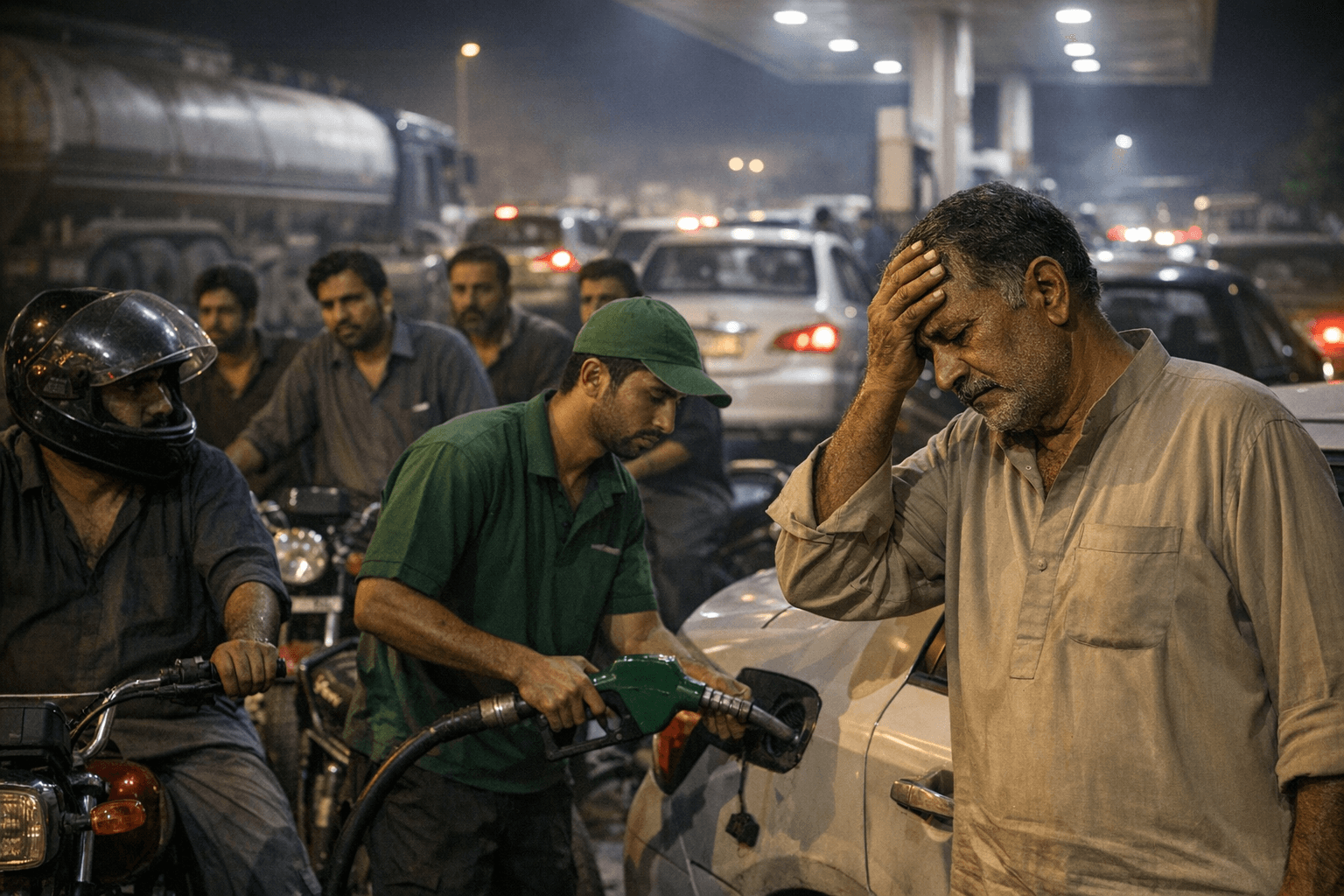
Pakistan's government eliminated its blanket petroleum subsidy in a late-night announcement, pushing petrol prices to Rs458.41 per litre from Rs321.17 and high-speed diesel to Rs520.35 from Rs335.86, effective immediately. The increases, equivalent to roughly Rs137 per litre on petrol and Rs184 per litre on diesel, translated to hikes of approximately 42.7 percent and 55 percent respectively, with kerosene and other petroleum products also rising sharply.
Petroleum Minister Ali Pervaiz Malik, addressing the country in a national broadcast accompanying the announcement, described the moves as "difficult and responsible" decisions reached through consultations with Pakistan's president, prime minister, military leadership and provincial chief ministers. The breadth of that consultation list signaled how politically sensitive the government considered the shift.
The fiscal mechanics behind the price jump are stark. The government raised the petroleum levy on petrol to Rs160 per litre from Rs105, effectively transferring a greater share of the import cost burden directly to consumers at the pump. To soften the blow on freight movement, it simultaneously cut the levy on diesel to zero. Officials framed the overall policy as a reallocation of scarce fiscal resources away from an across-the-board benefit toward targeted relief for specific groups.
That targeted relief includes a capped subsidy of Rs100 per litre for two-wheel vehicle users, limited to 20 litres per month and available for three months. Small farmers will receive a one-time payment of Rs1,500 per acre, while diesel-dependent intercity and goods transport operators will receive monthly support payments. Direct payments are also being extended to truck and public service vehicle operators, with the stated aim of stabilizing fares and logistics costs before the price hike feeds through to freight rates.
The policy shift arrives under the weight of two simultaneous pressures. Global oil prices have surged on the back of geopolitical disruption and regional conflict, compressing the fiscal headroom available to energy-importing economies. Pakistan is also operating under an IMF program that ties some fiscal measures to macroeconomic performance benchmarks, and officials cited the need to meet international commitments as a factor in the decision. The government also announced early market closures aimed at conserving electricity generation capacity, signaling that the energy crunch extends beyond liquid fuels.
The immediate transmission into daily life will be felt hardest in transportation and food supply chains. A 55 percent jump in diesel prices raises the operating cost of every goods truck, intercity bus and delivery vehicle in the country; that cost does not stay with operators. It moves into vegetable stalls, grain prices and the informal logistics networks that connect rural producers to urban markets. For a household already navigating elevated food inflation, the compounding effect of higher transport costs could erode purchasing power well before any targeted subsidy reaches the beneficiary's hands.
The government's political bet is that tightly administered targeted payments can absorb enough of the social anger to forestall the kind of street protests that have historically forced Pakistani governments to reverse or dilute unpopular energy price decisions. Opposition politicians and independent economists were quick to warn that the targeted measures, however well-designed on paper, face serious implementation risks and that the scale of the price increase leaves little margin for delay. Whether the IMF and international creditors ultimately view the restructured subsidy as a durable fiscal gain, or as a fragile political arrangement that could unravel under popular pressure, will define how Pakistan's energy policy is read in the months ahead.
This article was produced by Prism’s automated news system from verified source data, official records, and press releases, then run through automated quality and moderation checks before publishing. The system is built and supervised by the people who set the standards it runs under. Read our full AI policy.
Did this article answer your question?


