FAA investigates near miss between planes at JFK during landing approach
Two passenger jets at JFK came within 350 feet vertically before both crews aborted their landings, adding to a string of recent near misses under FAA review.
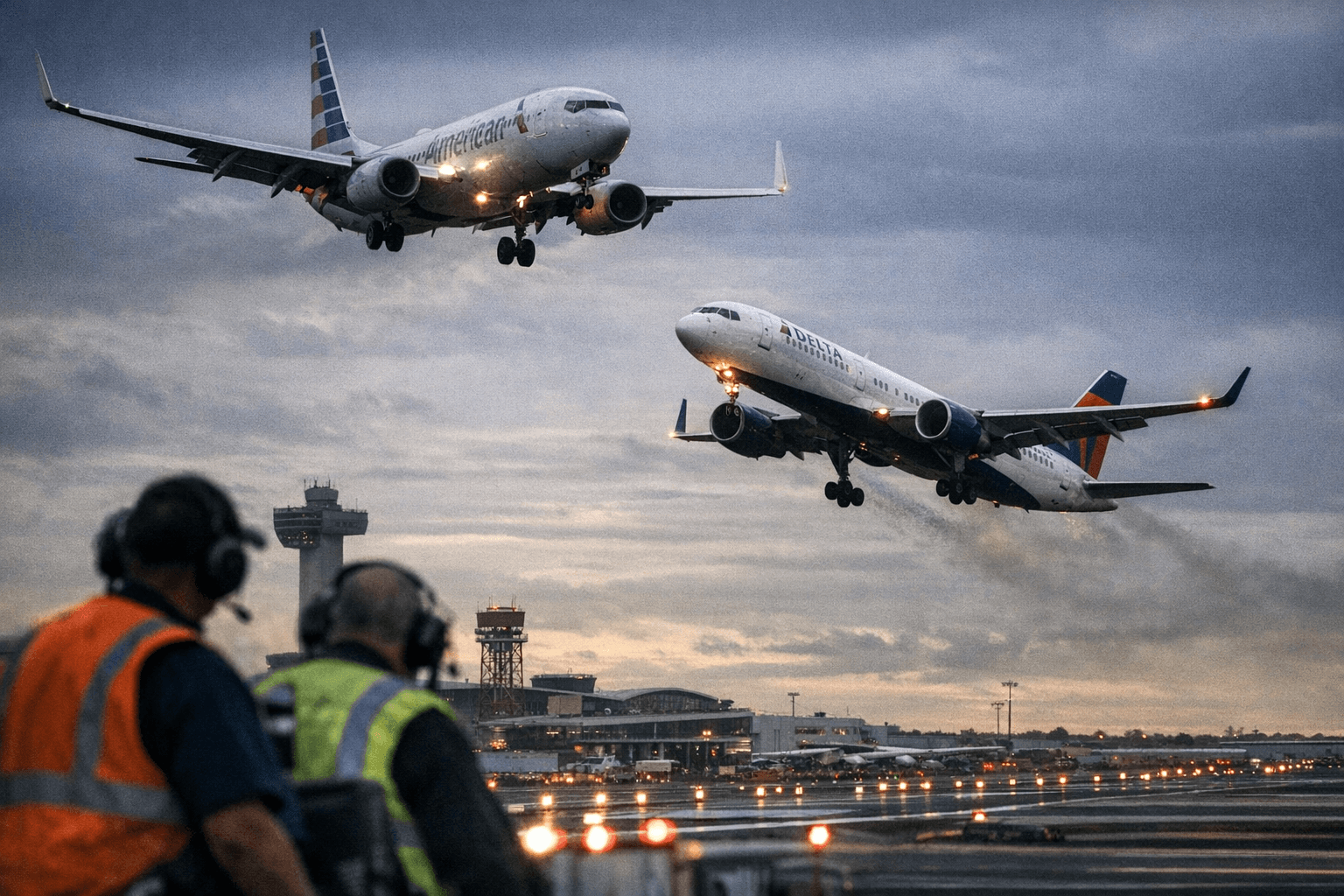
A close call over John F. Kennedy International Airport ended without a collision only because both crews reacted fast, one aircraft went around after missing its intended approach path, and onboard alerts warned the pilots in time. Republic Airways Flight 4464 and Air Canada Express Flight 8554 were converging on parallel runways on Monday afternoon when the Republic jet drifted too close to the other aircraft, triggering an urgent safety response.
The two planes were within about 350 feet vertically and 0.62 miles horizontally at their closest point, according to FlightRadar24-based tracking data cited in coverage of the incident. Republic Airways Flight 4464 broke off its landing and climbed away. Air Canada Express Flight 8554, which had been cleared to land on a parallel runway, also aborted its approach. Both aircraft later landed safely.
The Federal Aviation Administration said Tuesday that it is investigating the episode and described the information available so far as preliminary. The event places fresh scrutiny on a layer of aviation safety that normally operates without public attention: the sequence of approach clearances, runway alignment, cockpit warning systems, and controller decisions that must line up at one of the nation’s busiest airports.
The JFK incident came just days after another FAA-investigated near miss involving Southwest Airlines flights over the same weekend, when air traffic control directed two jets onto a potential collision course. The clustering of these events has intensified concern that close calls are no longer isolated misjudgments but part of a broader pressure point in the national airspace system.
The concern is sharper in New York, where the stakes were already elevated after the March 2026 crash at LaGuardia Airport, when an Air Canada Express jet struck a fire truck and killed the plane’s two pilots. With that tragedy still fresh, the latest JFK incident has renewed questions about runway safety, approach spacing, and controller workload across the region’s tightly managed air corridors.
Four commercial flights narrowly avoided collisions within a 48-hour span around the JFK episode, a pace that underscores how quickly multiple layers of protection can be tested at once. At JFK, those protections held. The wider question now is whether the system is being pushed toward more frequent breakdowns, or whether this string of near misses is exposing vulnerabilities that aviation officials will have to confront before the next warning arrives too late.
This article was produced by Prism’s automated news system from verified source data, official records, and press releases, then run through automated quality and moderation checks before publishing. The system is built and supervised by the people who set the standards it runs under. Read our full AI policy.
Did this article answer your question?