Fairfax stabbing reignites fight over sanctuary policies and prosecutorial choices
A 32-year-old man, identified as an undocumented Sierra Leone national, was charged with second-degree murder after a Hybla Valley bus stop killing, provoking sharp criticism of Fairfax County prosecution and state ICE limits.
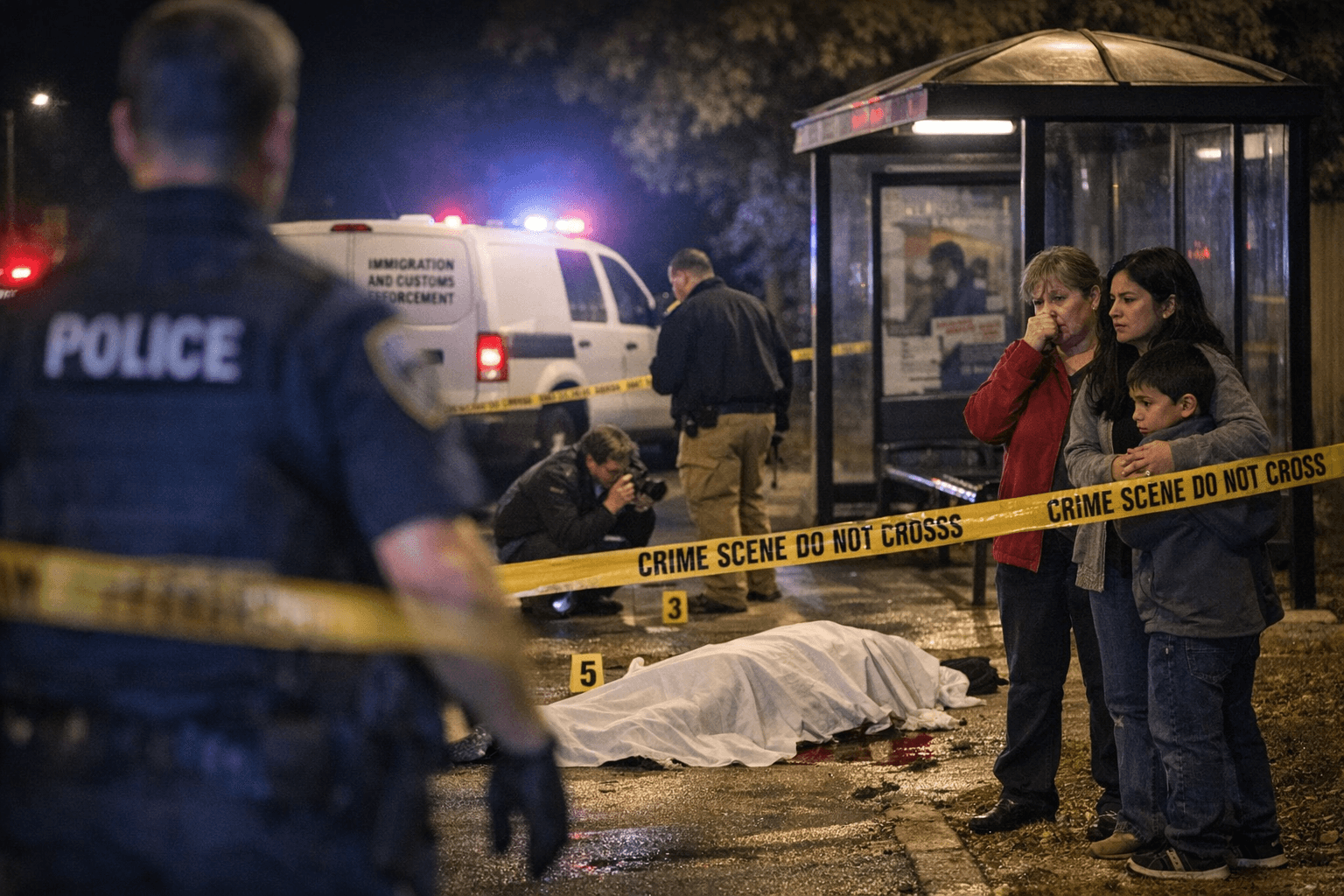
A 32-year-old man, identified as Abdul Jalloh, was charged with second-degree murder after the fatal stabbing of Stephanie Minter at a bus stop shelter in the Hybla Valley section of Fairfax County. Minter, who officials identified as a Fredericksburg resident and a mother, was found dead following the attack; local authorities made the arrest after an investigation that remains under seal.
Public records and law enforcement accounts compiled by local officials show Jalloh has an extensive arrest history in Fairfax County, with more than 40 prior charges filed over several years for allegations including rape, stabbings and assaults. Fairfax County Commonwealth’s Attorney Steve Descano has drawn fierce criticism from state and federal officials after multiple prior cases against the accused were dismissed or declined for prosecution, allowing him to return to the community prior to the killing.
The case has quickly become a flashpoint in Virginia politics and a test of how sanctuary-style policies interact with criminal-justice discretion. Del. Tom Garrett seized on the prosecutions record in a public statement: "In Fairfax County, there's a pretty good argument that not only would Stephanie Minter still be alive if we enforced our border policies, but that people who have violated our border policies actually get treated better, better!" Garrett also cited a prosecutorial standard he said guided Descano's office: "Steve will make charging and plea decisions that limit or avoid immigration consequences wherever possible." Garrett added, "I could actually understand if it said wherever practical or wherever appropriate. But no, it says 'wherever possible.' So Stephanie joins thousands who've died at the hands of people who shouldn't be here anyway, if we enforced our laws."
Police and county officials are confronting hard questions about charging decisions, detainer practices and intergovernmental cooperation. Fairfax County law enforcement operates under a Trust Policy that restricts sharing information with federal immigration authorities and, the department says, does not track crimes by immigration status. Fairfax County Public Schools adopted a similar Trust Policy in April 2022 to shield student and family information from federal immigration inquiries.
The dispute widened when Governor Abigail Spanberger issued a directive limiting state law enforcement cooperation with U.S. Immigration and Customs Enforcement, instructing agencies only to assist immigration enforcement when presented with a valid judicial warrant. Spanberger, who served in federal law enforcement, said her office "firmly believes that violent criminals who are in the United States illegally should be deported by immigration enforcement. DHS should request a signed judicial warrant to ensure this violent criminal is deported."
The U.S. Department of Homeland Security pushed back, posting on X: "Sanctuary [Spanberger] is fighting to protect a MURDERER over American citizens." County officials and some Republican lawmakers have blamed Descano's charging choices for enabling repeat offending. A local official identified only as Monahan said, "They chose to let him out. Now we have an individual who's now dead because of it. Our officers are doing their jobs. It falls with the Commonwealth’s Attorney's office. I would like to see Steve Descano take accountability for some of these cases and take accountability for Stephanie Minter’s death."
Legal commentary in the wake of the arrest highlights a legal technicality at the center of the dispute: several legal experts point out that ICE does not require a judicial warrant to make an immigration arrest and that requiring one is a local policy choice, not a federal mandate. That legal distinction will shape the next phase of the debate over accountability, which is likely to center on prosecutorial memos, jail booking records and whether ICE lodged detainers that were honored or ignored.
Beyond the immediate political backlash, the case underscores a broader tension between public-safety imperatives and policies designed to protect immigrant communities from federal enforcement. Officials and investigators now face a checklist of records and decisions to assemble if they are to determine whether prosecutorial discretion or policy choices materially altered the chain of events that led to Minter’s death. The answers will shape local practice and statewide cooperation with ICE going forward.
This article was produced by Prism’s automated news system from verified source data, official records, and press releases, then run through automated quality and moderation checks before publishing. The system is built and supervised by the people who set the standards it runs under. Read our full AI policy.
Did this article answer your question?

