Families mourn Air India crash victims at Ahmedabad anniversary tribute
Portraits, lamps and prayers marked the Air India crash anniversary in Ahmedabad as families waited for answers, justice and a final cause for the 260 deaths.
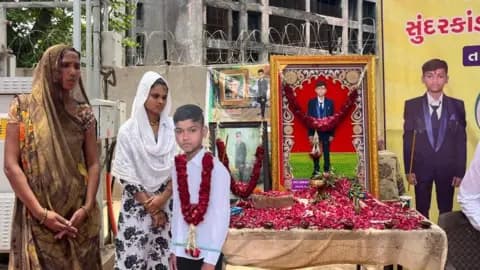
Families returned to the crash site in Ahmedabad with portraits, flowers and lit lamps on the first anniversary of the Air India disaster, mourning loved ones while still waiting for a full account of why a London-bound Boeing 787-8 Dreamliner went down. The June 12, 2025 crash killed 260 people, including 241 aboard the plane and 19 on the ground, after the aircraft struck a medical college hostel complex in Gujarat shortly after takeoff.
At the site and at B.J. Medical College, relatives gathered for prayers and a candlelight tribute that mixed private grief with public demands for transparency. Among them was Sita Patni, who mourned her 14-year-old son, Akash Patni, with his portrait, a framed photograph, a life-size cutout, flowers, rose petals and lit lamps. Another family remembered a son who had worked at a tea stall before he was killed in the disaster.
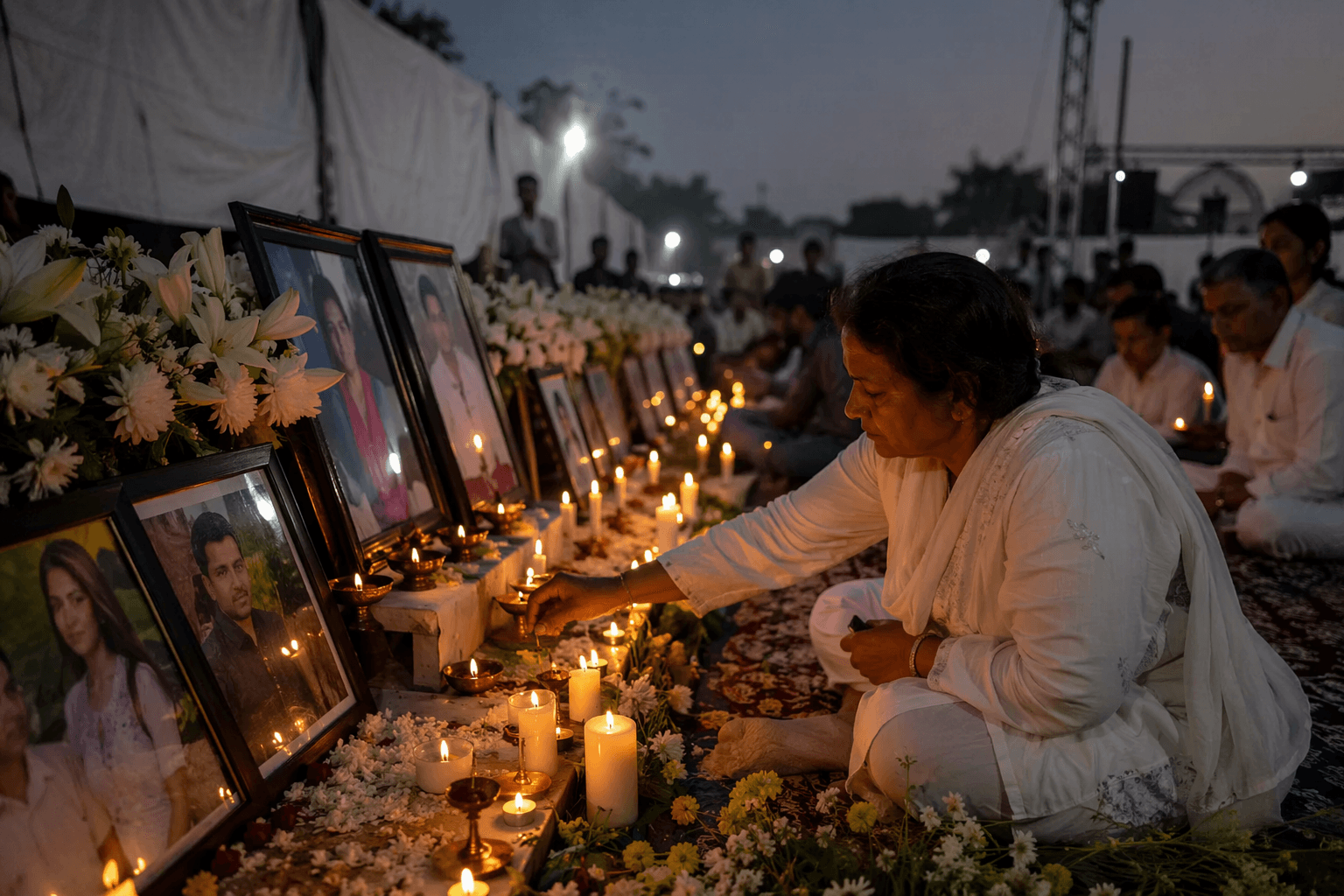
The anniversary also drew officials and foreign dignitaries, including British high commissioner to India Lindy Cameron, to a prayer meeting in memory of the dead. The loss reached across borders: the victims included 200 Indians, 52 British citizens, seven Portuguese nationals and one Canadian. Only one passenger survived, Vishwash Kumar Ramesh, who has described enduring psychological scars and unanswered questions.
One year on, the damaged hostel buildings at B.J. Medical College remained closed. The Gujarat government said they would be demolished and replaced with a new building, with funding help from Tata Group, which owns a 75% stake in Air India. The physical scars on the campus mirrored the emotional damage carried by families who said they still hear aircraft overhead and remain unable to move beyond the moment their lives changed.
The investigation has done little to ease that strain. A preliminary report from the Aircraft Accident Investigation Bureau said the Boeing 787’s engine fuel control switches moved almost simultaneously from RUN to CUTOFF moments after takeoff, starving both engines of fuel, but it did not explain why the switches were turned off. A final report was still pending a year later as engine analysis continued, fueling criticism from some relatives and pilot groups who said the process lacked transparency. Families and aviation experts were also set to discuss the path toward answers and safer skies at a conference in Ahmedabad, underscoring how the anniversary became not an end point but another chapter in a search for accountability.
This article was produced by Prism’s automated news system from verified source data, official records, and press releases, then run through automated quality and moderation checks before publishing. The system is built and supervised by the people who set the standards it runs under. Read our full AI policy.
Know something we missed? Have a correction or additional information?
Submit a Tip