Farage vows five-year asylum review, with hundreds of thousands facing deportation
Farage wants every asylum grant since 2021 reopened, a move Reform says could put about 400,000 people at risk of deportation.

Nigel Farage has promised that an incoming Reform UK government would reopen every asylum grant made over the past five years, a sweep that would reach back to claims made since 2021 and, by reporting estimates, could affect about 400,000 people. The plan would not just test individual cases. Reform’s policy document says those claims would become inadmissible for people caught by the new law, while the Home Office, immigration tribunals and higher courts would lose jurisdiction over them.
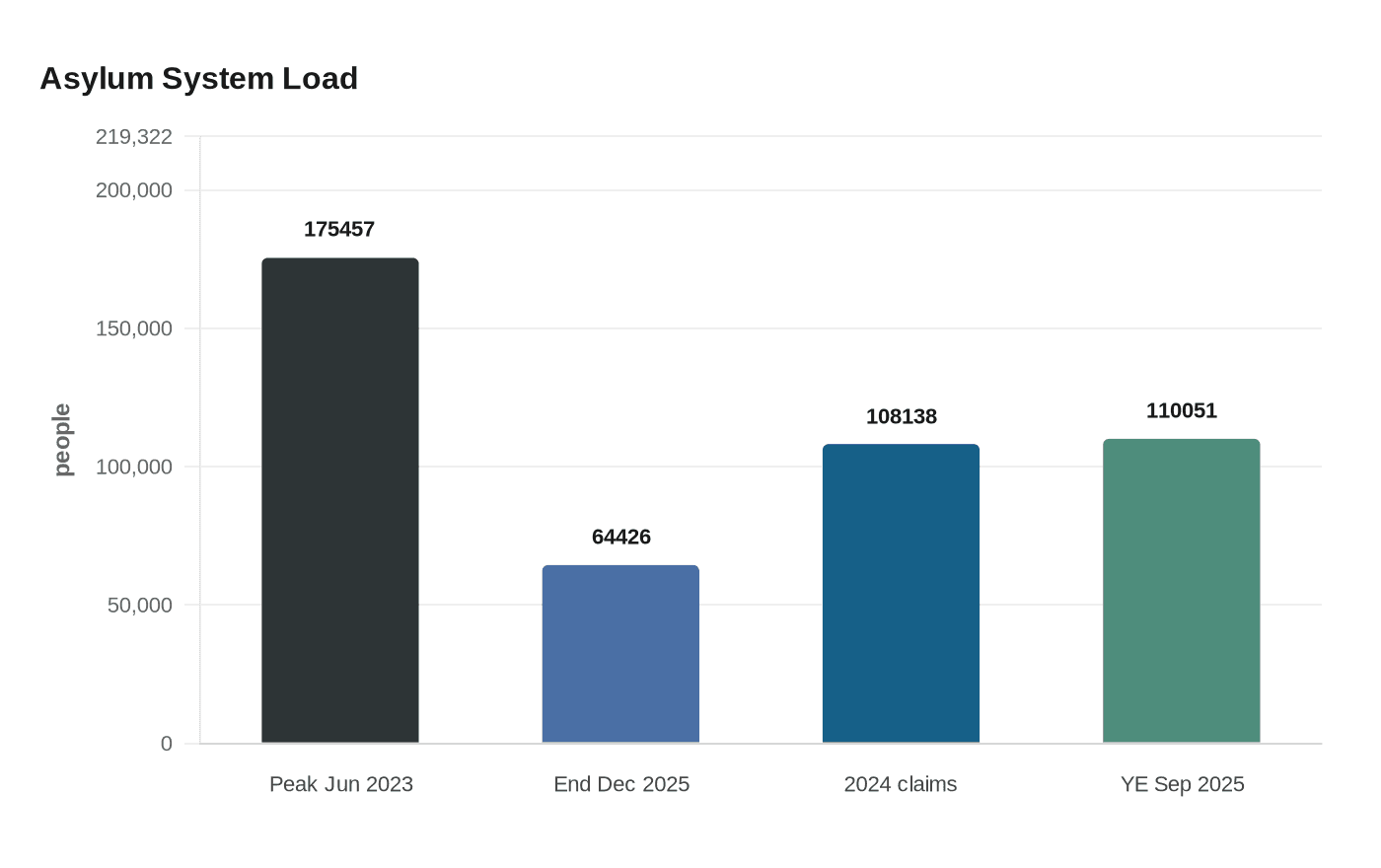
The scale collides with an asylum system that is already under strain. The United Kingdom recorded 108,138 asylum claimants in 2024, the highest on record and 18% above 2023, then 110,051 in the year ending September 2025, another record high. The National Audit Office has said there has been a notable increase in people seeking asylum since the second half of 2021, the same period Reform wants to revisit. The backlog of people waiting for an initial decision fell to 64,426 by the end of December 2025, down 63% from a June 2023 peak of 175,457, but the system would still be asked to absorb a retrospective review on a scale larger than the annual inflow.

That is the central feasibility problem. If the net pace of backlog reduction since June 2023 were applied to a 400,000-case review, the process would still run for roughly nine years, and that would be before fresh claims, appeals and removals were added. Reform’s proposal also depends on a major legal reset. Stripping out the Home Office, tribunals and higher courts would amount to a sharp cut in the ordinary machinery of challenge and review that governs asylum decisions, making the policy far more radical than a simple enforcement push.
The political context matters because Labour has already moved hard on immigration. In November 2025, the government proposed making refugee status temporary and extending the wait for permanent settlement to 20 years. That followed a wider crackdown on smuggling gangs and dangerous crossings. UNHCR welcomed the government’s concern about dangerous journeys and abuse by gangs, but stressed that refugees are not migrants and said protection must remain fair and efficient. The Refugee Council warned the reforms could harm vulnerable men, women and children, weaken integration and social cohesion, and add operational pressure to the Home Office.
What is new in Farage’s plan is not the language of toughness but the retrospective reach. Instead of tightening future arrivals alone, Reform is proposing to reopen five years of decisions, test whether people entered illegally, and send back those deemed removable. In a system already carrying record claims, a shrinking but still heavy backlog, and mounting legal sensitivity, the practical burden would fall on courts, local authorities and migrants who have already built lives in the UK.
This article was produced by Prism’s automated news system from verified source data, official records, and press releases, then run through automated quality and moderation checks before publishing. The system is built and supervised by the people who set the standards it runs under. Read our full AI policy.
Did this article answer your question?

