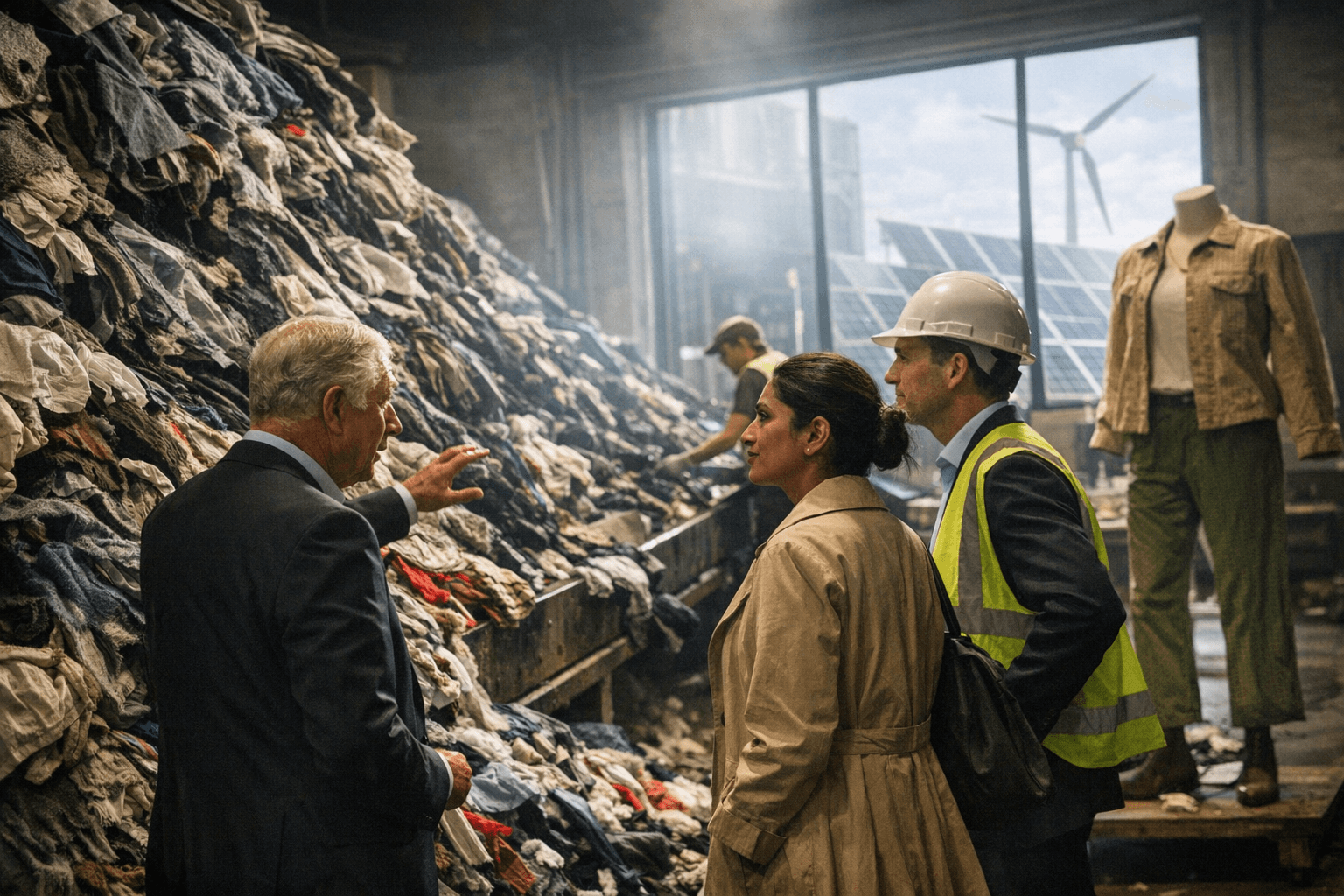
Fashion Industry Risks Missing Decarbonization Targets, Threatening Profits and Supply Chains
The Apparel Impact Institute warns inaction could shave 3% off operating margins by 2030 and cut profits by up to 70% by 2040, while fewer than 1 in 5 brands fund supplier decarbonization.
The Apparel Impact Institute’s report, The Cost of Inaction, issues a stark warning: “By 2030, brands that fail to act on three key climate risks — carbon pricing, energy volatility, and raw-material disruption — could shave 3% off their operating margin, which could cut profits by 34%. By 2040, profit losses could hit closer to 70%.” The report models an industry at risk: it says inaction could reduce the value of the $1.77 trillion fashion sector by 70% by 2040 for a conventional operator and sets a target to reduce up to 100 million tonnes of CO2 from apparel supply chains by 2030.
The financial picture outside Aii’s modeling is equally worrying. A McKinsey analysis of 30 brands and retailers finds about two-thirds of companies are behind on their decarbonization schedules, despite average Scope 3 commitments of 35% reductions by 2030; the same sample shows 40% have actually seen Scope 3 emissions rise since making pledges. McKinsey’s authors argue that “the entire fashion ecosystem will need to collaborate if the industry’s decarbonization goals are to become a reality,” highlighting supplier energy transitions and material switching as necessary behavior changes.
Bain frames the problem as both planetary and commercial: fashion represents roughly 2% of global greenhouse gas emissions, yet “companies representing just 11% of the industry’s market value are currently on track to meet their disclosed near-term goals.” Bain’s marginal abatement cost curve suggests apparel must prioritize sourcing and energy, while luxury houses should sharpen forecasting and scale resale. Bain adds a practical lever: upcoming EU digital product passport requirements could enable services such as a one-click resale button or automated buy-back that convert secondhand into a profitable, brand-owned channel.
Supply-chain fairness is a flashpoint. An assessment of 42 brands finds fewer than 1 in 5 provide any finance to help suppliers cut emissions; of six brands that do provide finance, five offer loans rather than grants, leaving garment suppliers to shoulder most costs. Rachel Kitchin, senior corporate campaigner at Stand.Earth, frames the equity argument bluntly: “Brands have built enormous wealth by outsourcing production and pollution to countries like Bangladesh. Now, as the climate crisis accelerates, they are demanding rapid decarbonisation without paying for it. That’s not a just transition.”
Aii and industry actors point to practical, near-term projects with favorable payback periods. The report highlights energy efficiency and heat recovery as incremental measures that “deliver meaningful near-term cost relief, build resilience, and unlock capital for future, larger-scale decarbonization efforts.” Lewis Perkins, President & CEO of Aii, says, “Collaborative investment remains a crucial pillar to maintaining business stability in the face of climate change. Mitigating these impacts will take effort from players in the industry ecosystem working together to scale deployment-ready decarbonization strategies while investing in long-term operation stability.” Ulrika Leverenz of H&M Group’s Green Investments echoes that collaboration, noting H&M’s financial solutions to accelerate supplier decarbonization and calling for wide industry cooperation.
The takeaway for brands is precise and immediate: early investment can pay, with Aii estimating a 2% bump on EBIT, improved liquidity, and a 5 to 10% valuation premium for climate-aligned portfolios, while delay risks margin erosion, supply-chain disruption, and steep valuation loss by 2040. If fashion is to decouple profitability from climate-volatile inputs and hit near-term goals, procurement, finance and product-design teams must join sustainability functions and fund supplier transitions now to protect profits and keep supply chains running.
Know something we missed? Have a correction or additional information?
Submit a Tip