Fast, Repeatable Basing and Display Techniques for Competition, Commissions, and Tabletop Miniatures
Quick, repeatable basing systems let you batch-process display-ready miniatures for commissions, competitions, and tabletop — practical steps, kit picks, and display tricks you can copy tonight.
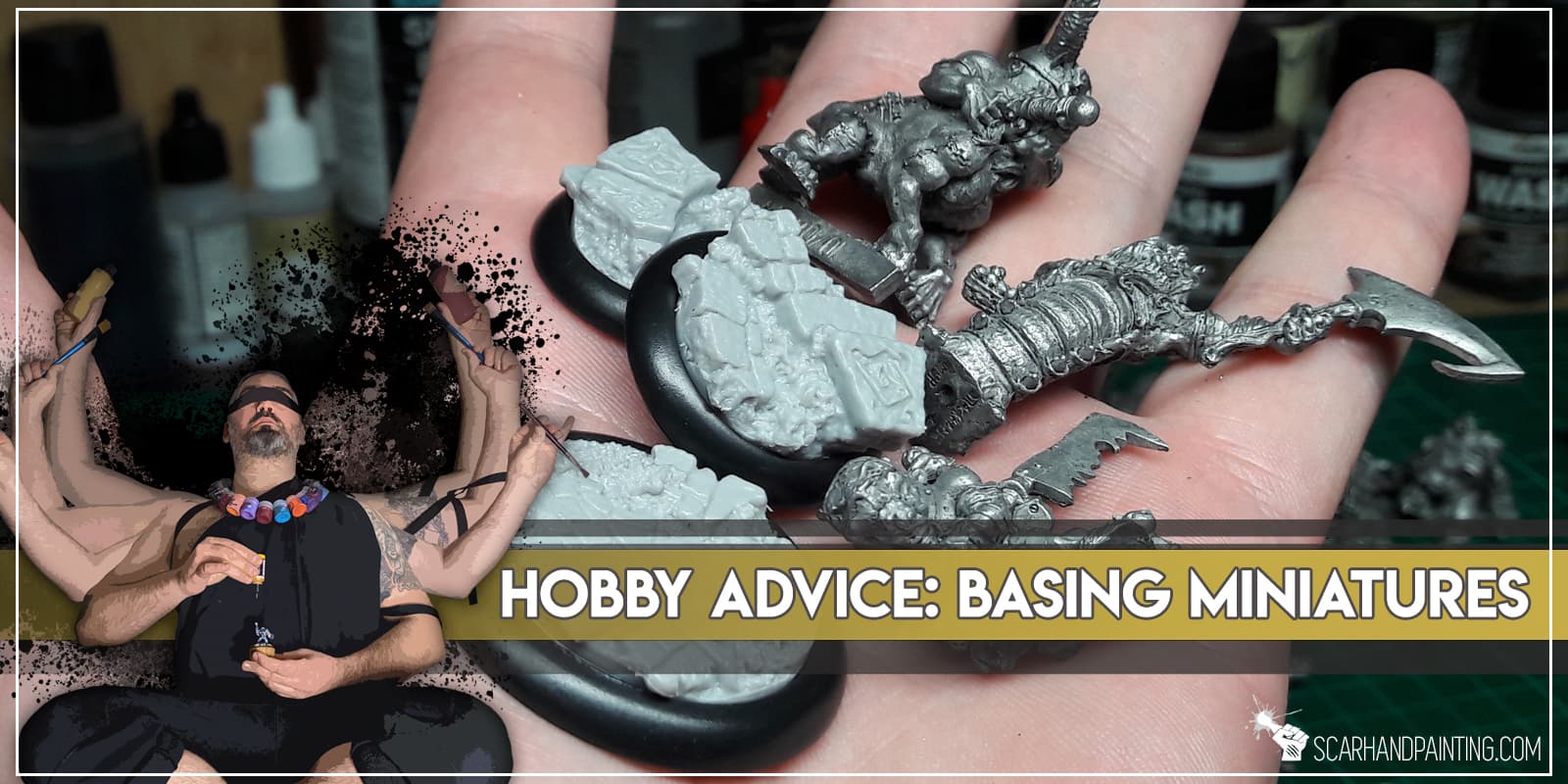
If you want bases that win judges’ eyes, keep clients coming, and survive a dozen tabletop sessions, treat basing as a reproducible system instead of an afterthought. That’s the lesson from painters like Josh at JW Mini Painting who build workflows around the same three moves for every project: batch prep, single-pass texture, and modular scenic inserts. And yes — the community metric that 100% of readers view without sharing is a reminder: make your basing visually decisive enough that others will want to save or repost it.
1. Batch prep: standardize parts and zones before painting
Set aside one session to glue in magnets, pin models, and affix any permanent kitbashing elements; Josh’s approach at JW Mini Painting is to treat this like a production line so painting sessions never stall on fiddly base tasks. Use identical base sizes for commission runs (e.g., all 25mm infantry or 40mm characters) and mark zones on your work tray: focal rock, mid-ground gravel, and edge rim. When bases are prepped the same way, washes, drybrushing, and varnish steps read across the whole batch — judges and clients notice consistent edges and repeatable lighting behavior.
2. Fast texture methods: choose one go-to for speed
Pick a single texturing technique you can do quickly and repeatedly: a PVA + sand mix, a commercial texture paint, or pre-mixed modeling paste. Each method has trade-offs — PVA + sand is cheap and fast for large batches, texture paints give reliable raised detail without sanding, and modeling paste offers sculpted control for focal bits. Keep a labeled pot of your chosen medium and a single scoop tool so every base gets the same grain size; repeatability beats variety when you’re chasing uniform presentation for commissions or competition entries.
3. Modular scenic inserts: build a parts kit for quick focal points
Assemble a small, consistent parts kit — a handful of cork rocks, two sizes of resin cast stones, a pack of Spikey Bits basing clumps, and several tufts — so you can add a focal element in under a minute. Modular inserts let you vary silhouettes without redeveloping a whole base, which is critical when prepping many minis for a commission gallery or a display tray. Store parts in labeled dividers and photograph a “kit map” on your phone so you can re-create the same placement choices for future batches.
4. Tufts, grass, and foliage: placement rules that read at a glance
Use tufts and static grass to direct the eye: always place the largest tuft offset from the model’s centerline, and use smaller clumps to lead toward weapon points or faces. Spikey Bits remains a go-to source for ready-made foliage and clump materials that cut minutes off every base; for tabletop sets, prioritize durability — glue tufts with cyanoacrylate rather than PVA for better wear. Keep a small palette of three tuft colors (green, dead-brown, and green-brown mix) to match different table themes without overcomplicating the process.
5. Rockwork and cork: fast sculpting without Green Stuff reliance
Cork and ready-cast resin rocks give convincing elevation quickly; when sculpting is necessary, plan around availability — recent Green Stuff shortages have made suppliers and painters more likely to rely on premade pieces and epoxy putties as backups. Use a utility knife to slice cork into believable strata, attach with superglue, then texture with your chosen medium. For commissions where the client expects bespoke terrain, reserve hand-sculpted Green Stuff elements for focal features and substitute premade bits elsewhere to keep timelines predictable.
6. Rim treatment and color consistency: the small detail judges see first
Decide a rim color and finish for each project type and apply it last to avoid touch-ups: matte black for competitive entries, a muted brown for historical or tabletop minis, or a gloss varnish if you’re aiming for diorama sheen. Paint rims with a dedicated angled brush and keep a jig or clip to hold bases steady; consistent rim width and color across a set gives an immediate impression of professionalism Clients and judges often judge by thumbnail — uniform rim treatment makes that thumbnail sing. Record the hex or paint name you used (e.g., "Vallejo Model Color 70.987") in your project notes so you can reproduce it for future commissions.
7. Display-ready photography and trays: what to show clients and judges
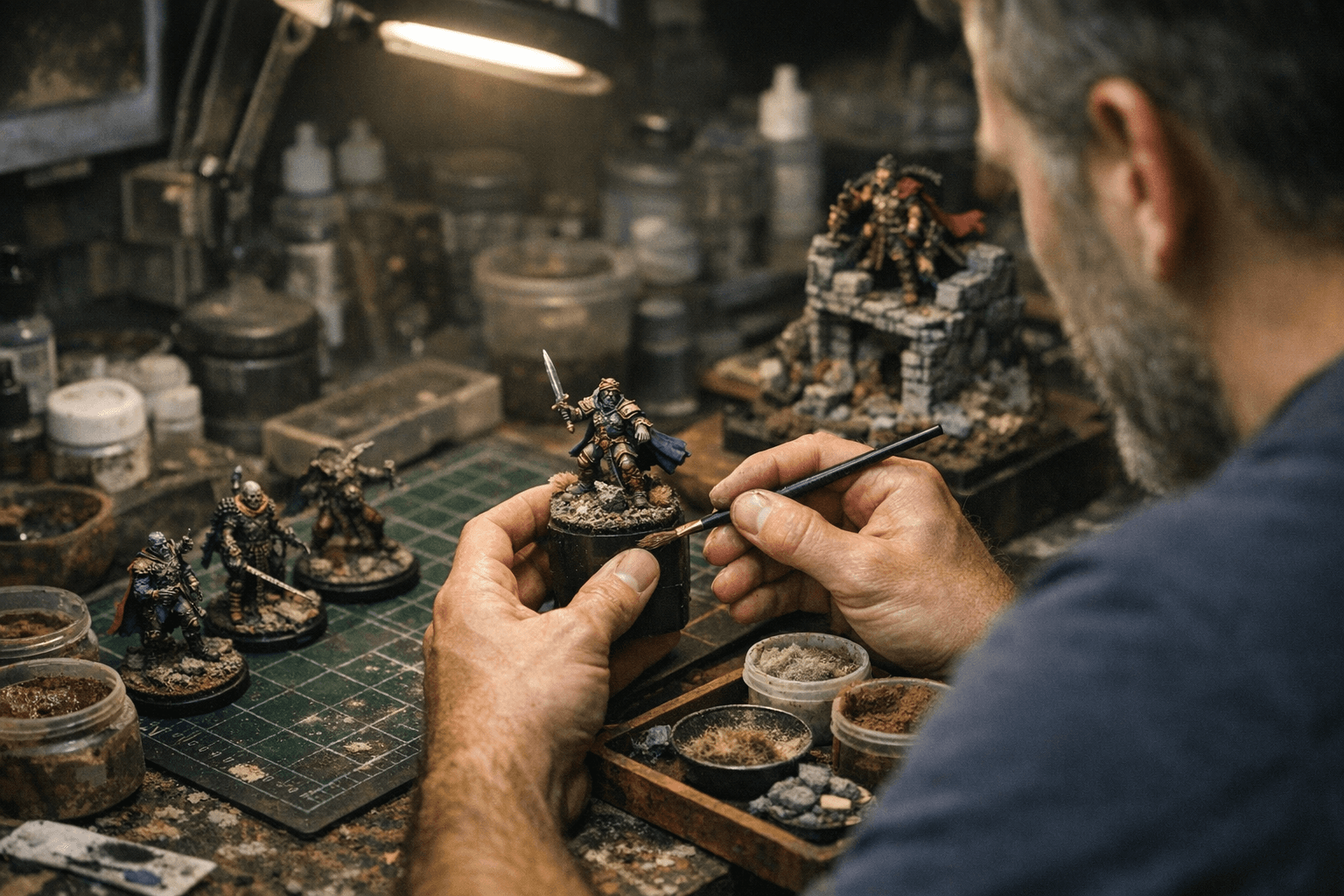
Design a display tray system that translates to photos: neutral gray or slightly desaturated two-tone backdrops work best for competition entries, while tabletop previews can use thematic mats. Miniswap and other community marketplaces are useful for sourcing secondhand display trays, risers, or acrylic cases if you’re building a commission presentation on a budget. When shooting, use diffused light and a small fill card to keep basing textures visible; consistent photography standards across your portfolio will help clients compare options and judges evaluate basing choices objectively.
8. Protection, packaging, and delivery: make bases survive repeat handling
Seal textured bases with a matte spray to lock sand and fibers, then spot-seal delicate tufts with cyanoacrylate to prevent shedding in transit. For commissions, package individual minis with foam between bases and include a small printed “base notes” card describing materials used (e.g., cork, Spikey Bits clumps, texture paint) so clients understand choices and future touch-ups. If you ship frequently, maintain an inventory on Miniswap and supplier sites to replace specific tufts or premade rocks quickly when a batch runs low.
9. Repeatable workflows for different goals: competition, commission, tabletop
Tailor the same core workflow for each end use: competitions need immaculate rim edges and consistent photography; commissions require communication and documentation (kit maps, color swatches); tabletop priorities tilt to durability and quick repairs. Keep three checklists — Competition, Commission, Tabletop — clipped to your bench with exact materials and steps for each job type so you never miss a requirement when switching context. This is the system-level thinking that painters at JW Mini Painting use to scale without sacrificing quality.
10. Maintain a parts pipeline: sourcing and substitution strategies
With supply quirks like the Green Stuff shortage, build redundancy: two putty options, three tuft suppliers (including Spikey Bits), and at least one secondhand parts source like Miniswap. Track reorder points in a simple spreadsheet — when you drop below two packs of the base texture paint you rely on, reorder immediately — and photograph alternative parts in case you need to propose substitutions to a client. A predictable parts pipeline keeps commissions on schedule and prevents last-minute display compromises.
Final note: make basing a signature Basing is your silent salesperson: repeatable, camera-friendly bases make judges’ lives simpler, clients’ tastes easier to match, and tabletop groups more likely to invite you back. Treat it like a product: standardize materials, document decisions, and build a small parts kit (cork, Spikey Bits clumps, two tuft colors, texture medium) you trust. Do this, and you’ll be able to turn out consistent, display-ready miniatures that hold up in competition, in commissions, and across the tabletop.
Know something we missed? Have a correction or additional information?
Submit a Tip