Father spots son’s stroke signs, swift action saves his life
Geno Mueller survived because his father recognized stroke signs fast, a reminder that F-A-S-T can turn a family scare into a lifesaving response.

Geno Mueller survived a stroke because his father caught the warning signs fast enough to get him lifesaving help. In a medical emergency where every minute matters, that split-second recognition made the difference between tragedy and survival.
His case puts a familiar public-health lesson in sharp focus: stroke is not only an older adult emergency, and it does not always arrive with a dramatic collapse. Families, teachers and coaches are often the first to notice that something is wrong, which is why the American Stroke Association urges people to remember F-A-S-T: Face drooping, Arm weakness, Speech difficulty, and Time to call 911.
That acronym is more than a memory aid. It is a checklist for action. Face drooping can show up as an uneven smile. Arm weakness can appear when one arm drifts downward or cannot be lifted normally. Speech difficulty may sound like slurring, confusion or trouble getting words out. The final letter is the one that decides outcomes: Time to call 911 immediately.
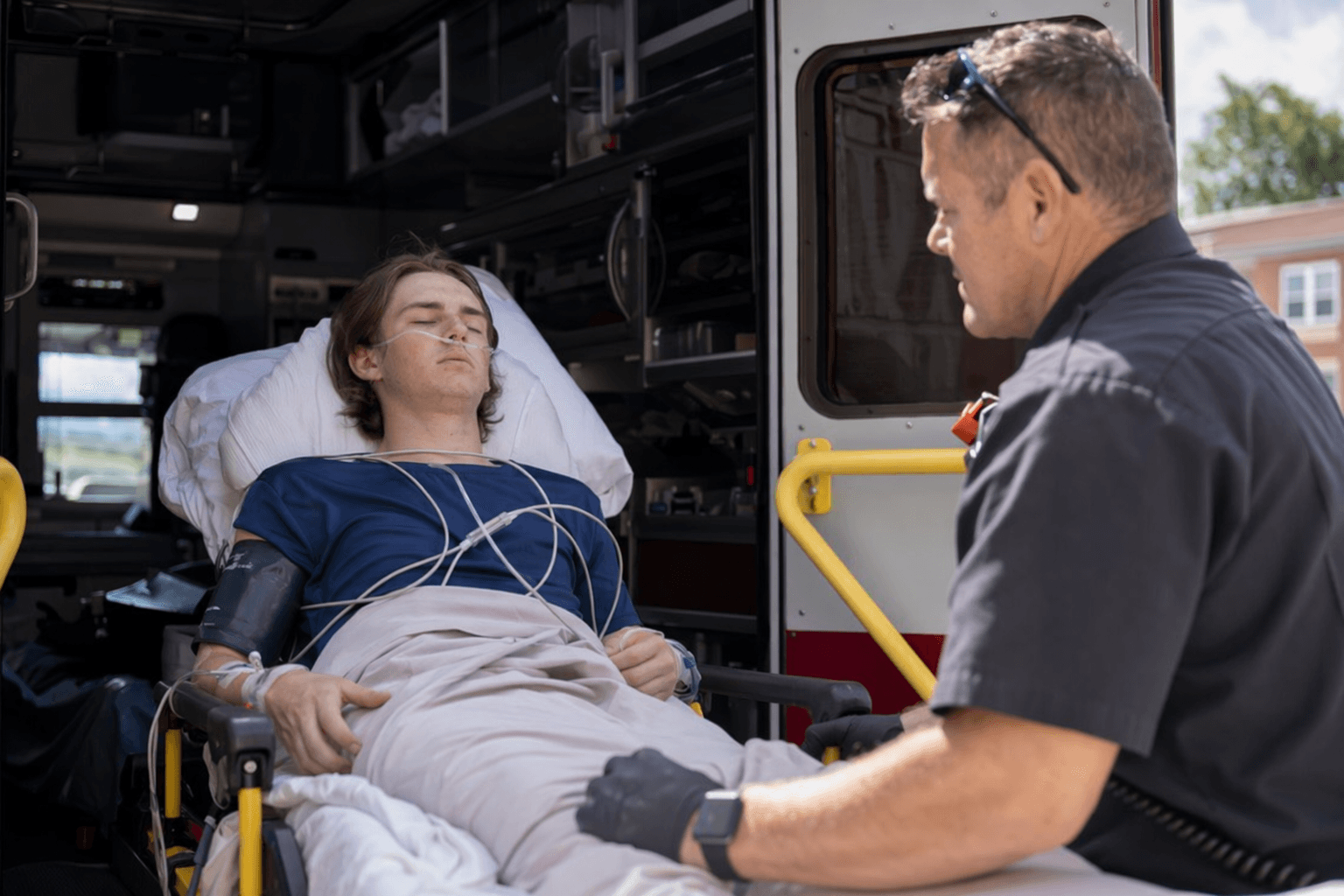
Geno Mueller’s survival underscores how quickly stroke care has to begin. Emergency treatment works best when patients arrive fast, because doctors can move sooner to restore blood flow and limit brain injury. Delays can cost speech, movement and, in some cases, life itself.
A separate case involving John Hall shows how often the first response comes from inside the family. Hall was behind the wheel when he suffered a stroke, and his 16-year-old son, Evan Hall, jumped into action using skills he had learned in the Boy Scouts. The episode is a reminder that bystanders do not need a medical degree to save precious time; they need to recognize danger and call for help.

That is the larger lesson in Geno Mueller’s story. Stroke can happen in children and adults alike, and the difference between recovery and permanent damage often comes down to whether someone nearby knows what to look for and acts without hesitation. F-A-S-T gives families, schools and communities a clear way to respond when seconds count.
Know something we missed? Have a correction or additional information?
Submit a Tip