Father's life experiences may leave epigenetic marks in sperm, study finds
Sperm may carry molecular traces of a father’s stress and health, but the research still points to possibility, not destiny. The strongest evidence comes from mouse experiments and emerging human studies.
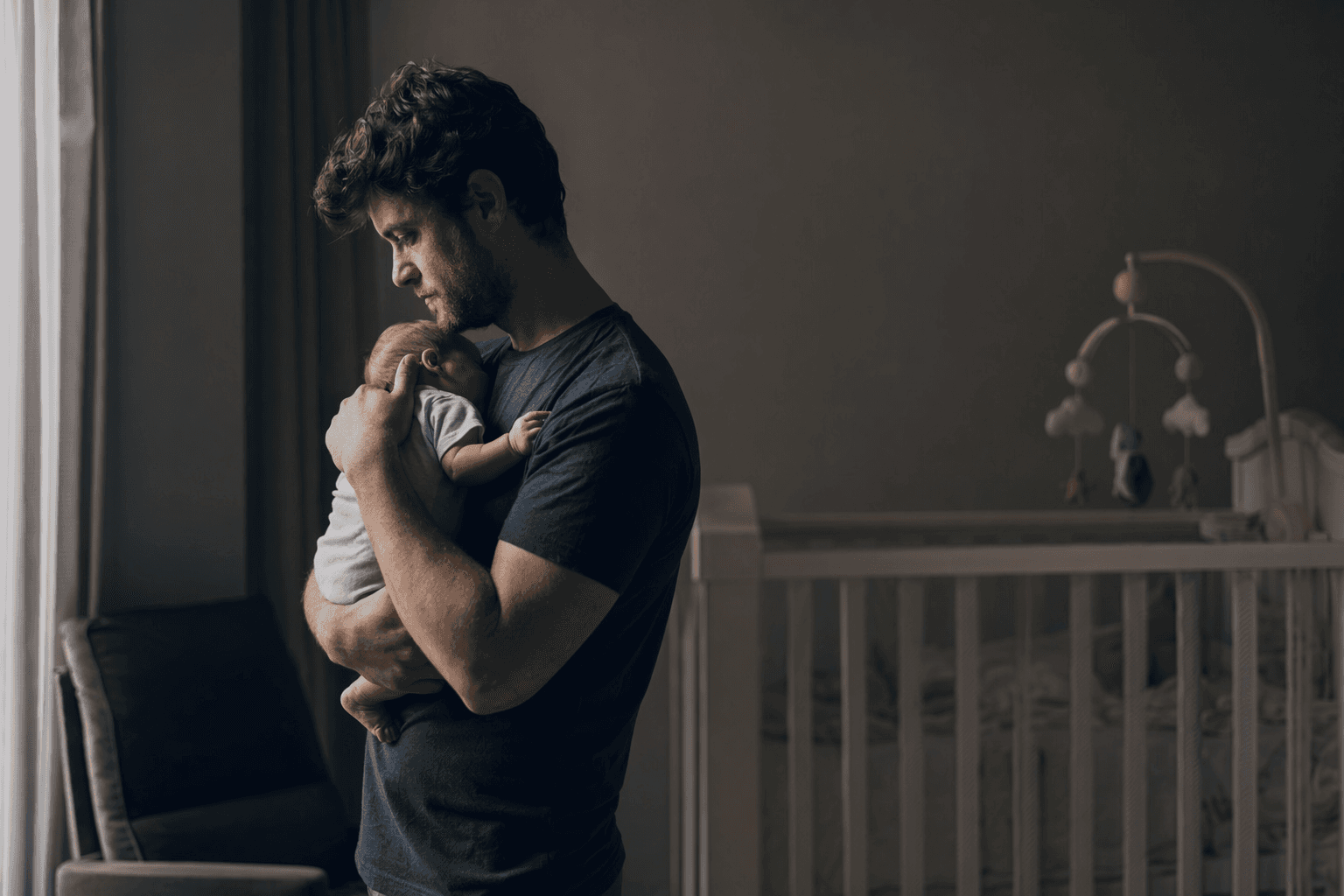
What the new science is really saying
Sperm may carry more than DNA, and that possibility is reshaping how researchers think about inheritance. Evidence is building that a father’s life experiences, including trauma, diet, stress, and nicotine use, can leave molecular marks in sperm that may influence the next generation without changing the genetic code itself.
That does not mean a child is predetermined by a parent’s past. It does mean the old picture of inheritance as DNA alone is too simple, and the stakes are larger than a single lab finding. For families, clinicians, and public-health officials, the emerging question is whether preconception health in men deserves far more attention than it has received.
From fringe idea to serious research question
A decade ago, the suggestion that sperm could carry experience-based biological memory was still controversial. Today, reviews in the field treat it as a serious research question, even though the exact mechanism and the scope of what can be passed on remain unresolved.
Recent work points to several candidate carriers: sperm small non-coding RNAs, DNA methylation, chromatin modifications, and RNA modifications. Researchers including Katharina Gapp, Isabelle M. Mansuy, Upasna Sharma, Oliver J. Rando, Noora Kotaja, Jetro Tuulari, Alyssa Jeng, and Nickole Moon have helped push the discussion from speculation toward mechanism, with work spanning Switzerland, Finland, the United States, and the University of California, Santa Cruz Sharma Lab.
One key reason the field has gained traction is that mature sperm RNA appears to be more than cellular leftover. Biology of Reproduction has described these RNAs as a retrospective of spermatogenesis, reflecting sperm maturation, fertility potential, and the paternal contribution to the developmental path an offspring may follow. Nature Reviews Genetics has also argued that RNA modifications in sperm may play an essential role in epigenetic memory.
The mouse study that changed the conversation
The modern debate sharpened in 2014, when Katharina Gapp and colleagues reported in Nature Neuroscience that sperm RNA from traumatized male mice could reproduce behavioral and metabolic alterations in offspring after being injected into fertilized eggs. That result gave researchers a plausible carrier for inherited stress effects and offered a concrete biological route for how experience could leave a trace in the next generation.
The point was not that trauma was magically encoded in DNA. It was that sperm RNA could help convey a signal from father to embryo, with measurable effects later in life. For a field that had long been split between skepticism and curiosity, the experiment provided a powerful proof of principle.
What human studies are now finding
Human data are more complicated, but they are beginning to align with the animal findings. A 2024 Molecular Psychiatry study examined sperm from men exposed to childhood maltreatment and found molecular associations in sperm-borne small RNAs. The work used the Trauma and Distress Scale questionnaire and helped move the discussion from laboratory plausibility toward human relevance.
The most detailed evidence so far came from a 2025 Nature paper involving the FinnBrain Birth Cohort Study in Finland. The research found that paternal childhood maltreatment was associated with specific changes in sperm small RNAs and DNA methylation, a pattern that suggests early-life adversity can leave a measurable molecular signature in sperm.
The Finnish team described the project as the largest and most comprehensive human study in the area to date. In the DNA-methylation analyses, 55 middle-aged men took part, with 25 in the high-trauma group and 30 in the low-trauma group. The scale still leaves plenty unanswered, but it raises the level of confidence that the signal is real enough to investigate seriously.
Why the biology is promising, and why it is still hard
The strongest caution in this story is also the most important. These studies show associations and experimental plausibility, not proof that trauma, diet, or nicotine exposure is transmitted to children in humans in any deterministic way. The line between a molecular mark and an inherited trait is long, and many steps can break the chain.
That caution matters because mammalian reproduction contains powerful reset mechanisms. Fertilized eggs erase most methylation marks after conception, and mature sperm replaces most histones, which means any heritable signal must survive substantial reprogramming before it could influence development. In other words, the biology is not only intriguing; it is also guarded by built-in resistance to inheritance.
Researchers now think sperm-borne RNA, DNA methylation, chromatin structure, and RNA modifications may work together rather than separately. Newer reporting suggests the mechanism is becoming less mysterious as scientists learn how sperm RNA is packaged and how it may influence embryo development, but the field still does not know how many traits can realistically be passed this way, or which exposures matter most.
What this could mean for fathers before conception
The practical takeaway is not that fathers are responsible for every outcome in a child’s future. It is that a man’s health before conception may matter more than the public has been told to assume. If these findings continue to hold up, they could influence preconception counseling, mental-health care, nicotine cessation, workplace exposure rules, and broader public-health messaging about men’s reproductive health.
That would be a significant shift in how inheritance is discussed in the United States. The familiar debate about genes versus environment would give way to a more demanding view: fathers may carry biological echoes of their own histories, but those echoes are not fate, and they are not yet a map of what will happen in children.
The science is still early, but the direction is unmistakable. Sperm is looking less like a sealed package of DNA and more like a biological record of lived experience, one that may help shape the next generation without dictating it.
This article was produced by Prism’s automated news system from verified source data, official records, and press releases, then run through automated quality and moderation checks before publishing. The system is built and supervised by the people who set the standards it runs under. Read our full AI policy.
Did this article answer your question?


