FBI Labels West Bloomfield Synagogue Attack Hezbollah-Inspired Act of Terrorism
A 41-year-old Dearborn Heights man recorded a video vowing to kill as many as possible before ramming a gas-filled truck into a Detroit-area synagogue.
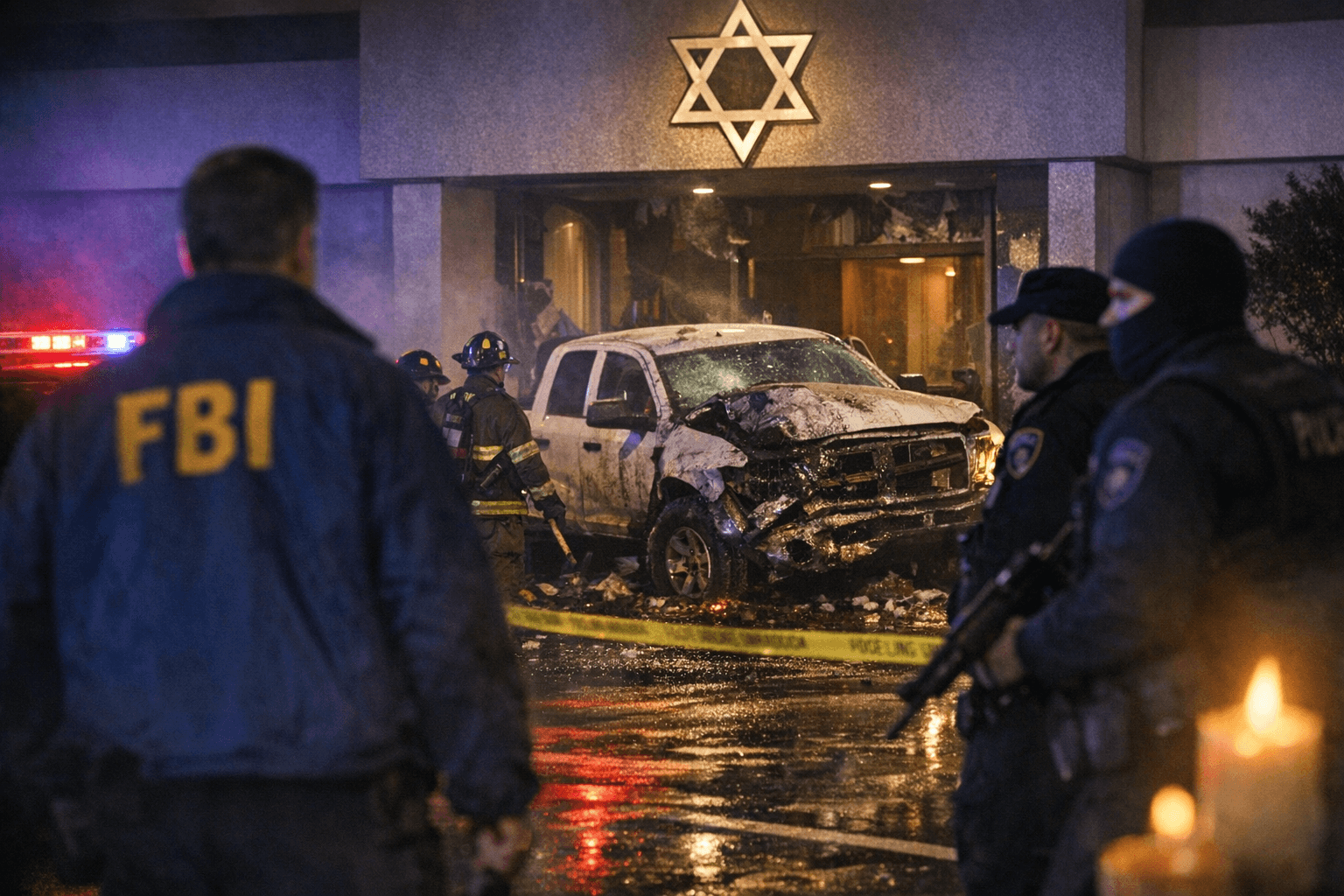
When FBI Special Agent in Charge Jennifer Runyan stood before cameras on March 30 to deliver what she called a final investigative update, she was deliberate about one word: terrorism. The FBI does not make that determination lightly, Runyan explained, defining it as violent criminal acts committed by individuals inspired by or associated with an internationally designated foreign terrorist organization. The evidence against Ayman Mohamad Ghazali, the 41-year-old Dearborn Heights man who drove a gasoline-loaded Ford F-150 into Temple Israel in West Bloomfield Township on March 12, met that threshold, she said.
The case rested on hundreds of digital and forensic evidence items and more than 100 interviews with witnesses, family members, and associates. Investigators found that Ghazali had produced videos embracing militant ideology tied to Hezbollah, had searched for Michigan synagogues and Jewish cultural sites in the days before the attack, and had surveyed congregation schedules to identify what he believed was the state's largest gathering of Israelis.
Three days before the attack, on March 9, Ghazali purchased an AK-style rifle and approximately 300 rounds of ammunition, then practiced at a shooting range. He stocked his Ford F-150 with more than 113 liters of gasoline and commercial-grade fireworks. About 10 minutes before driving into the synagogue's entrance, he recorded a video message stating he wanted to "kill as many of them as I possibly can," Runyan said.
The FBI stopped short of designating Ghazali an official Hezbollah member. What investigators documented instead was sustained consumption of pro-Hezbollah and Iranian media, a planning sequence consistent with the group's operational ideology, and messaging aligned with its militant worldview. U.S. Attorney Jerome Gorgon drew a direct historical line, comparing the vehicle-borne accelerant tactic to Hezbollah's 1983 bombing of the U.S. Marines barracks in Beirut, calling the West Bloomfield attack "exactly what this terrorist did a few weeks ago in our backyard."
The attack targeted Temple Israel's preschool and early-childhood education facilities while children and staff were present. No children were injured. A security guard was wounded in a gunfire exchange with Ghazali before he fatally shot himself.
The terrorism designation carries national implications beyond the Detroit case. Classifying the incident as inspired by a foreign terrorist organization rather than as a hate crime unlocks different interagency protocols and federal security funding channels for religious institutions. Local leaders and law enforcement called for heightened vigilance at synagogues and Jewish cultural sites across the country in the wake of the FBI's conclusion. The Bureau established a Virtual Assistance Center for Temple Israel victims and said it continues to work with local and international partners.
Investigators remain focused on Ghazali's overseas ties and family connections, seeking to understand how he radicalized and whether any co-conspirators or broader network connections remain unaccounted for. Those answers will matter not only to the Temple Israel community but to federal agencies recalibrating how they assess and fund protections for religious sites in an era when Hezbollah's militant ideology has apparently found a foothold in suburban Michigan.
This article was produced by Prism’s automated news system from verified source data, official records, and press releases, then run through automated quality and moderation checks before publishing. The system is built and supervised by the people who set the standards it runs under. Read our full AI policy.
Did this article answer your question?