FBI Team Arrives in Havana to Probe Deadly Speedboat Confrontation
Five men died when Cuba's Border Patrol opened fire on a Florida speedboat carrying 13 rifles and nearly 13,000 rounds; the FBI is now in Havana to find out why.

A technical team from the FBI landed in Havana this week to conduct an independent investigation into the February 25 shootout between Cuba's Border Patrol and a Florida-registered speedboat that left five men dead and five others in Cuban custody facing terrorism charges that carry potential life sentences.
The confrontation unfolded in Cuban waters north of the island when a coast guard vessel approached the speedboat to demand identification. According to Cuban authorities, the crew opened fire first; Cuban forces returned fire, killing four men immediately. A fifth later died from his injuries. Six others were wounded and taken into custody, though some accounts from Cuban officials put the detained survivors at five. Cuban President Miguel Díaz-Canel had signaled in March that he expected U.S. agents to travel to the island to assist in the inquiry.
The arsenal Havana displayed in the days after the clash underscored the weight of the terrorism designation: 13 rifles, 11 pistols, nearly 13,000 rounds of ammunition, body armor, helmets, uniforms, Molotov cocktails, a satellite communications unit, and an electric generator. Cuban authorities identified all 10 people on the boat as Cuban nationals living in the United States, saying most had prior criminal records.
A U.S. diplomatic official, speaking on background because they were not authorized to comment publicly, said the FBI team arrived Tuesday to carry out "a thorough and independent investigation." The official declined to say how many agents were deployed or how long they would remain on the island. Secretary of State Marco Rubio had framed the U.S. position clearly in February, saying the incursion was not a government operation: "We will verify that independently. But we're going to find out exactly what happened here, and then we'll respond accordingly."
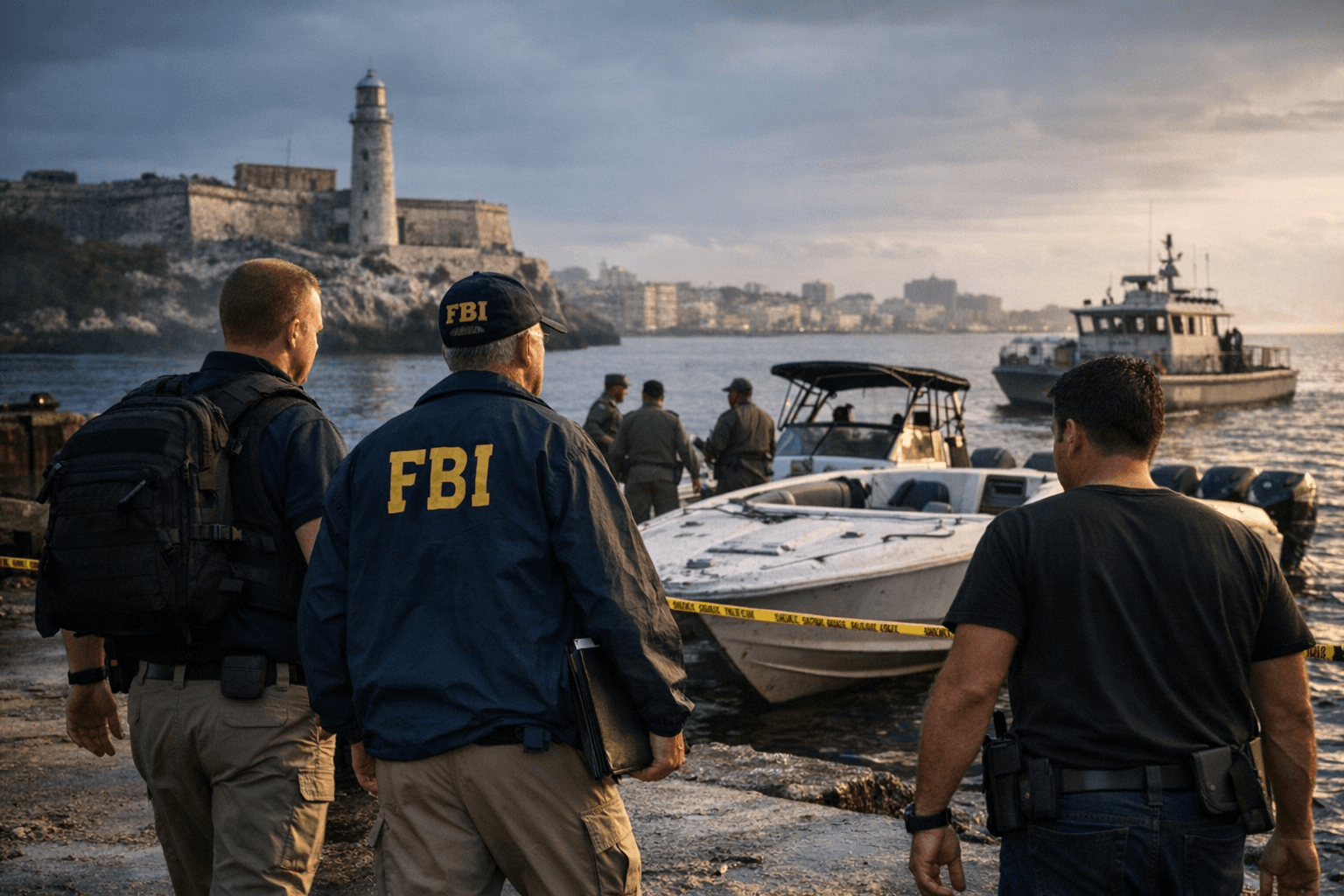
Washington's disavowal and the FBI's arrival represent a rare operational overlap between two governments whose broader relationship has been under significant strain. Since returning to office, the Trump administration has taken a more confrontational posture toward Cuba, and Cuban officials have accused U.S.-based exile networks of organizing violent actions from abroad.
What the FBI team can actually do inside Cuba remains constrained by jurisdiction: agents cannot compel testimony, access physical evidence unilaterally, or operate outside what Havana permits. Their findings could still carry significant weight, either corroborating or complicating Cuba's account of who organized the operation, how the boat departed from Florida undetected, and whether any networks in the United States bear criminal exposure. For the five survivors held in Cuban jails, the outcome of that inquiry may determine whether Washington pursues its own legal avenues or leaves them entirely to the Cuban justice system.
This article was produced by Prism’s automated news system from verified source data, official records, and press releases, then run through automated quality and moderation checks before publishing. The system is built and supervised by the people who set the standards it runs under. Read our full AI policy.
Did this article answer your question?


