FCC tells talk shows they must honor equal-time rules for candidates
The FCC's Media Bureau clarified that daytime and late-night talk shows cannot rely on a 2006 Jay Leno exemption and must follow equal-time obligations when interviewing candidates.
The Federal Communications Commission’s Media Bureau has told broadcasters that daytime and late-night television talk shows that interview political candidates cannot assume they qualify for a longstanding news-interview exemption to the commission’s equal-time rule. The unsigned, four-page guidance, issued Jan. 21, 2026, instructs networks and programs to treat candidate appearances on such shows as potentially subject to equal-opportunity obligations unless the broadcaster secures a formal determination.
The guidance rejects reliance on a 2006 Media Bureau decision that carved out an exemption for the interview portion of Jay Leno’s Tonight Show. The new document states the bureau “has not been presented with any evidence that the interview portion of any late night or daytime television talk show program on air presently would qualify” for the news-interview exemption. It also reiterated that a program “motivated by partisan purposes, for example, would not be entitled to an exemption under longstanding FCC precedent.”
Under the equal-time rule, when a station provides free time to a political candidate it must offer comparable time and placement to rival candidates. Records of free time must be entered into the station’s public political file, and other candidates may submit equal opportunities requests; the guidance notes the burden for initiating such requests is not placed on broadcasters. The bureau advised that any program or station seeking assurances that the equal-time requirements do not apply should “promptly file a petition for a declaratory ruling.”
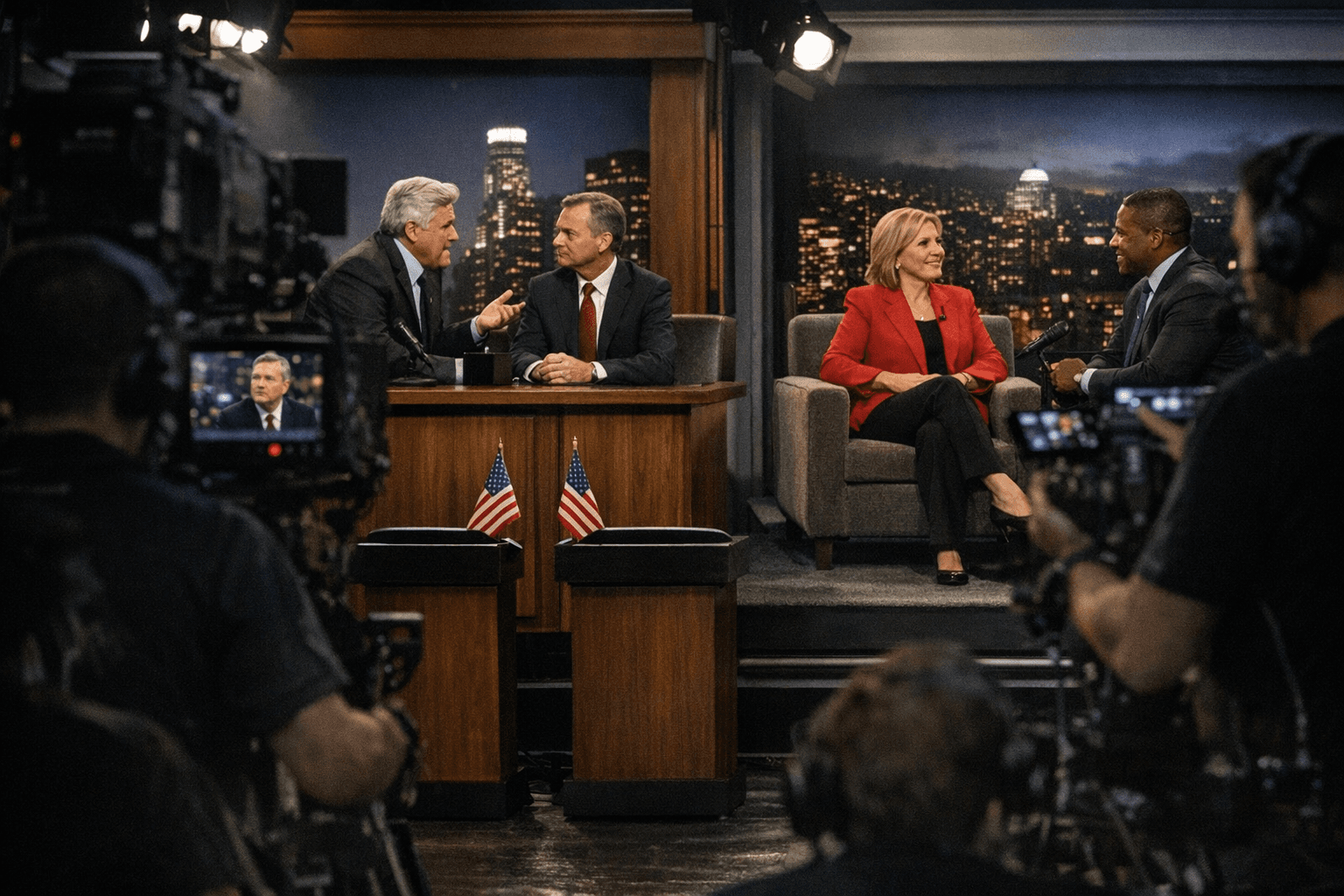
The clarification puts major daytime and late-night programs on notice. Networks have cited the 2006 Leno decision for years when booking political candidates on programs such as The View, Jimmy Kimmel Live!, The Tonight Show and The Late Show. With the 2026 midterm elections now less than 10 months away, the ruling raises the prospect that routine appearances by officeholders and challengers on entertainment-oriented platforms could trigger formal equal-time claims that require broadcasters to offer comparable access to rivals.
The guidance is closely associated with FCC Chairman Brendan Carr, who has pushed the agency to more aggressively interpret broadcast responsibilities. Carr has publicly urged networks to consider editorial lines as they relate to political coverage, and he drew bipartisan criticism last year after pressing broadcasters to take a late-night program off the air. The Media Bureau’s move signals the commission under his leadership intends to limit what it sees as reliance on prior narrow exemptions.
Anna M. Gomez, the commission’s lone Democratic member, responded sharply. She said: “For decades, the Commission has recognized that bona fide news interviews, late-night programs, and daytime news shows are entitled to editorial discretion based on newsworthiness, not political favoritism.” She added the guidance “does not change the law, but it does represent an escalation in this FCC’s ongoing campaign to censor and control speech,” and warned broadcasters “should not feel pressured to water down, sanitize, or avoid critical coverage out of fear of regulatory retaliation.” She also said, “The First Amendment does not yield to government intimidation.”
Broadcasters now face a choice: seek declaratory rulings on a program-by-program basis, adjust booking practices to avoid triggering equal-time obligations, or prepare to defend placements in response to competitor requests. The practical effect could be fewer candidate interviews on entertainment platforms or more formal equal-opportunity exchanges recorded in station files.
The clarification has already drawn attention from the White House political sphere; President Donald Trump posted a link to coverage of the guidance and has repeatedly urged the FCC chair to take action against broadcasters. As campaigns intensify this year, the bureau’s directive could reshape how candidates use high-profile talk shows to reach voters and how networks balance editorial discretion against regulatory exposure.
This article was produced by Prism’s automated news system from verified source data, official records, and press releases, then run through automated quality and moderation checks before publishing. The system is built and supervised by the people who set the standards it runs under. Read our full AI policy.
Did this article answer your question?

