FDA lets ZYN claim lower risk than cigarettes after review
The FDA let 20 ZYN products carry a lower-risk claim than cigarettes, even as youth pouch use stays low but still worries public-health experts.
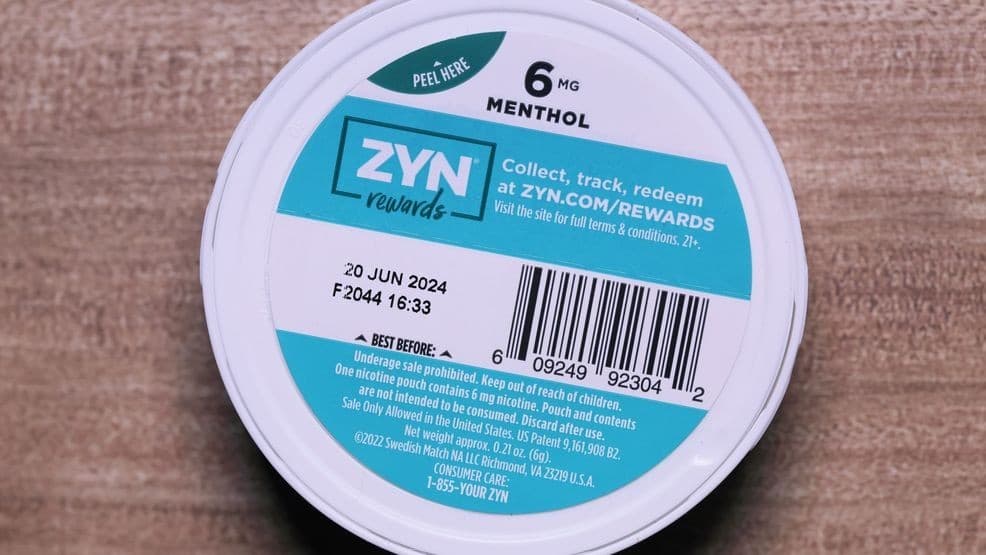
The Food and Drug Administration on June 30 granted modified-risk orders for 20 ZYN nicotine pouch products made by Swedish Match USA, a Philip Morris International company, allowing them to be marketed as posing lower risk than cigarettes. The products may be promoted as putting users at lower risk of mouth cancer, heart disease, lung cancer, stroke, emphysema and chronic bronchitis, a narrow ruling tied to specific products rather than the entire nicotine pouch category.
The decision rested on an extensive scientific review, consumer-understanding data and youth-risk data. The claim is scientifically accurate for these products and benefits the population as a whole. The FDA will closely monitor youth use and the company’s compliance with marketing restrictions.

The 20 products include 10 flavors in 3 mg and 6 mg strengths. The FDA first cleared 20 ZYN products in January 2025, the first authorization ever for nicotine pouches. That earlier action was built on the agency’s conclusion that the products contained substantially lower amounts of harmful constituents than cigarettes and most smokeless tobacco products.
In 2024, nicotine pouches were the second most commonly used tobacco product among U.S. youths, behind e-cigarettes. The 2024 National Youth Tobacco Survey put current nicotine pouch use at 1.8% of middle and high school students, while 10.1% of high school students and 5.4% of middle school students reported current use of any tobacco product. The survey reached 29,861 students in 283 schools between January 22 and May 22, 2024.

The FDA’s June 2026 summary put current nicotine pouch use at 1.7% in 2025, or about 460,000 middle and high school students, even as about 2 million students reported current tobacco use overall. Bonnie Halpern-Felsher, a Stanford Medicine pediatric expert who studies adolescent risk behavior and health decision-making, warned that nicotine pouches are increasingly popular among young people, that tobacco companies market to kids and teens, and that many youth wrongly think oral nicotine pouches are safe despite real health risks.
This article was produced by Prism’s automated news system from verified source data, official records, and press releases, then run through automated quality and moderation checks before publishing. The system is built and supervised by the people who set the standards it runs under. Read our full AI policy.
Did this article answer your question?