FDA panel to review seven peptides for compounding pharmacies
FDA advisers were set to weigh seven peptide substances, from BPC-157 to Semax, in a vote that could widen what compounders may legally make.
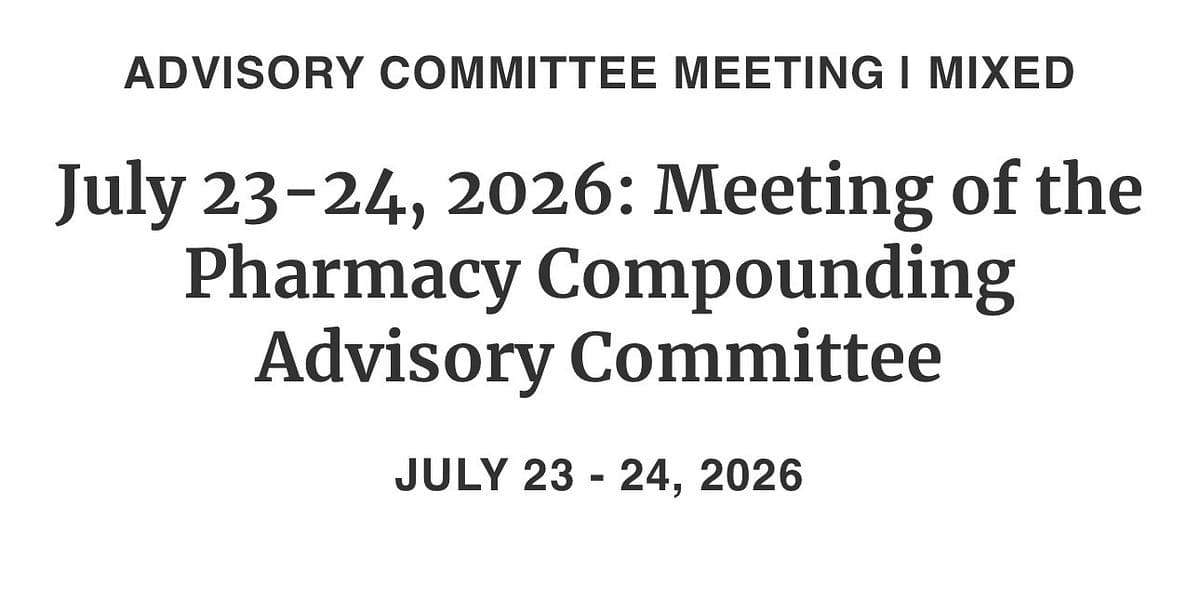
FDA’s Pharmacy Compounding Advisory Committee was set to meet July 23-24 to weigh seven peptide-related bulk substances for possible inclusion on the Section 503A bulks list, a decision that could reshape what compounding pharmacies may legally produce. The committee’s vote questions broke each item out individually, putting BPC-157, KPV, TB-500, MOTS-c, Emideltide, Epitalon and Semax under separate review in both free base and acetate forms.
The stakes extend well beyond one advisory session. Under FDA’s compounding framework, drugs made by compounders are not FDA-approved and are not reviewed by the agency for safety, efficacy or manufacturing quality before marketing. At the same time, FDA says compounding can serve an important role when a patient’s needs cannot be met by an FDA-approved drug product. That tension has made peptide compounding one of the most closely watched corners of the gray market between mainstream medicine and wellness demand.

FDA’s briefing materials said the agency sought the committee’s advice but warned that the background package may not include every issue relevant to the final recommendation. The agency has already built a three-tier system for nominated bulk substances, dividing them into Category 1, Category 2 and Category 3. On May 14, 2026, FDA updated the list again and added GHK-Cu, except for injectable use, to Category 1, underscoring how active the agency has been in policing which substances can enter the compounding pipeline.
The peptide review landed amid broader pressure from compounders and pharmacy groups for clearer rules. The Alliance for Pharmacy Compounding and the National Community Pharmacists Association have been active in peptide-compounding policy, arguing for more predictable access. Their push reflects strong market demand for peptide-based wellness, longevity and weight-loss products, a demand that has also fed an online gray market where safety, dosing and product quality are often opaque.
FDA reviewers had opposed allowing the seven peptides for compounding before the meeting, a sign that internal safety concerns remained high. Critics have also questioned the makeup of the advisory committee itself, saying some advisers have promoted unproven peptide products popular in wellness circles. FDA’s revised compounding guidance, issued January 13, 2025, has already helped set the policy ground rules that compounders are operating under.
Any recommendation to add the seven peptides to the 503A bulks list would broaden the substances compounders could use under federal law. A rejection would leave the current limits in place and deepen the fight over where legitimate medical need ends and speculative wellness marketing begins.
This article was produced by Prism’s automated news system from verified source data, official records, and press releases, then run through automated quality and moderation checks before publishing. The system is built and supervised by the people who set the standards it runs under. Read our full AI policy.
Did this article answer your question?