Feb 17, 2026: Brands & initiatives circularity/traceability/repairability resale-growth/waste-figures innovation&tech-shortlist bio-based-materials transform t
Fablstyle’s Feb 17, 2026 industry audit names four shortlists and scores the scale: ~100 billion garments made, 92 million tons of waste, and resale up +25% as secondhand outstrips retail 3x.
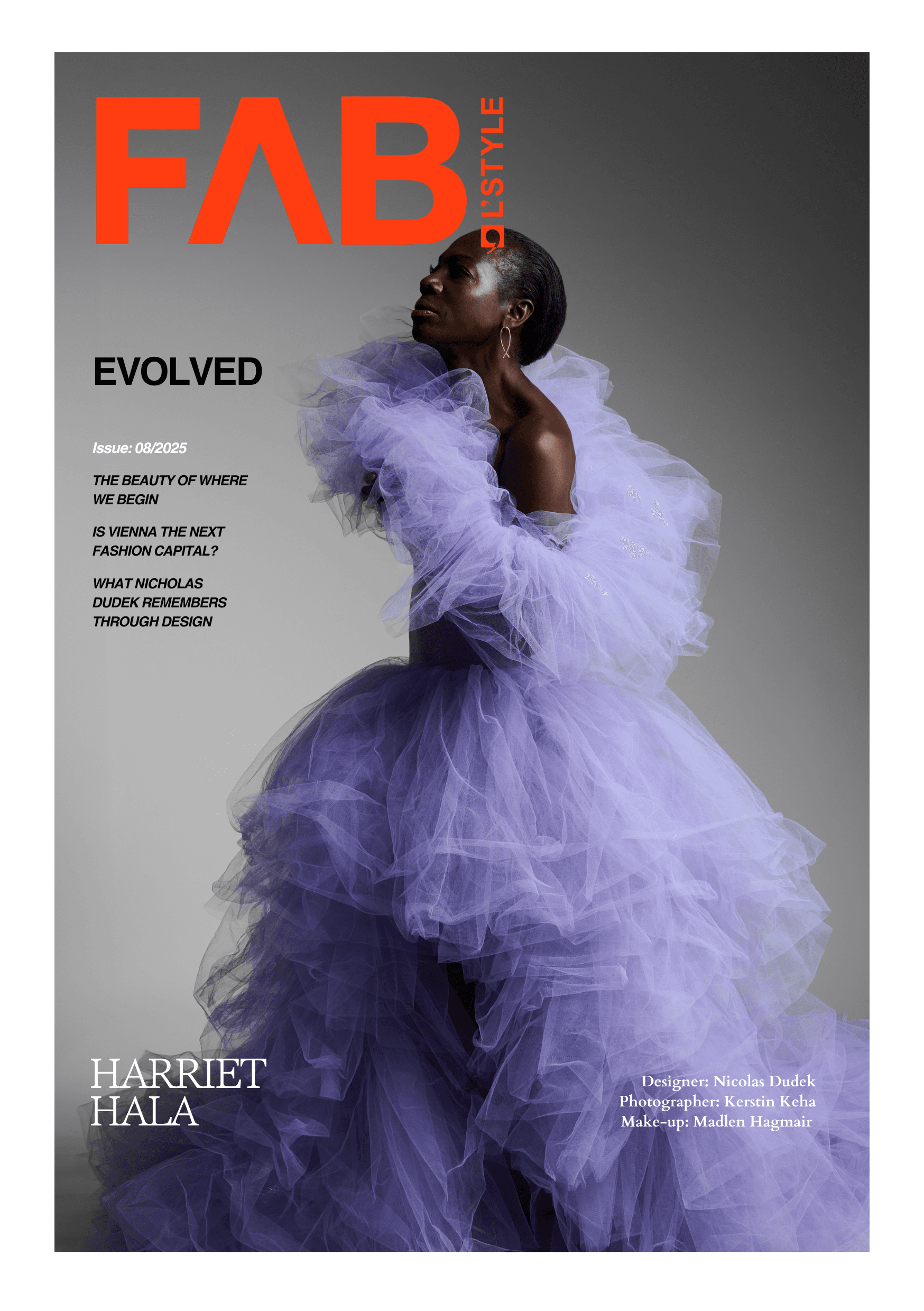
These labels aren’t just selling clothes; they are engineering solutions." That Fablstyle phrasing sits at the centre of the industry audit published Feb 17, 2026, which crowns four shortlist categories - Innovation & Tech Pioneers, Heritage & Artisanal Guardians, Localism & Social Impact Champions, and Conscious Contemporary Leaders - and frames the shift from "more, faster, cheaper" to systems thinking.
The audit’s numbers read like a manifesto and a rebuke. Fablstyle’s table lists annual production at ~100 billion garments - "Enough to clothe the planet 12 times over every year" - and records textile waste at 92 million tons annually, the equivalent of "one garbage truck of clothes dumped every second." It repeats stark sector-wide proportions: fashion accounts for around 10% of global carbon emissions and around 20% of global wastewater, while synthetic textiles contribute 35% of primary microplastics shed into oceans.
The market contradictions are raw. Fablstyle flags a +25% resale growth with the secondhand market "outstripping traditional retail 3x over." Yet TheSustainableAgency replays the circularity shortfall: fast-fashion garments are worn just seven to ten times before discard, and the European Parliament figure shows less than 1% of textiles are recycled globally. The Changing Markets Foundation findings cited by TheSustainableAgency add a cautionary note - 98% of recycled polyester feedstock comes from plastic bottles rather than textile waste, and 59% of green claims by fast-fashion brands failed scrutiny, with H&M registering a 96% deception rate in that analysis.
Brand-level solutions are highlighted alongside metrics. Sumissura’s shortlist entries include Girlfriend Collective, which "transforms recycled plastic bottles into activewear," ABLE, which "champions ethical fashion and women's empowerment," Amendi, noted for "organic denim" and supply-chain transparency, Amour Vert with organic fabrics and tree-planting per T-shirt, Outerknown founded by Kelly Slater, Nudie Jeans with free lifetime repairs, Hockerty’s made-to-order menswear using AI measurement, and Stella McCartney listed among conscious leaders. Fablstyle places these efforts "From the bio-based labs of Germany to the artisan looms of Mali and Nigeria, these are the names defining 'Modern Luxury' in 2026," and the report’s Innovation & Tech Pioneers shortlist explicitly references bio-based materials and the truncated fragment "transform t".
Policy and trade pressures are compounding the imperative. Earth notes that "Governments must take a more active role," points to Emmanuel Macron’s pact with 150 brands, and records that UK ministers rejected a parliamentary report in 2019. Business of Fashion warns that US tariffs are reshaping trade as higher duties push costs across the value chain and that "Agility will be the defining factor enabling brands and suppliers to maintain their competitive edge." The social fallout is measurable: the French HCSP data cited by TheSustainableAgency records roughly 24,000 apparel store closures and more than 82,000 salaried jobs lost across EU countries.
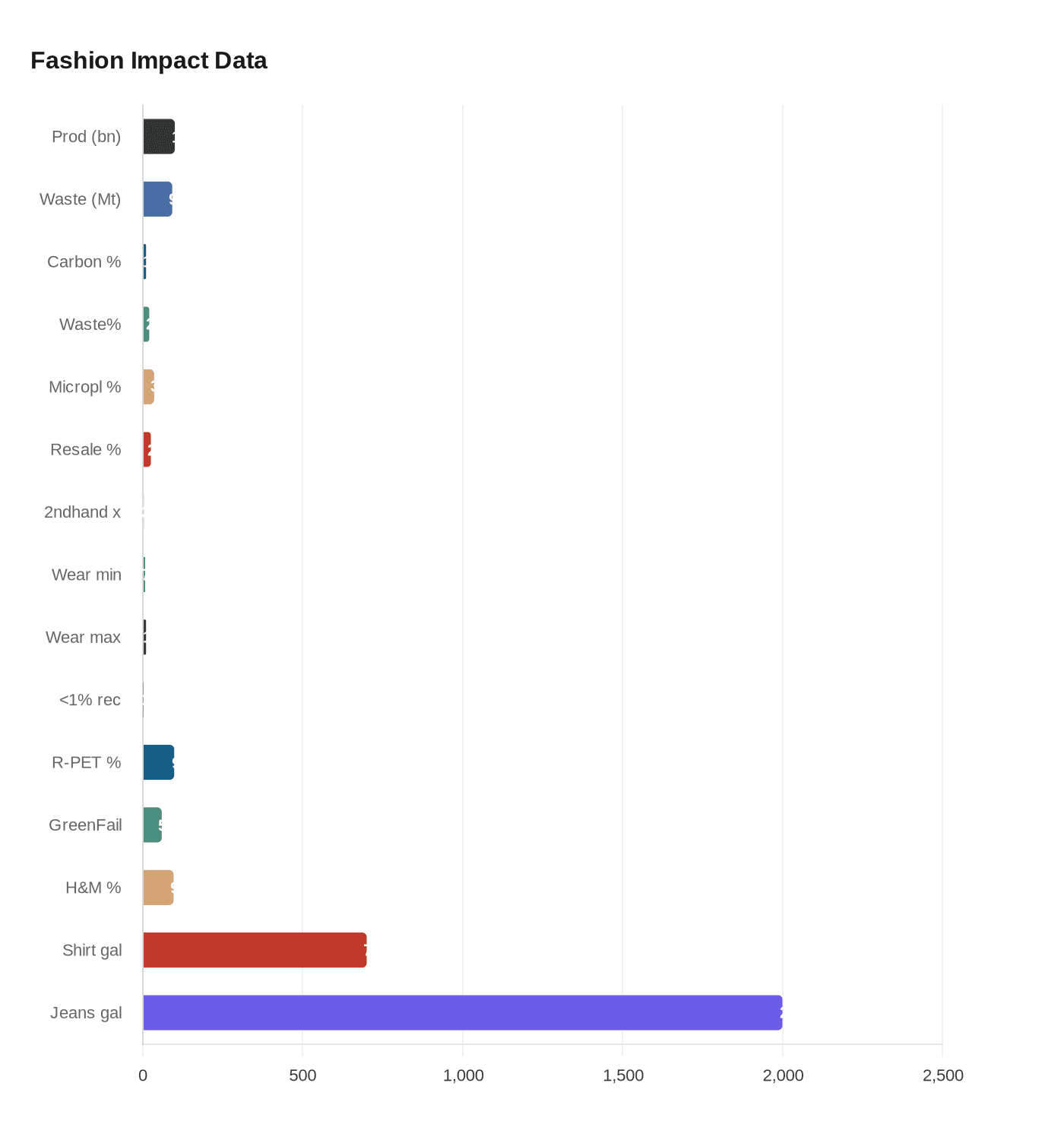
Patsy Perry’s summation - "Less is always more." - lands with editorial clarity against the audit’s data. The Feb 17, 2026 industry audit makes clear that the conversation has shifted from green gestures to measurable systems change: brands that can cut water use - remember 700 gallons for one cotton shirt and 2,000 gallons for a pair of jeans cited by Earth - scale traceability, and stop relying on bottle-based recycled polyester will be the ones to move the needle.
Know something we missed? Have a correction or additional information?
Submit a Tip