Pre-Purchase Checklist for Timeless Investments: Natural Fibres, Seam Allowances, Linings
Choose construction over logo: insist on two‑ply cashmere, high‑twist or worsted wool, generous seam allowances, and a durable lining before you buy.
Think of buying an investment piece the way a tailor thinks about a suit: materials first, then the math of construction. If you want garments that age with grace rather than trend, your questions at the boutique counter should be concrete — not aspirational. Ask for two‑ply cashmere, high‑twist wool, or worsted wool; insist on seam allowances you can work with; and evaluate lining quality as carefully as color. Those three details determine whether a coat, sweater, or suit will be heirloom or landfill.
Why natural fibres matter Natural fibres — specifically two‑ply cashmere, high‑twist wool, and worsted wool — are the foundation of longevity. Two‑ply cashmere means two single yarns twisted together to give loft without sacrificing softness, so a sweater holds its shape and pills less readily than single‑ply knits. High‑twist wool uses more twists per inch to create spring and resilience in the yarn; garments made in high‑twist wool bounce back from creasing and abrasion. Worsted wool has been combed and spun to align fibres, producing a smooth, dense cloth that resists shine and keeps sharp tailoring lines. When you hear these names at the shop, you’re hearing technical signals about durability, hand, and how the fabric will behave across seasons.
Feel and testing: what your hands should tell you In the fitting room, your fingertips are the best gauge. Two‑ply cashmere should feel weighty but supple, not papery; it should compress and recover under pressure. High‑twist wool will feel springy, with a tensile snap when you gently stretch a sleeve or seam; worsted wool will slide under your hand, smooth rather than fuzzy. Ask whether the cashmere is single or two‑ply, or whether the wool is worsted or woollen spun — those labels are not marketing fluff but practical clues to performance over years of wear.
Seam allowances: the invisible margin of repairability Seam allowances are the tailors’ safety net. A generous seam allowance lets a skilled cutter take garments in or let them out without sacrificing the garment’s lines; a minimal allowance forces you into invasive alterations or compromises on fit. At purchase, ask specifically about seam allowances on hems, side seams, and sleeve heads — and whether facings are taped or bonded. For a durable coat or tailored jacket, details like reinforced seam tapes and well‑finished allowances are as important as the outer fabric because they determine how many times the piece can be altered and re‑worked across decades.
Lining quality is more than comfort Lining quality is not decorative; it controls friction, structure, and the lifespan of the outer fabric. A full silk lining will feel luxurious, but cupro or high‑viscose linings offer breathability and glide without the cost and care constraints of silk; cheap polyester linings can trap abrasion against delicate cashmere or worsted cloth. Assess the lining’s weight, whether the garment is fully or partially lined, and how it's attached at the seams — a hand‑stitched hem and floating lining are signs of thoughtful construction that absorb stress instead of transmitting it to the garment’s outer seams.
Hardware, reinforcements, and finishings Small components tell big stories. Buttons set into tailors’ backing, thread shanks, and bartacks at high‑stress points prolong service life; a coat with taped shoulder seams and bound buttonholes will outlast one with glued facings and machine‑tacked buttons. When you try something on, check that buttons are sewn on with a reinforced bar tack and that interior stress points — pockets, lapels, belt loops — are double‑stitched. These are the physical investments that match the cost of natural fibres like two‑ply cashmere and worsted wool.
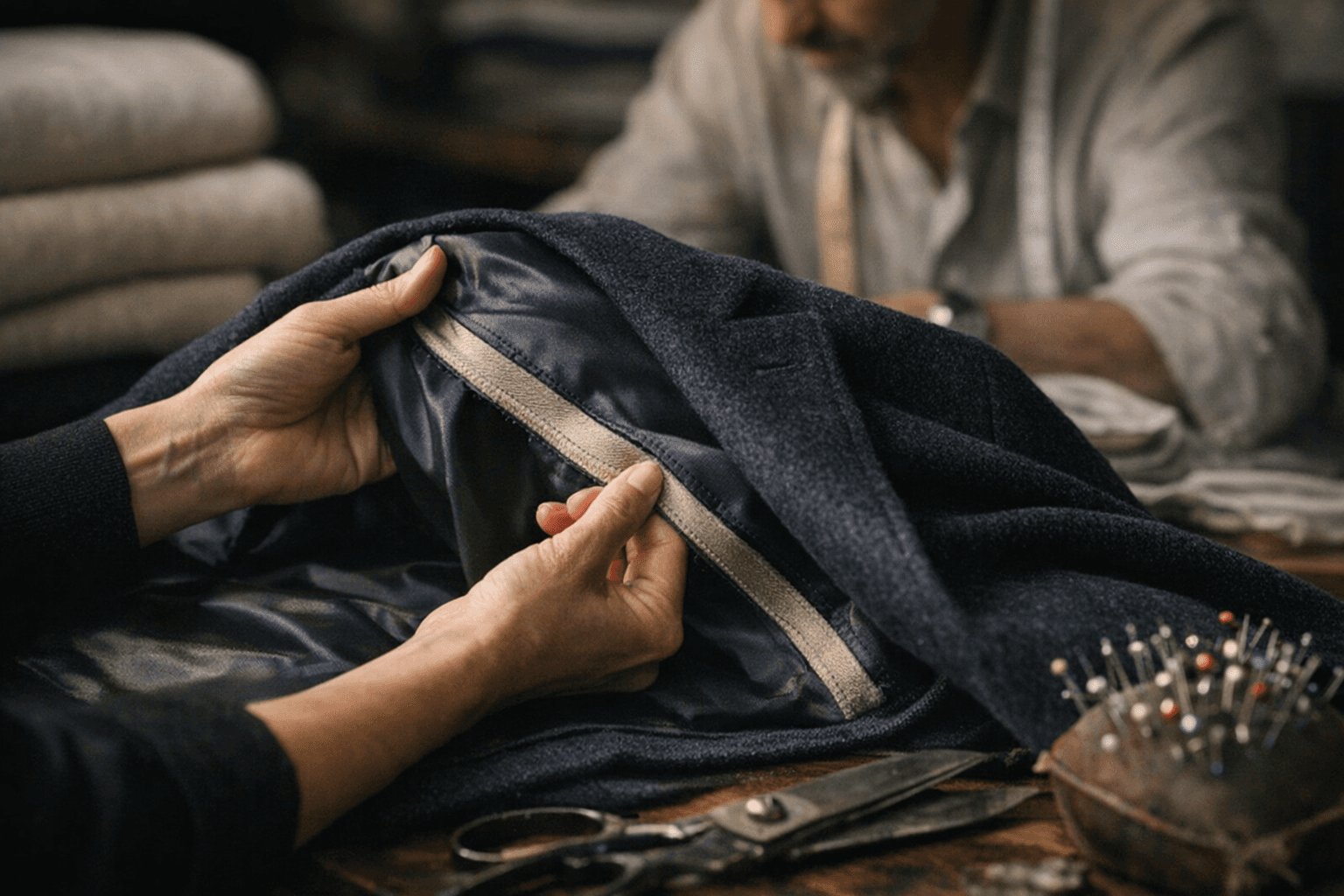
Ask about alterability and spare parts Before you buy, ask about availability — spare buttons, extra yardage, and the brand’s alteration policy. High‑end houses and independent ateliers often keep extra buttons and a small offcut for repairs; knowing whether you can return for a replacement button or a serviceable hem alteration years later protects your purchase. If you plan to have a coat or blazer altered, discuss seam allowances and lining access with the salesperson so your tailor won’t be forced to cannibalize the garment’s construction.
Care, storage, and the economics of maintenance Natural fibres demand smarter care: two‑ply cashmere benefits from seasonal hand‑washing or gentle machine cycles and flat drying to retain loft; high‑twist wool and worsted garments should be aired between wears and professionally pressed when needed to maintain structure. Invest in cedar or breathable storage for long stints away from your wardrobe and rotate garments to reduce friction and abrasion. Maintenance is part of the cost of ownership — factor in occasional professional pressing, re‑lining, and button replacement when you evaluate a price tag.
- Fibre: Is the label two‑ply cashmere, high‑twist wool, or worsted wool? Ask for specifics if the language is vague.
- Seam allowances: Are they generous and finished? Check hems, sleeve heads, and side seams.
- Lining quality: Is the garment fully lined? What is the lining fiber, and how is it attached?
- Reinforcements: Look for taped seams, bartacks, and reinforced buttons.
- Availability: Can the brand supply spare buttons or provide alteration services?
- Care: What does the care label require and can you commit to that routine?
A practical pre‑purchase checklist
Treat this as your shopping ritual — it will save you time and regret at the register. Confirm these items before you leave the store:
When to prioritize each element Luxury knitwear leans on fibre choice: prioritize two‑ply cashmere and ask about ply and origin. Tailored pieces depend on weave and finishing: choose worsted wool and inspect seam allowances and lining. Outerwear sits between the two — look for high‑twist wools in the shell for resilience, plus a robust lining and taped internal seams. Let the garment’s purpose guide which detail you interrogate most aggressively.
Final measure: will it improve with age? An investment piece should accumulate stories without collapsing under them. Two‑ply cashmere that softens, a worsted suit that keeps a crisp edge, a well‑lined coat that still hangs right after many winters — these are the markers of success. The right questions about two‑ply cashmere, high‑twist and worsted wool, seam allowances, and lining quality turn an impulse into a wardrobe anchor. Buy with those details in hand, and you’re not just spending on cloth; you’re underwriting decades of wear.
Know something we missed? Have a correction or additional information?
Submit a Tip