Fed report finds food insecurity surges among lower-income households
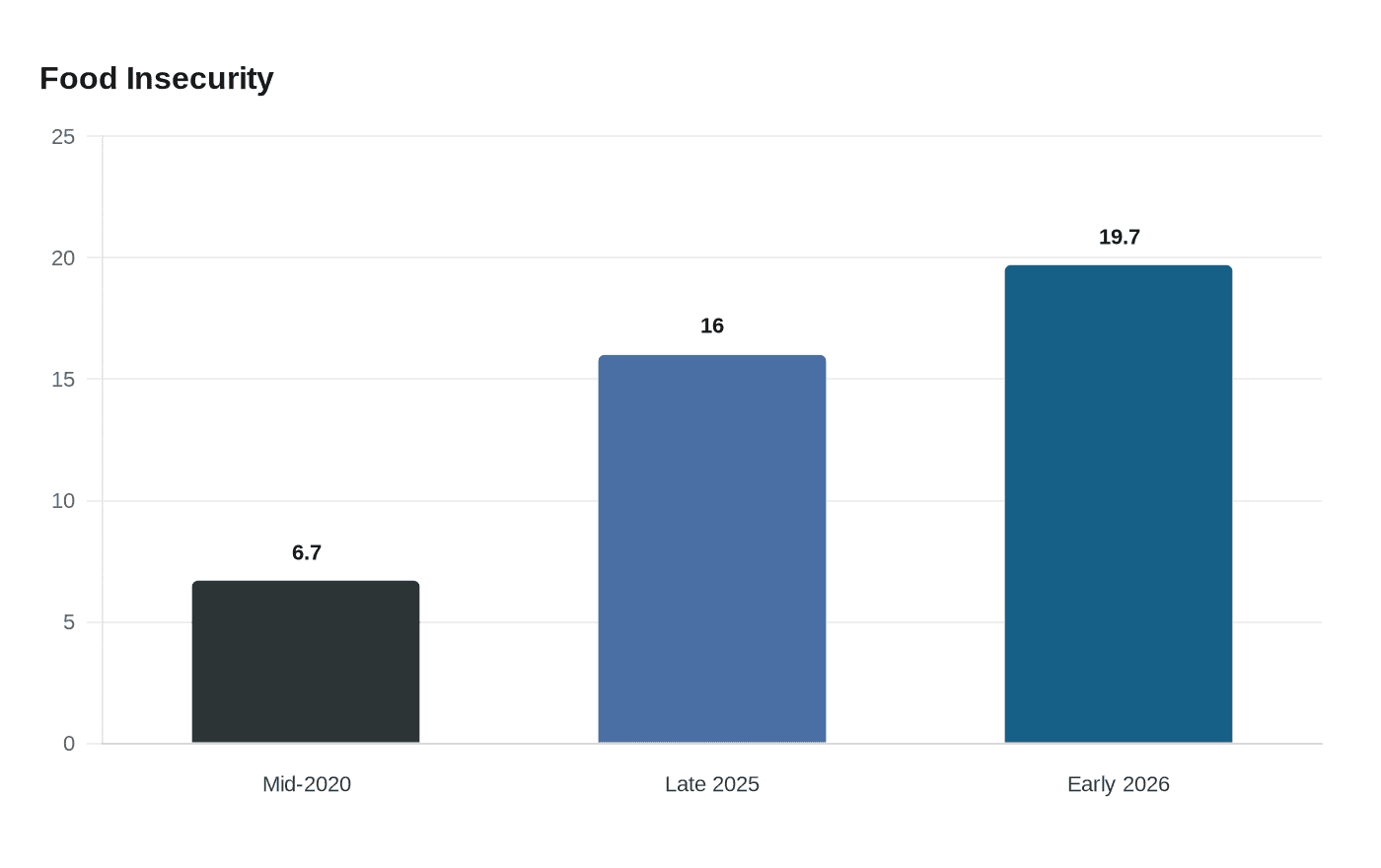
Food insecurity kept climbing for households under $50,000 even as the broader economy stayed steady. In early 2026, 19.7% said they lacked enough food or had children miss meals.
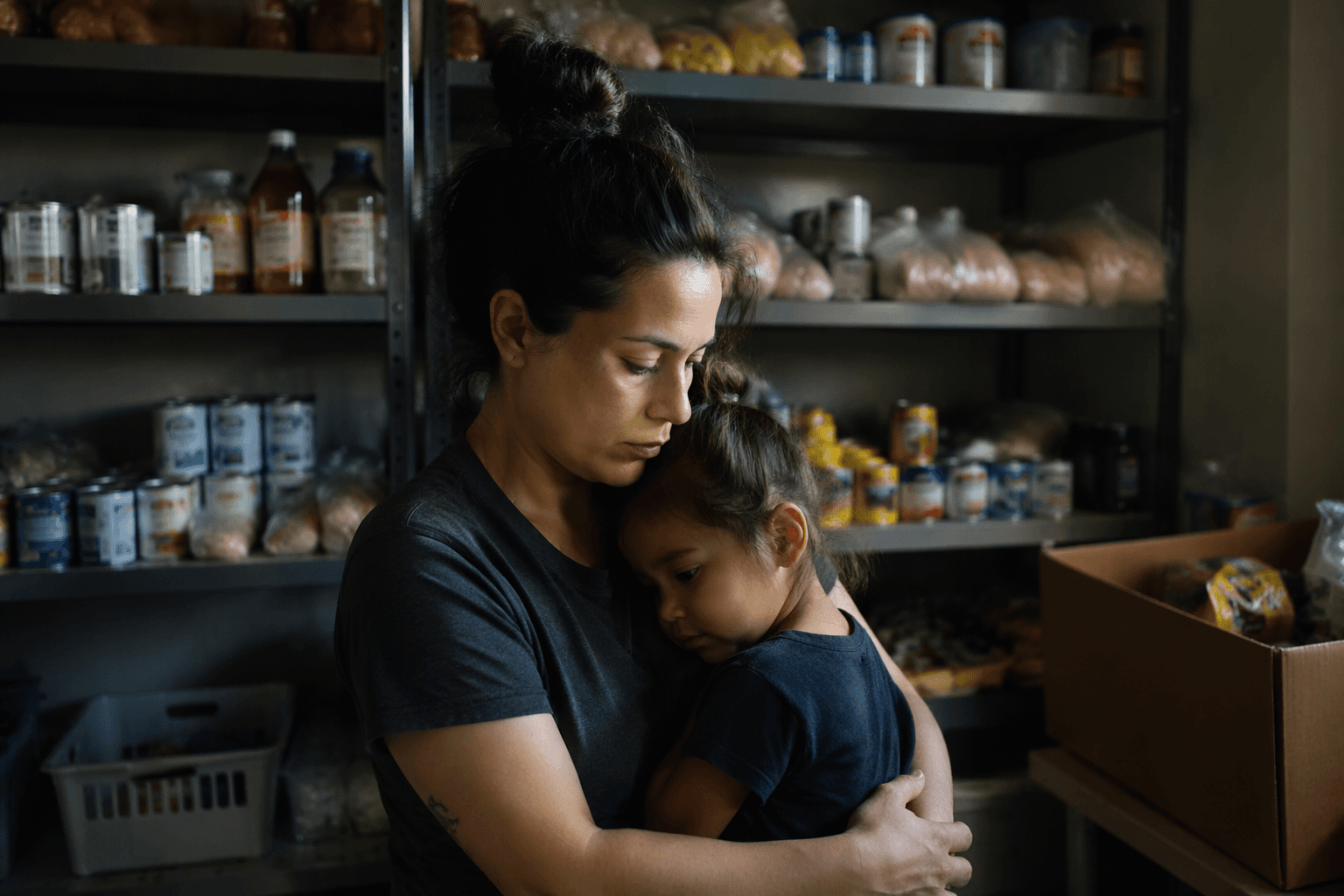
Even in a wealthy country with low unemployment and cooling inflation, more households are struggling to eat. The Federal Reserve Bank of New York said food insecurity rose in a way it described as remarkable, with the sharpest pressure falling on lower-income families, less-educated households and homes with young children.
The New York Fed’s analysis found that among households earning under $50,000 a year, the share reporting they did not have enough food, or that children missed a meal, climbed to 19.7% in early 2026 from 16% in late 2025 and 6.7% in mid-2020. For those same households, 40.1% said they were dipping into savings in early 2026, up from 37.8% in late 2025 and 29% in 2020. The pattern points to a widening gap between headline economic strength and the daily strain felt inside lower-income homes.
The findings were based on supplemental questions fielded in October 2025 and February 2026 in the Survey of Consumer Expectations, a nationally representative rotating panel of about 1,200 household heads. The research, published May 27 by Gizem Kosar, Ishva Mehta and Wilbert van der Klaauw, revisited the Fed’s pandemic-era work and tied food insecurity to expectations about financial conditions, job prospects and debt delinquency. It also showed that among respondents with only a high school diploma, food donations rose from 10.7% in mid-2020 to 18.8% in late 2025 and 20.9% in early 2026.
The authors said consumer sentiment has fallen near or below Great Recession and pandemic-era lows even as the economy still shows low unemployment, historically high household net wealth and resilient consumer spending. They described the United States as increasingly “K-shaped,” with higher-income and college-educated households pulling away while lower-income families face more pressure. Persistent inflation, high interest rates and elevated delinquency rates on credit cards, auto loans and student loans are intensifying that split, especially because lower- and middle-income households spend more of their budgets on housing, groceries and utilities.
The broader data underline how widespread the problem remains. The U.S. Department of Agriculture estimated that 13.7% of households were food insecure at some point in 2024, while 5.4% experienced very low food security. Among households with children, 18.4% were food insecure. Feeding America says 48 million people, including 14 million children, face food insecurity each year. And with the Bureau of Labor Statistics reporting that consumer prices were still up 3.8% over the 12 months ending in April 2026, grocery bills remain a central pressure point for families already running out of room in their budgets.
This article was produced by Prism’s automated news system from verified source data, official records, and press releases, then run through automated quality and moderation checks before publishing. The system is built and supervised by the people who set the standards it runs under. Read our full AI policy.
Know something we missed? Have a correction or additional information?
Submit a Tip