Fed study says remote work, not AI, is hurting young graduates
Remote work now explains 64% of the rise in young graduate unemployment, the New York Fed says, while AI exposure shows little effect on hiring.

Remote work, not artificial intelligence, is emerging as the bigger drag on young job seekers, according to a New York Fed analysis that points to a simple mechanism: fewer entry-level openings, weaker mentoring, and less informal training when teams are scattered.
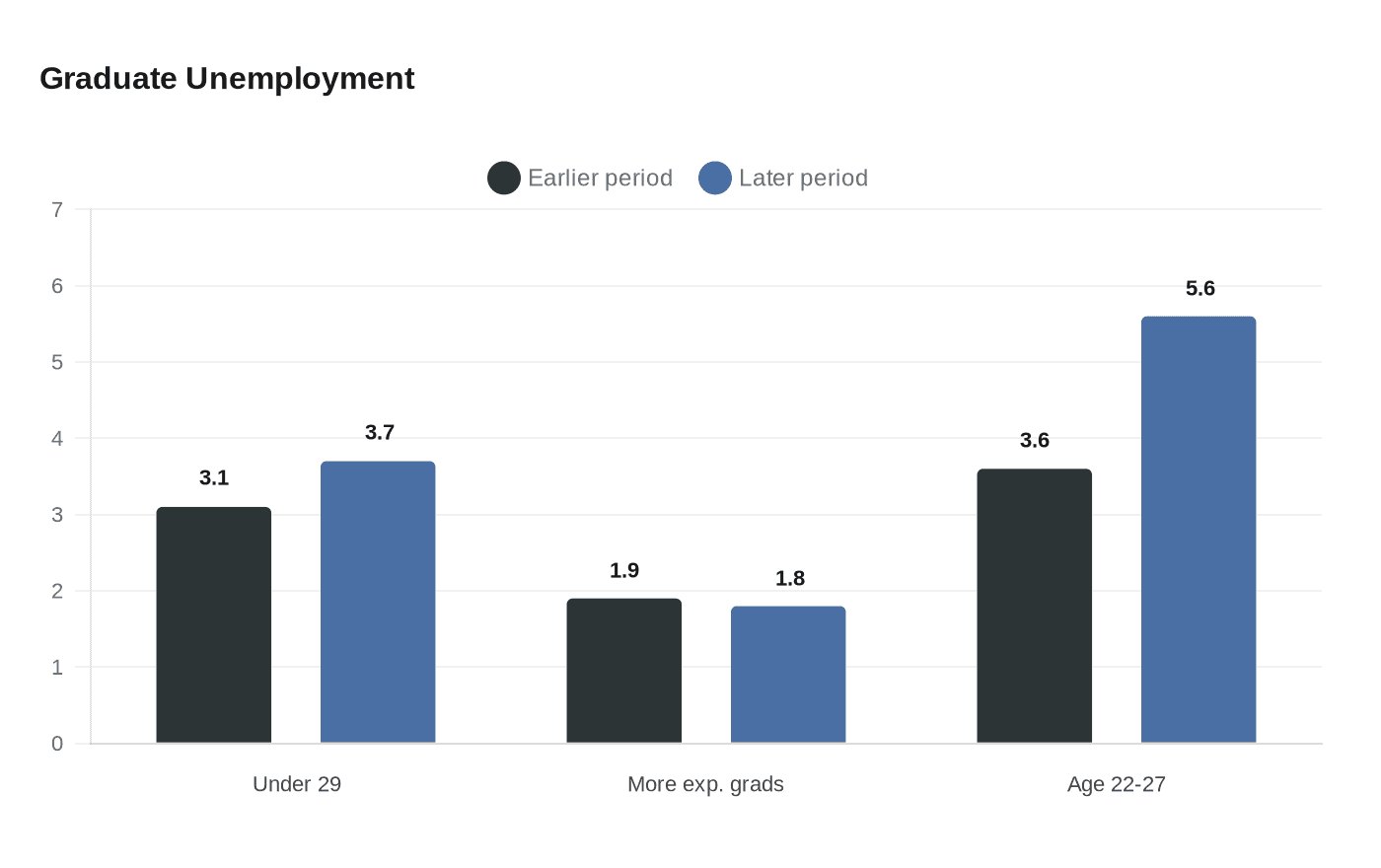
The Fed’s authors, Natalia Emanuel, Emma Harrington and Amanda Pallais, found that unemployment among workers under 29 averaged 3.1% in 2017 to 2019 and rose to 3.7% in 2022 to 2025. For more experienced college graduates, the rate edged down from 1.9% to 1.8% over the same span. Among college graduates ages 22 to 27, unemployment reached 5.6% in March 2026, up from 3.6% in March 2019.

The pattern was sharper in jobs that can be done from anywhere. In remotable occupations, such as software development, unemployment for young college graduates rose by about 1 percentage point from the pre-pandemic period to 2022 to 2024. In jobs that must be done in person, such as nursing, the gap between younger and older graduates was much smaller. The New York Fed estimates that remote work explains 64% of the recent increase in unemployment among young college graduates.
That conclusion matters because the rise was not confined to one elite slice of the labor market. The same age pattern showed up among workers without college degrees, suggesting the problem is broader than the top of the labor market. The Fed also said remote work has become about four times more common since the pandemic, a shift that has changed how managers hire, supervise and train new workers.
The timing also undercuts the argument that generative AI is the main culprit. The study says youth unemployment climbed before ChatGPT and the current wave of AI tools arrived, and when the authors measured occupations’ exposure to AI, they found little effect on youth unemployment. Their data came from the Current Population Survey and proprietary firm-level data from an undisclosed Fortune 500 company.
For employers, the message is that remote and hybrid policies may carry hidden costs if companies do not deliberately build training pipelines for junior staff. For new graduates, the labor market appears less like a story of machines taking jobs than one of managers struggling to develop talent they cannot see every day. The New York Fed also warned that early-career joblessness can leave lasting scars on earnings and career progression, making a soft first job market more than a temporary setback. Stanford economist Nicholas Bloom pushed back, arguing that remote work is not slowing employment and may instead be affecting labor supply.
This article was produced by Prism’s automated news system from verified source data, official records, and press releases, then run through automated quality and moderation checks before publishing. The system is built and supervised by the people who set the standards it runs under. Read our full AI policy.
Know something we missed? Have a correction or additional information?
Submit a Tip