Federal cleanup begins at Apollo nuclear waste dump after decades-long wait
Federal crews have started digging into 10 buried trenches of radioactive waste near Apollo, launching a cleanup that could take six years and cost more than $500 million.
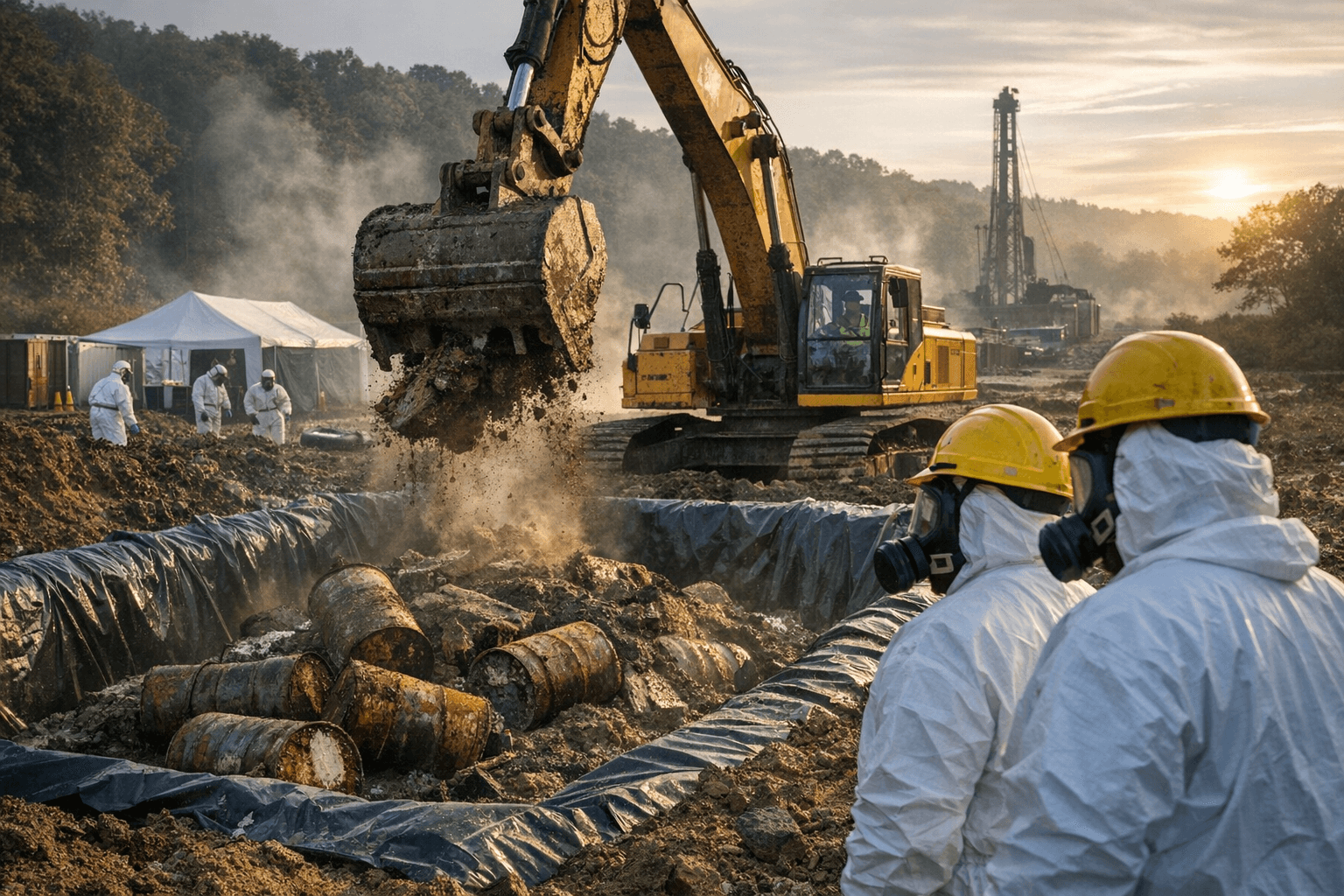
Federal crews have finally begun tearing into a 44-acre nuclear waste dump near Apollo, a long-delayed cleanup that puts decades of contamination and federal stewardship back under the microscope. The Shallow Land Disposal Area sits in Armstrong County in Parks Township and Vandergrift, on the right bank of the Kiskiminetas River, about 23 miles east-northeast of Pittsburgh.
What lies buried there is the residue of the atomic age: 10 trenches of radioactive and non-radioactive waste left from disposal operations between 1960 and 1970. The waste included low-level radioactive materials tied to nuclear-powered submarine fuel and commercial power-plant fuel production. Nuclear Materials and Equipment Corporation, known as NUMEC, carried out the disposal work, and BWX Technologies now owns the property. Congress ordered the Army Corps of Engineers to clean up the site in 2002 under the Formerly Utilized Sites Remedial Action Program, the federal effort aimed at places contaminated by the nation’s atomic weapons and energy programs.
Excavation began April 7, and the Army Corps announced April 14 that physical remediation was underway. Work started at Trench 8 with topsoil removal before contaminated material is dug out. Officials said the pace will be deliberate and will shift depending on conditions underground, with safety controls and monitoring in place throughout the operation.
The project is expected to take about six years and cost more than $500 million. Earlier estimates put the amount of material to be removed at roughly 33,000 cubic yards. The Corps says the waste will first be trucked to a facility in Lawrence County, then moved by rail to commercial disposal sites in Utah or Texas. Material that cannot be commercially disposed of is expected to go to the Nevada National Security Site. Nearby residents have been told to expect possible alarms and more truck traffic as systems are tested and excavation continues.
The cleanup arrives after years of public anger, lawsuits and fear over cancer cases in surrounding communities. Residents have long worried that digging could spread contamination, while the Corps has said it will monitor air, groundwater and surface water during the work and continue public outreach. The agency has also pointed to earlier FUSRAP cleanups in Aliquippa and Springdale as precedent. For families living near the old trenches, the excavation is not just a construction project. It is a reckoning with what was left behind, and how long it took to remove it.
This article was produced by Prism’s automated news system from verified source data, official records, and press releases, then run through automated quality and moderation checks before publishing. The system is built and supervised by the people who set the standards it runs under. Read our full AI policy.
Did this article answer your question?

