Federal GOP budget plans threaten Medicaid dental expansions in 36+ states
More than three dozen states now cover dental services through Medicaid; Republican budget proposals that analysts say would cut up to $1.1 trillion risk rolling back those benefits and increasing emergency care costs.
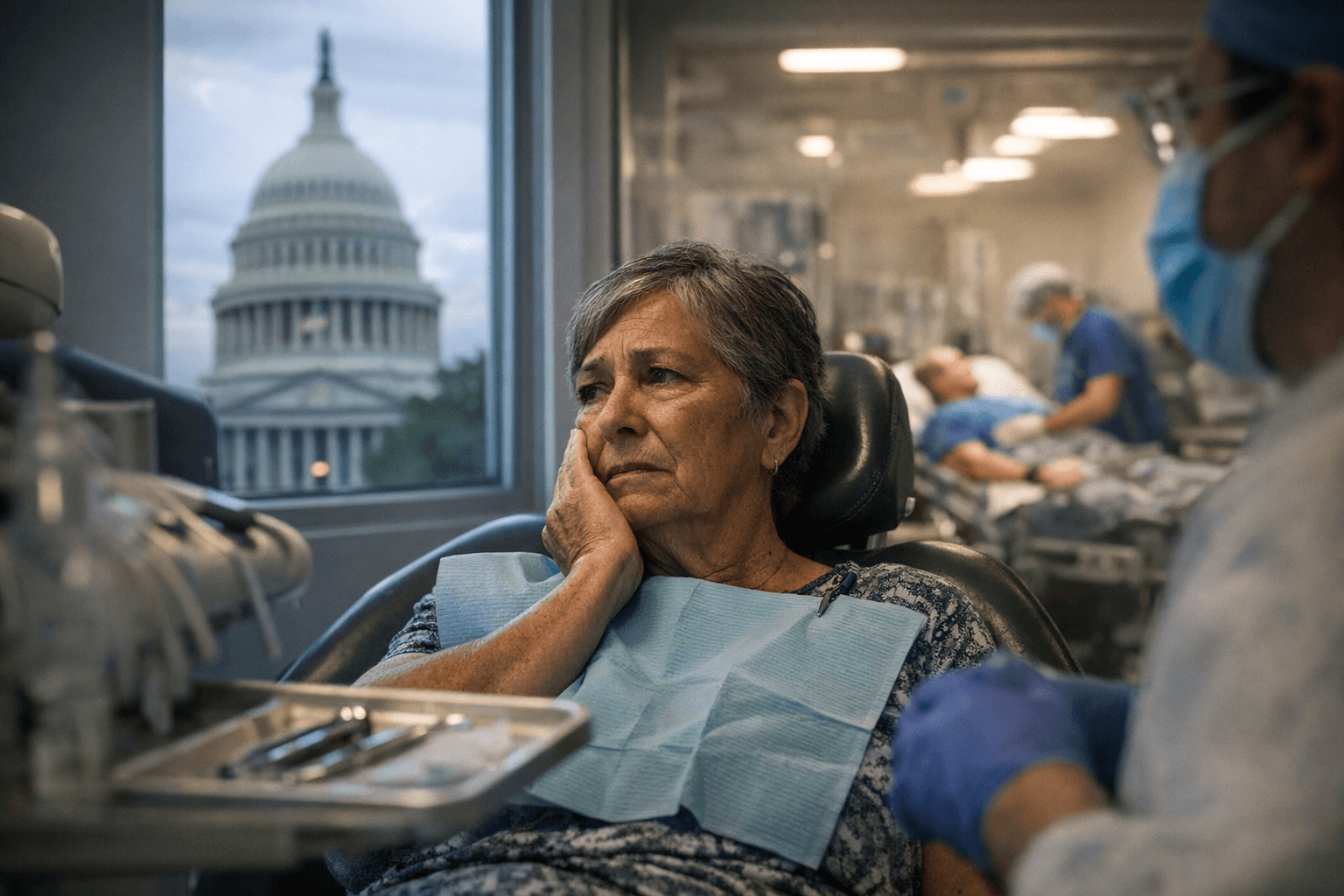
More than three dozen states now cover dental services for people on Medicaid, but federal Republican budget proposals that analysts estimate could cut between about $900 billion and $1.1 trillion in health funding over the next decade threaten to force states to roll back those benefits.
Advocates, public health analysts and state budget modelers say the math is straightforward: facing large federal cuts, states typically trim optional benefits first, and adult dental care is a frequent target. One analysis estimated hospitals would lose roughly 18 percent of their Medicaid funding, nearly $665 billion, over 10 years, a hit that state and hospital budgets would struggle to absorb. A separate nonprofit study cited by analysts warned that payments to hospitals or nursing facilities would probably decrease in at least 29 states if the proposals proceed, creating immediate pressure to reduce optional benefits such as vision and dental or to lower provider reimbursement rates.
Republican proposals have generated competing tallies. A policy group described a package that would slash $1.1 trillion from Medicaid, the Affordable Care Act and other health programs over 10 years, while other estimates put federal Medicaid cuts at about $900 billion or "more than $1 trillion" depending on the accounting. The nonpartisan Congressional Budget Office estimate cited by that group projects 14.2 million people would lose coverage because of the package and the failure to extend enrollment programs; that figure includes 6.5 million losing Medicaid and 7.7 million losing ACA marketplace coverage.
The mechanisms driving those losses are detailed by the package's critics: new work requirements and stricter eligibility and enrollment rules that would reverse recent simplifications, and limits on states using their own funds to cover undocumented workers. One projection tied to those policies finds that 5 million people could lose Medicaid because of work requirements and enrollment hurdles, and that millions of families would accumulate substantial medical debt as a result. Analysts estimate that families losing coverage could see medical debt rise by as much as $22,800 depending on prior debt.
Public-health research underscores the downstream costs of cutting dental benefits. Historical examples show spikes in emergency department visits for nontraumatic dental conditions after states eliminated adult dental benefits and drops when benefits were partially restored. In California, removal of comprehensive adult dental benefits in 2009 preceded an immediate increase in dental-related ED visits; ED use fell after partial restoration in 2014. In 2018, Medicaid paid 42 percent of the costs for dental-related ED visits. The American Dental Association estimates ending adult Medicaid dental benefits nationwide would increase health care costs by $9.6 billion over five years.
States are already weighing responses. Some legislatures are exploring targeted programs to shore up rural health infrastructure, including a bipartisan Pennsylvania bill to create a rural health care grant program for student-loan relief for clinicians, and proposals in Indiana and Oklahoma to support rural hospitals. In April, Texas Governor Greg Abbott announced the state would release more than $6 million in grants for struggling rural hospitals.
The policy debate has become political. Some congressional Republicans have decried the maneuver as a "money laundering scheme," while analysts caution that lowering provider taxes and other financing changes will likely punch big holes in state Medicaid budgets. One state official warned, "This is ultimately not only going to affect the lives of the people that are not going to get the care, but also the majority of the hospitals that provide this care, and the people that are employed by those locations," she said.
For voters and lawmakers, the immediate choice is clear: preserve optional benefits by finding state or federal offsets, or accept narrower Medicaid coverage and the likely rise in emergency care use and household medical debt. Democratic and Republican state officials will control much of that outcome, but the scale of projected federal reductions means local decisions will determine whether expanded Medicaid dental access becomes a lasting safety net or an early casualty of broader budget cuts.
This article was produced by Prism’s automated news system from verified source data, official records, and press releases, then run through automated quality and moderation checks before publishing. The system is built and supervised by the people who set the standards it runs under. Read our full AI policy.
Did this article answer your question?

