Federal indictment targets companies after deadly Baltimore bridge collapse
Prosecutors charged two Synergy companies and a technical superintendent, saying the bridge collapse killed six workers and caused at least $5 billion in losses.
Federal prosecutors have moved beyond the wreckage of the Francis Scott Key Bridge and into the corporate chain behind it, indicting two foreign companies and a technical superintendent in a case that turns a fatal maritime disaster into a question of accountability.
The indictment, unsealed Tuesday, named Synergy Marine Pte Ltd, based in Singapore, Synergy Maritime Pte Ltd, based in Chennai, India, and Radhakrishnan Karthik Nair, a 47-year-old Indian national who worked for both companies as the Dali’s technical superintendent. Prosecutors said the case centers on the March 26, 2024 crash of the Motor Vessel Dali, a 900-foot foreign-flag container vessel registered in Singapore, which struck the bridge in Baltimore and sent the structure into the Patapsco River, killing six construction workers.
Authorities said the defendants face charges of conspiracy, willfully failing to immediately inform the U.S. Coast Guard of a known hazardous condition, obstruction of an agency proceeding and false statements. The companies were also charged with misdemeanor violations of the Clean Water Act, the Oil Pollution Act and the Refuse Act tied to pollutants discharged into the river, including shipping containers and their contents, oil and the bridge itself. Prosecutors said the economic loss is at least $5 billion.
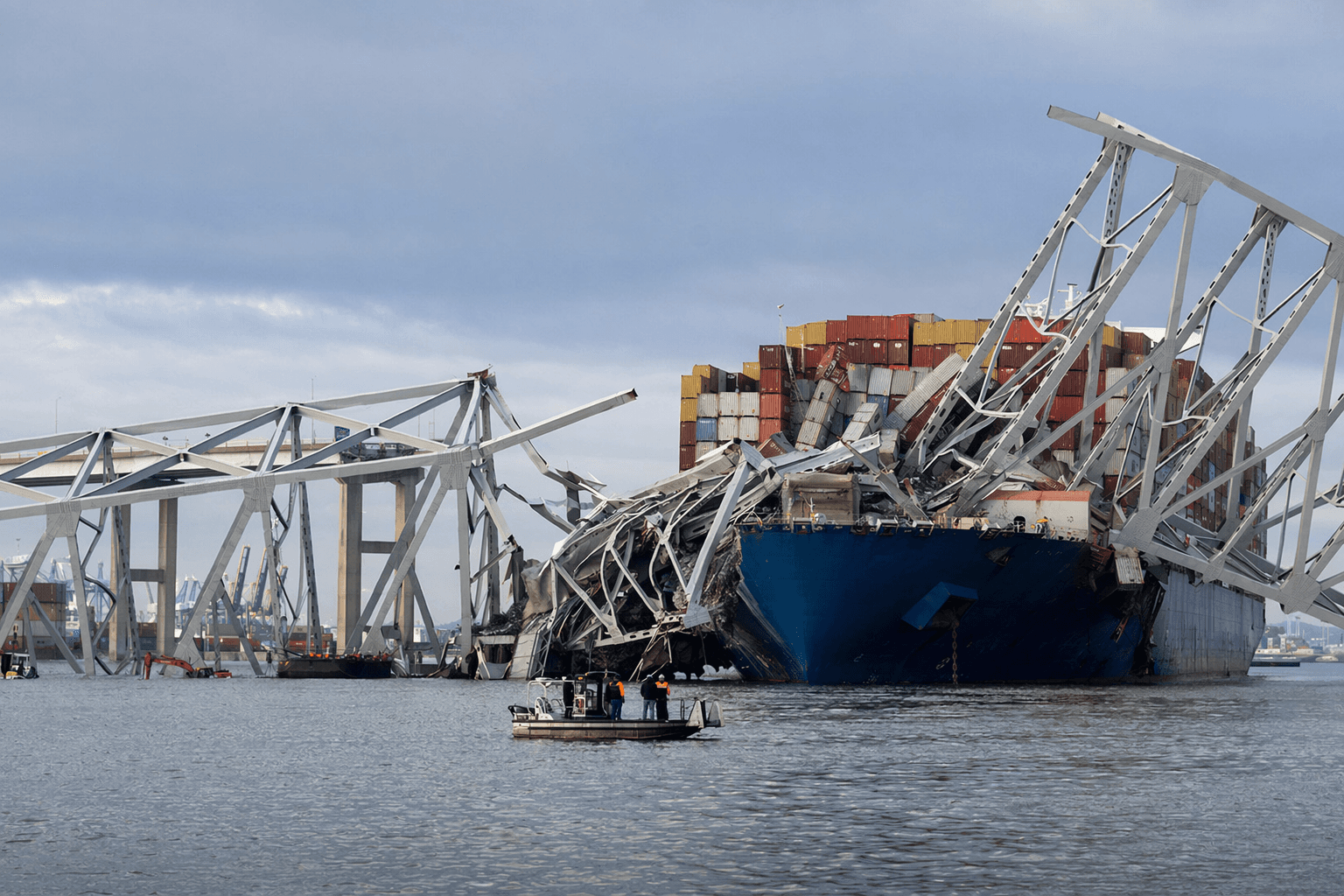
Acting Attorney General Todd Blanche called the collapse a “preventable tragedy.” U.S. Attorney Kelly O. Hayes said the indictment was the first step in holding responsible those who caused the deaths of six people and catastrophic damage to the region. Jimmy Paul, the FBI’s top agent in Baltimore, said the collapse “forever changed Maryland.”
The government’s case says the ship’s operators used a “flushing pump” instead of the normal fuel supply pumps with redundancies and that the improper setup had been used since at least 2020. Prosecutors allege some employees tried to hide that arrangement after the collapse. The National Transportation Safety Board later concluded that the probable cause was a loss of electrical power from a loose signal wire connection stemming from improper installation of wire-label banding, which cut off propulsion and steering as the vessel approached the bridge.
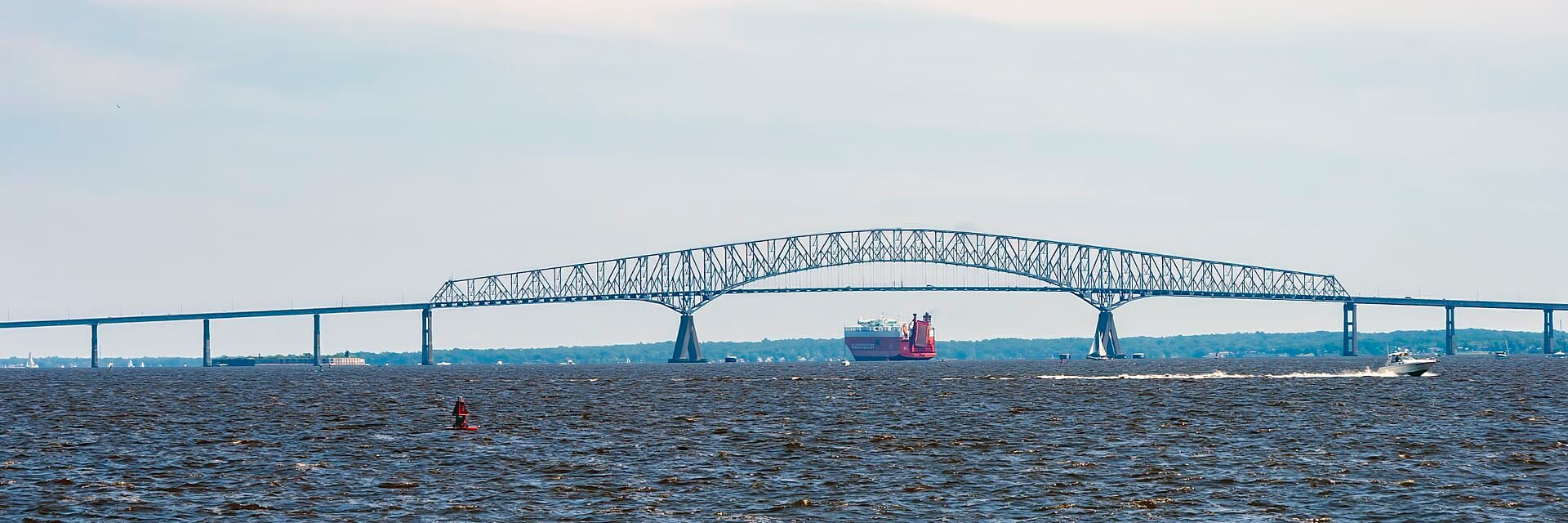
The collapse shut down most ship traffic to the Port of Baltimore for nearly three months, exposing how quickly one failure can ripple through a working waterfront, regional commerce and families already carrying the cost of dangerous labor. Maryland officials now estimate replacement of the bridge will cost between $4.3 billion and $5.2 billion, with reopening expected in late 2030.
A related trial set for June 1 will decide whether Grace Ocean Private and Synergy Marine Management can limit liability to about $44 million under an old admiralty law, even after the federal government settled cleanup-related claims for more than $102 million. The criminal case now pushes a larger question into the open: how much risk remains embedded in U.S. ports, vessel oversight and the systems meant to prevent a catastrophe that was, by federal prosecutors’ account, avoidable.
This article was produced by Prism’s automated news system from verified source data, official records, and press releases, then run through automated quality and moderation checks before publishing. The system is built and supervised by the people who set the standards it runs under. Read our full AI policy.
Did this article answer your question?

