Federal Judge Blocks Trump Order Cutting NPR and PBS Funding
A federal judge blocked enforcement of Trump's order to cut NPR and PBS funding, as NPR secured $36 million from CPB in a parallel settlement.
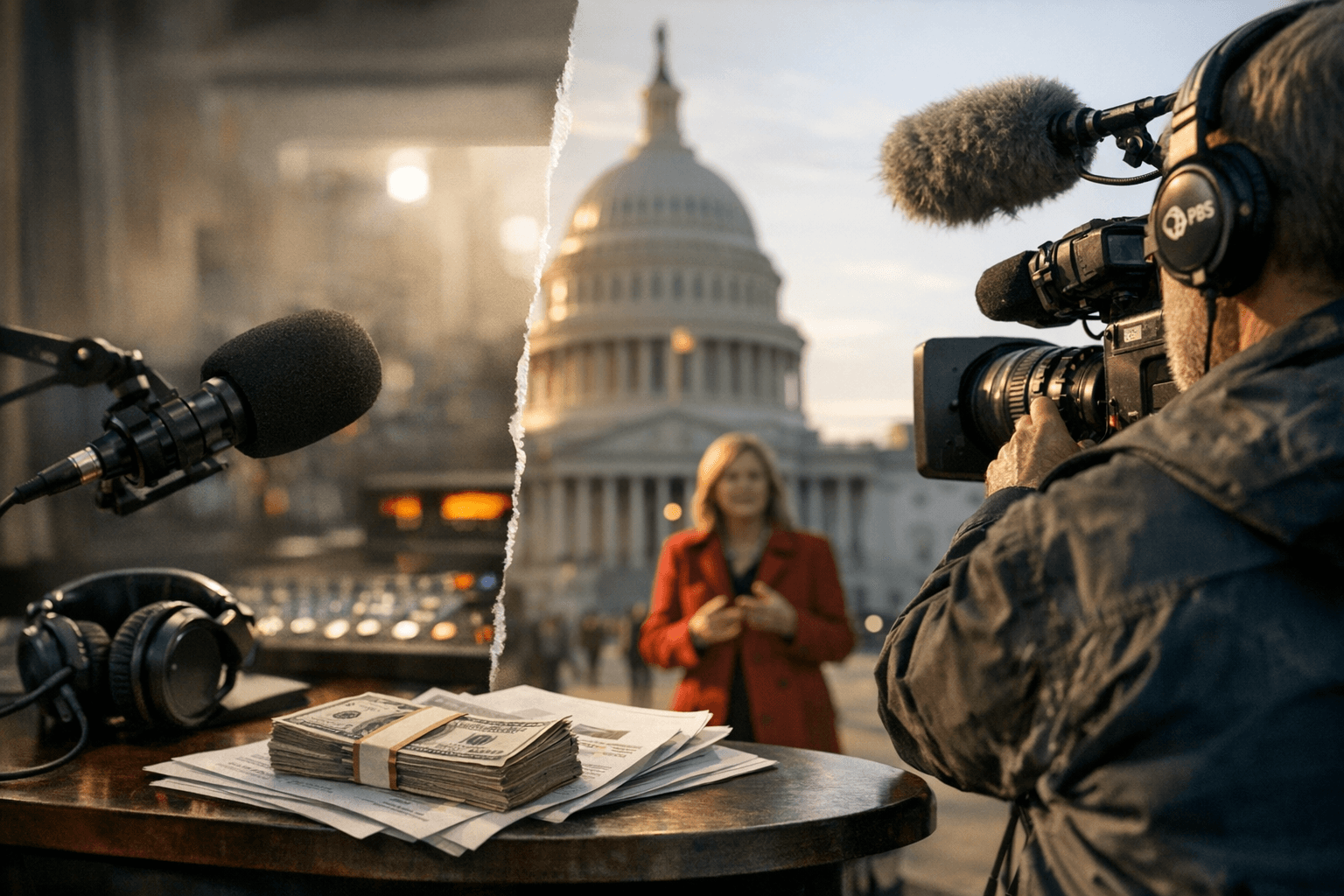
A federal judge drew a sharp constitutional line around congressionally funded public media, blocking the Trump administration from enforcing an executive order that directed federal agencies to cut off funding to NPR and PBS. The ruling by U.S. District Judge Randolph Moss of the District of Columbia put the administration on notice that its effort to defund the country's 246-station public radio network had collided with the limits of presidential authority.
The judicial block arrived alongside a settlement between NPR and the Corporation for Public Broadcasting that deepened the legal setback. Under the agreement, NPR received approximately $36 million in grant money to operate the nation's public radio interconnection system, and CPB agreed not to enforce the executive order unless a court orders it to. Both organizations declared the order unconstitutional outright, a joint position that will carry significant weight when Judge Moss convenes a further hearing in the case on December 4.
Katherine Maher, NPR's president and CEO, called the settlement "a victory for editorial independence and a step toward upholding the First Amendment rights of NPR and the public media system."
The underlying lawsuit was filed in federal court in Washington by NPR alongside three Colorado stations: Colorado Public Radio, Aspen Public Radio, and KUTE, Inc., selected to demonstrate the network's reach across both urban and rural markets. The legal argument ran on two tracks: that the executive order violated First Amendment free speech protections, and that the president relied on authority he does not possess to redirect funding that Congress had appropriated. The complaint framed the administration's motive directly, arguing that "retaliation is Trump's plain purpose."
Trump signed the executive order on May 1, following a March 25 news conference at which he said he would "love to" defund NPR and PBS on grounds that both outlets favor Democrats. The White House characterized the move as ending what it called "taxpayer subsidization of biased media," noting that the two organizations receive tens of millions of dollars in taxpayer funds each year, primarily through CPB. The order directed all federal agencies to terminate direct and indirect funding, barred CPB fund recipients from channeling money to NPR or PBS, mandated CPB revise its 2025 General Provisions to prohibit such funding, and instructed the FCC to investigate whether the two broadcasters had engaged in unlawful discrimination.
CPB attorneys had disputed NPR's characterization, denying the agency retaliated against NPR to appease the president and arguing that NPR's claims were "factually and legally meritless." The settlement nonetheless extracted both the $36 million commitment and the constitutional concession from CPB.
A parallel governance dispute complicated the picture further. Three CPB board members were removed via email, leaving two remaining, and the dismissed members filed their own lawsuit challenging the removals. A judge in that proceeding stopped short of reinstating them but ordered the administration to provide 48 hours' notice before replacing board members with acting or interim appointees, finding the plaintiffs could not demonstrate immediate irreparable harm. CPB's spokesperson said the removed members were proceeding as though they remained on the board, on the premise that a one-line email did not constitute lawful removal for positions requiring Senate confirmation.
PBS did not join the NPR filing. Spokesman Jeremy Gaines said the organization was "considering every option, including taking legal action, to allow our organization to continue to provide essential programming and services to member stations and all Americans." The Senate Appropriations Committee's failure to include future public broadcasting funding in the most recent budget added financial pressure on local stations already navigating the legal standoff.
The settlement does not resolve NPR's broader lawsuit seeking to block any implementation or enforcement of the order. December 4 will determine how far the constitutional constraints on presidential defunding authority extend, a question that reaches well beyond public radio and television to the administration's parallel court fights over Voice of America and Radio Free Europe/Radio Liberty, where attempts to dismantle government-funded news infrastructure have generated their own legal challenges.
This article was produced by Prism’s automated news system from verified source data, official records, and press releases, then run through automated quality and moderation checks before publishing. The system is built and supervised by the people who set the standards it runs under. Read our full AI policy.
Did this article answer your question?