Ferrari unveils its first electric supercar, the Luce, in Rome
Ferrari’s Luce arrived in Rome with more than 1,000 horsepower and a price above €500,000, but its biggest surprise was how unlike a Ferrari it looked.
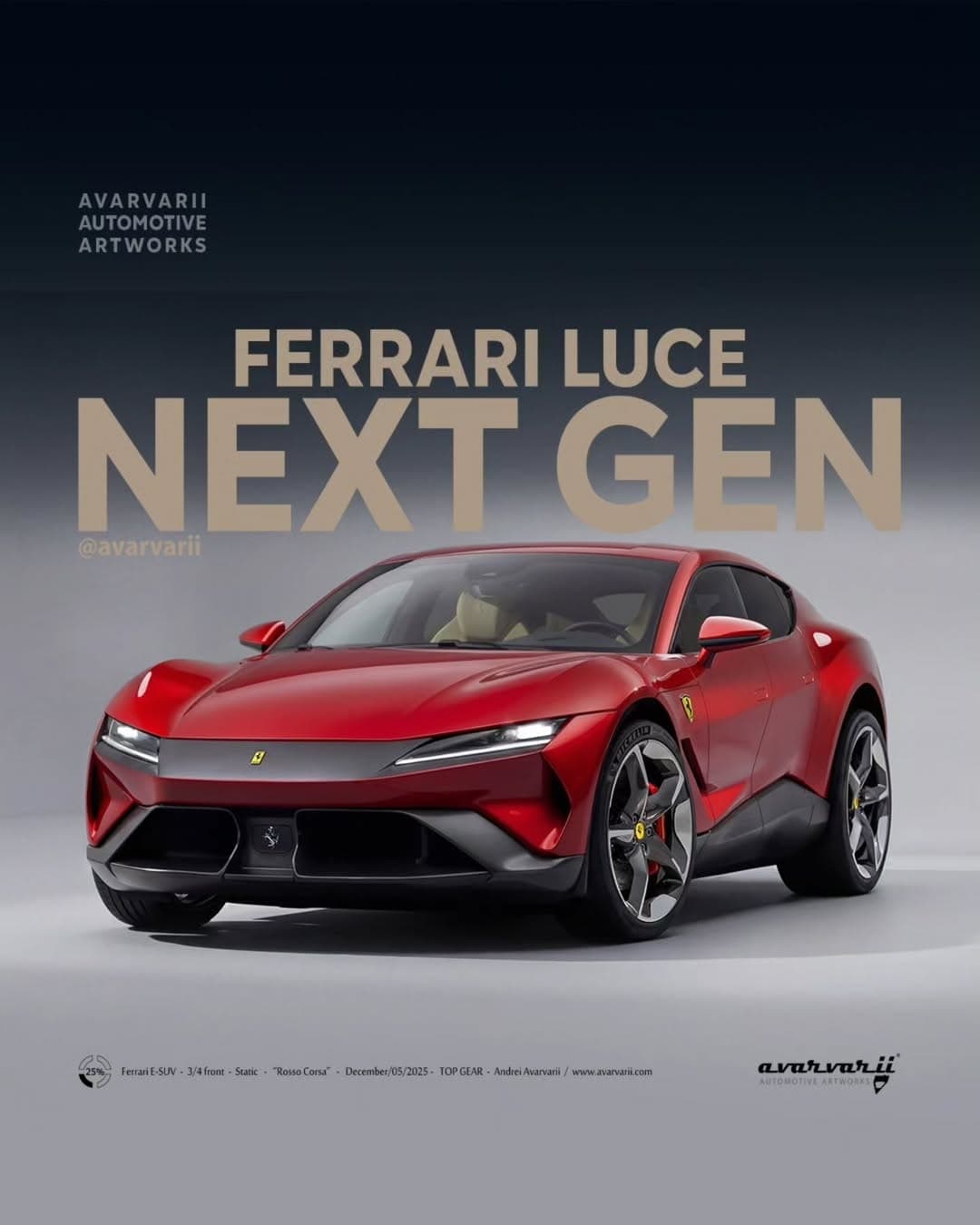
Ferrari used Rome to unveil the Luce, its first fully electric car, a move that puts one of the world’s most closely guarded luxury brands into a market that many rivals are now approaching more cautiously. The model is reported to cost more than €500,000, or about $640,000, and to deliver over 1,000 horsepower, placing it squarely in the ultra-high-performance tier even by Ferrari standards.
The car’s significance reaches beyond the sticker price and output figures. The Luce was developed with Jony Ive and Marc Newson’s LoveFrom collective, and the result is striking because it does not read as an obvious Ferrari at first glance. That is the point. For a company built as much on visual identity as on speed, an electric model that softens or reworks the usual design cues is a direct test of whether Ferrari can modernize without eroding the silhouette that made its name.
Ferrari’s EV debut has been a long time coming. The company inaugurated its new e-building in Maranello, Italy, on June 21, 2024, with the facility intended to produce combustion-engine cars, hybrids and its first electric model. Ferrari had already said that production lines were being tested ahead of an expected start of car production in early 2025. Chief executive Benedetto Vigna also laid out a three-stage unveiling, with the technological heart shown in October 2025, a full world premiere in spring 2026 and customer deliveries beginning in October 2026.

The shift reflects both Ferrari’s own evolution and the wider pressure on legacy automakers to choose where electrification still makes economic sense. Ferrari’s electric push followed its adoption of hybrid technology in Formula One in 2014, giving the brand more than a decade to develop the systems now going into its road car. But the timing also matters: competitors including Porsche and Lamborghini have been scaling back or reassessing EV ambitions as demand softens, leaving Ferrari to make a very expensive bet that its wealthiest customers will still pay for novelty, scarcity and performance, even when the badge on the nose looks different from the one they know.
This article was produced by Prism’s automated news system from verified source data, official records, and press releases, then run through automated quality and moderation checks before publishing. The system is built and supervised by the people who set the standards it runs under. Read our full AI policy.
Did this article answer your question?

