Festive Hats and Costumes Fill Fifth Avenue Easter Parade
Hundreds turned out for New York's free Fifth Avenue Easter Parade, a 150-year-old tradition where papier-mâché hats, pigeon bonnets, and even costumed pets packed Midtown.

Hundreds of New Yorkers and out-of-towners turned Fifth Avenue into a moving exhibition of feathers, flowers, and papier-mâché on Easter Sunday, filling eight blocks of Midtown Manhattan with the kind of extravagant self-expression that no ticket booth or registration form has ever governed.
The Easter Parade and Bonnet Festival ran from 10 a.m. to 4 p.m., stretching from 49th Street to 57th Street, with the densest crowds clustering around St. Patrick's Cathedral between 50th and 51st streets, typically the busiest viewing spot. There is no formal procession; people simply stroll along Fifth Avenue in costume throughout the day.
Art teacher James Haggerty and his 13-year-old daughter Zoe started brainstorming this year's bonnet ideas last Easter and continued building them into the new year. The pair appeared as fixtures again with realistic papier-mâché creations, hoping, as CBS New York noted, to bring smiles to the crowd. Brooklynite Jairus Abts recalled a past appearance with a crate holding 76 real hollowed-out eggs, saying the reaction from onlookers made the effort worthwhile despite how hard the hat was to wear.
Brooklyn-based mixed-media artist and costume jeweler Casey Sobel has attended the festival for years, often spending months creating the elaborate hats and sometimes full costumes she wears along Fifth Avenue. Over the years, Sobel has transformed herself into a garden gnome, a flower pot, and even a giant disco bunny with fluorescent pink fur; this year, she planned to go as a teapot. "It feels like a beautiful community of people because we are all just there to express ourselves in new and interesting ways without it being a contest," she said.
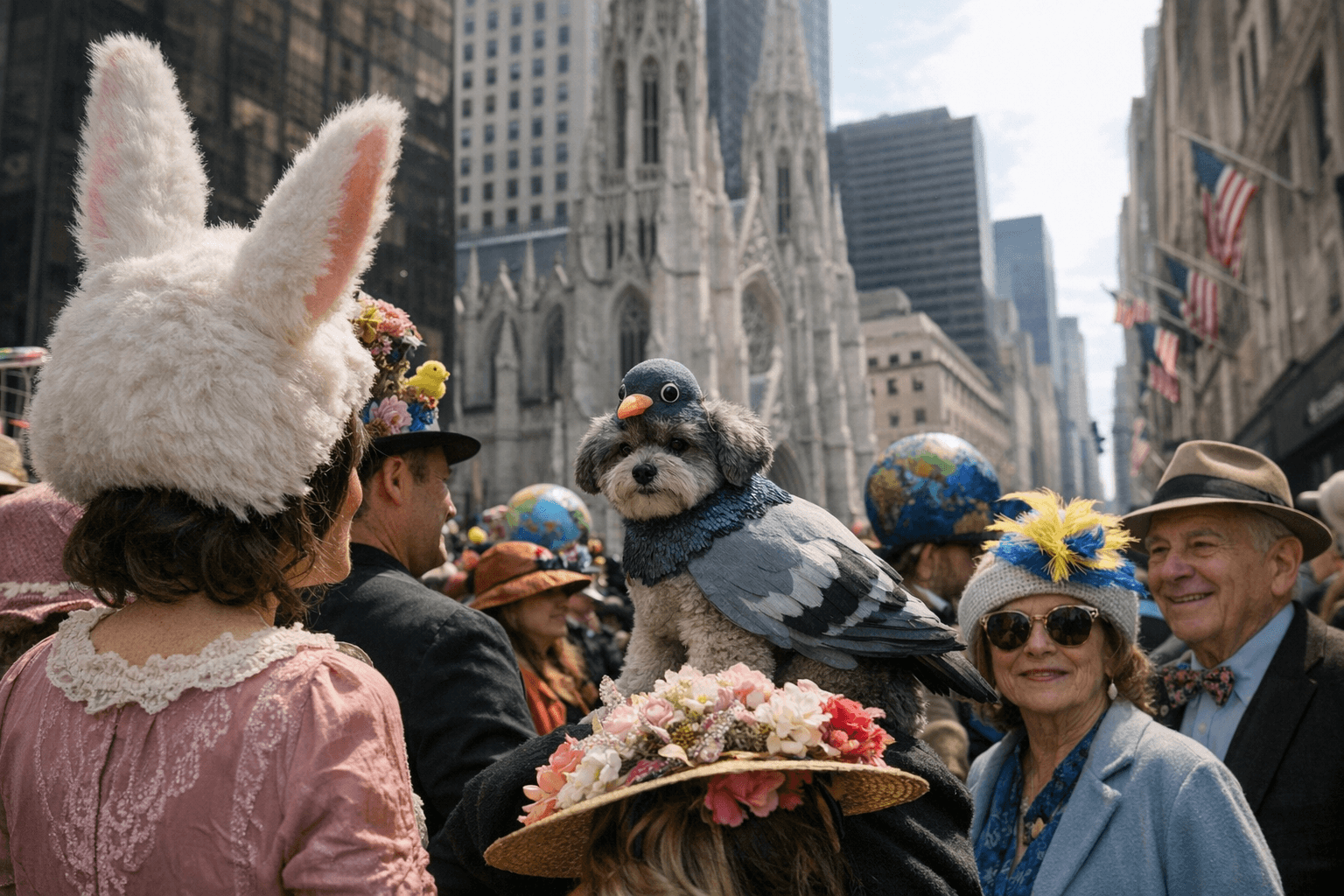
The parade is free and always has been, its economics flowing outward rather than inward: participants spend weeks sourcing materials, commissioning headdresses, or simply raiding craft stores, while the avenue's sidewalks fill with vendors and onlookers whose wallets tend to open anyway. Jane Jubilee, a headdress designer from South Orange, New Jersey, shrugged off the April showers that cut the day short. "It's always a sunny day on Easter, regardless of what's coming out of the sky," Jubilee said. Kerry Auld showed up in a pigeon-themed hat; two chihuahuas named April Moon and Bianca wore bonnets of their own; and a cat named Picco made the scene with its owner Stanley.
The tradition dates back to the 1870s. It was immortalized by Irving Berlin and popularized on screen by Judy Garland and Fred Astaire. The tradition began as a post-church gathering, when New Yorkers would stroll along Fifth Avenue in their finest spring attire. Today, it operates as something harder to categorize: part street fair, part civic ritual, part fashion show with no judges. "Not only is this a beautiful artist and creative expression of our excitement for spring," Sobel said, describing the chance to "shake off the coldness of winter and being inside."
Jamie Leo of the Upper West Side put it more plainly: "We need to resurrect kindness, and Easter is the perfect day to celebrate." On a block where elaborate hats have drawn crowds for more than 150 years, that sentiment, worn on the outside for all to see, remained the parade's most durable tradition.
This article was produced by Prism’s automated news system from verified source data, official records, and press releases, then run through automated quality and moderation checks before publishing. The system is built and supervised by the people who set the standards it runs under. Read our full AI policy.
Did this article answer your question?

