Field Repair Kit Essentials: Isolate Leaks and Install Temporary Plugs
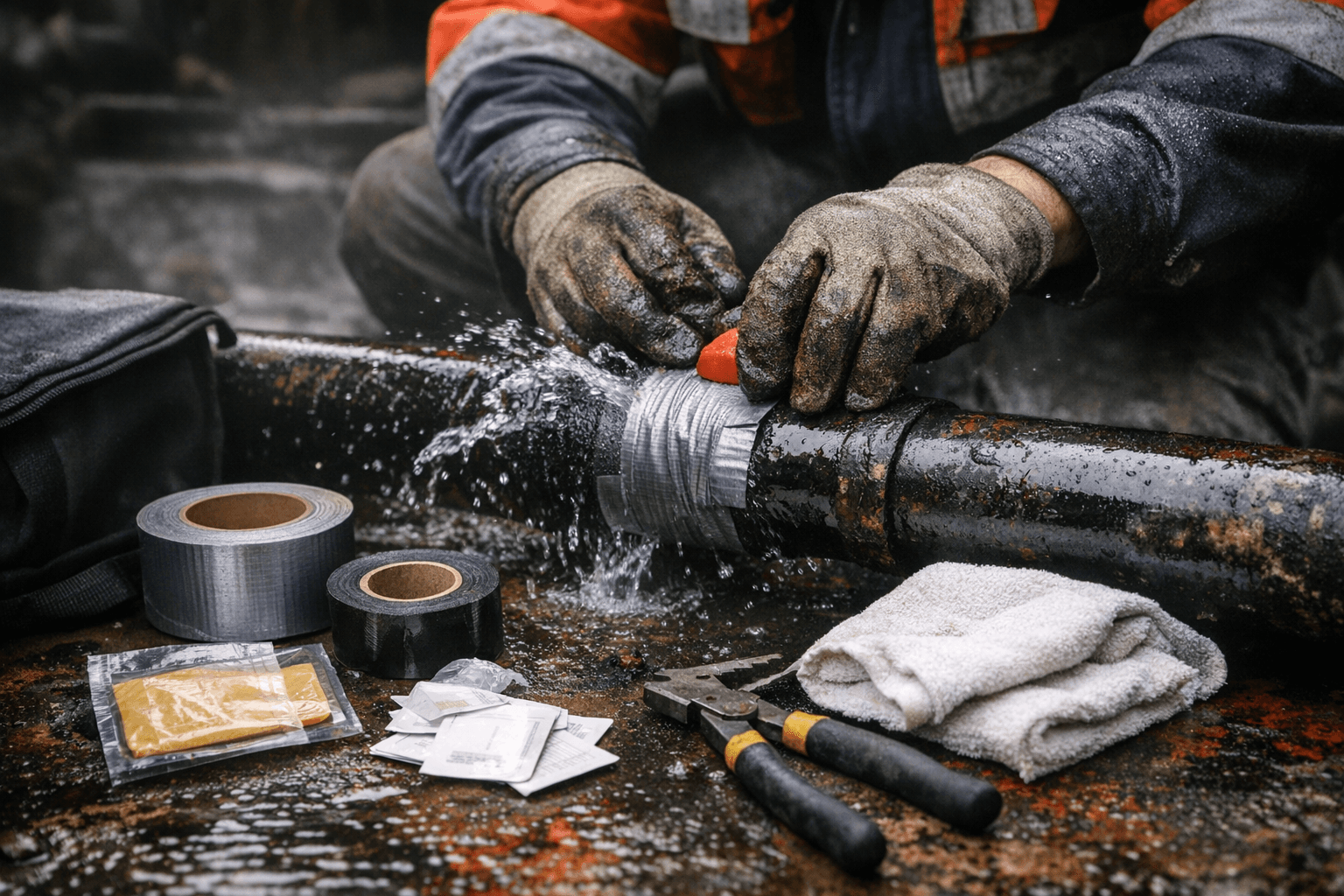
Pack Tear-Aid, a couple tape types (including a whole roll of duct or Gorilla), a dry towel and alcohol pads — know the tape rules and when to stop and tow; replace inflatable patches at home.
1. Intended audience and scope
"Who this guide is for: day sailors, paddlers, cruisers and small‑boat owners who may need to stop or slow water ingress in the field until a permanent repair is possible." This guide gives the hands‑on kit list and field techniques you’ll actually use when a hull or skin starts leaking mid‑trip. Treat the items here as stopgap measures to keep you afloat and get you home for a permanent repair.
2. What this piece covers
"What the guide covers: basic diagnosis techniques, temporary plugging methods, recommended emergency materials (moldable sealants" — use this as your roadmap: identify the leak, isolate it, install a temporary plug or patch, and know which materials to keep on the boat. The missing remainder of that sentence is why I focus on the explicit, field‑tested items and tactics called out by paddlers and retailers.
3. Inflatable boats: a critical caution from the retailer
"These products can provide permanent repairs in many applications, and they are certainly great things to have in your repair kit for on-the-water emergencies. However, for air-holding patches on inflatable boats, we recommend you replace field patches with permanent repairs when you get back home." NRS’s line is blunt: even if your Tear‑Aid or Patch‑N‑Go holds, plan to remove and properly repair or professionally patch inflatable air chambers once you’re ashore. Don’t treat a field patch as a final fix for pressurized or load‑bearing seams.
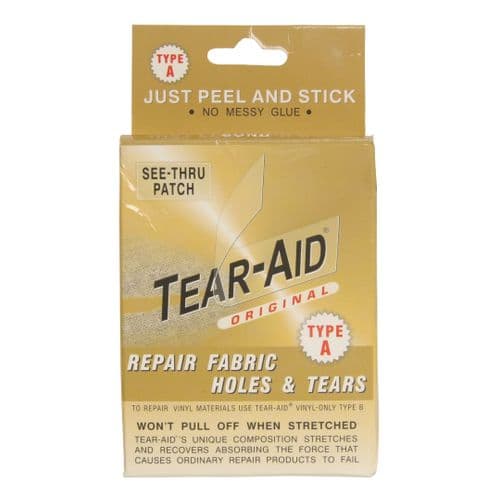
- Tear‑Aid kit / Tear‑Aid roll — "Tear-Aid comes in a kit with various size patches, alcohol prep pads and reinforcement filament for repairing tears in edges. It’s also available in a roll 3"W x 5'L. The roll is a great item to pack in your repair kit." Carry the kit for small rips and the 3"W x 5'L roll when you need longer coverage; the included alcohol pads speed adhesion in the field.
- Patch‑N‑Go / Kirch’s Kwik Patch — "Patch-N-Go is designed to be a permanent patch. This is the right tape for a careful repair job, the only more durable option is to glue patch material to the boat (see below)." Treat Patch‑N‑Go as your go‑to for a careful, high‑strength tape patch where substrate compatibility allows.
- Tenacious Repair Tape (Gossamer Gear) — "Tenacious tape has more stretch than sheathing tape. Tenacious tape is best on uncoated nylon (the interior of some hulls), and not as good for TPU-coated nylon (the exterior of most hulls)." Keep this for interior tube or pack repairs where stretch and conformability matter.
- Sheathing tape (Tyvek/Tuck) — "Tyvek: 24 inches. I don’t think Tyvek would work on a long patch. Realistically, I only need a few inches at a time." Use the Tyvek/Tuck sheathing tape for quick, stiff backing strips and short reinforcement runs.
- Vinyl tape — "Vinyl: 24+ inches. This piece is intentionally long enough to span the entire cargo zipper." Vinyl is useful for long seams and zippers; choose pieces 24" or longer to span gear attachments.
- Gorilla / Black Gorilla Tape — "Gorilla: I’ve started carrying the entire 1″ roll. I justify the bulk because it might be useful for other repairs or first aid." Gorilla provides durable, thicker sticky tape that tolerates rougher surfaces.
- Duct tape — "Have used duct tape several times. Make sure you carry a dry towel in your emergency kit. Tape does not stick to wet surfaces" and carry a whole roll if you can. For many paddlers the roll is the ultimate field material.
- West Marine fiberglass repair kit — "West Marine has a tidy little fiberglass repair kit" — bring it only if you have the skills and time; it’s compact but not exhaustive.
- Acetone, gloves, scissors — "that will get someone started but I don’t think it has all the needed equipment. You’d want some acetone for cleaning and clean-up, lots of latex or nitrile exam gloves and scissors for cutting the cloth, for instance." If you attempt fiberglass work, bring these extras.
- Dry towel, alcohol prep pads, reinforcement filament — these speed prepping and adhering patches; alcohol is in Tear‑Aid kits and also useful for tape removal.
- Float bags and paddle halves — "float bags are carried…lotsa duct tape…you can use the paddle halves as “splints”…lotsa things you can do when you have to…" Float bags give reserve buoyancy; paddle halves work as improvised splints for bracing or holding a patch in place.
- Moldable sealants — the original brief recommends "moldable sealants" as emergency materials; bring a small block of a pliable sealant if you have a brand you’ve tested.
4. What to carry — the compact kit (bulleted list of named items)
5. Tape selection and how it affects adhesion
"I like to carry multiple tapes so that I have options if Plan A doesn’t work. I carry at least two feet of tape, and commonly use the tape on other equipment (torn clothing, leaking tent, cracked water bottle)." Carry at least two feet of different tapes and a roll of duct or Gorilla if space allows. Match tape to substrate: Tenacious for uncoated nylon, avoid Tenacious on TPU exteriors, and remember "Some tapes will not adhere to the exterior side of the hull" — test compatibility in calm conditions before you need it.
6. Applying a tape patch that will hold
"Tape should extend at least one inch (two cm) beyond the edges of the puncture or tear. Round the corners on a tape patch to make the repair more durable." Dry and clean the area if possible — "Tape does not stick to wet surfaces," so have that dry towel close. Whenever you can, "If possible, apply tape to both the inside and outside of the puncture or tear." Two layers (interior + exterior) buys real strength.
7. Removing temporary tape and switching to a permanent repair
"suppose you used a vinyl tape for a quick repair. How do you remove it when you want to make a more permanent repair job? Just rip it away? Use some kind of solvent? Thanks! I’d try a slow peel and alcohol. I’d be nervous about using stronger solvents." Slow peel and alcohol will usually remove adhesive without damaging coatings; avoid harsh solvents that attack TPU or fabric coatings. Plan for replacement of inflatable air‑holding patches at your home workshop, per the NRS guidance.
- Stop the flooding path: bail or start a pump and keep minimal freeboard.
- Dry and prep around the leak: use a towel, alcohol pad, and scrape salt/grit before applying patches.
- Apply a backing when possible (rigid strip or folded tape), then cover with your strongest tape, extending at least 1" beyond the damage and rounding corners.
- If you cannot reach shore, use the paddler transfer and towing method to effect repairs or get to better conditions: "Have the paddler in the leaking boat climb out of his boat onto your front deck, facing you. While you drag his boat up between the two of you, he can scull on the other side. That will keep you from capsizing away from the other boat. The other boat will keep you from capsizing towards it. It sounds much more difficult than it really is." This technique stabilizes both boats while you patch.
8. Field steps to isolate a leak and install a temporary plug
9. Fiberglass hulls: when to stop and tow
"from my limited fiberglass repair experience, I would say that if you can make repairs with a roll of duct tape in the field (carry a whole roll), do it. I’d much rather do that than try to mess with fiberglass repair in the field. Unless you had ideal conditions, which you probably wouldn’t, doing a good fiberglass repair in the field with limited materials and resources seems like it would be quite a challenge." Use duct tape as the emergency stopgap; only attempt fiberglass onshore or with full kit and ideal conditions. If you carry a West Marine kit, remember it "will get someone started but I don’t think it has all the needed equipment."
10. Improv, humor, and safety shorthand
"Spam Cut to fit, wedge into hole, watch out for sharks. Learned that tip from the MD Duckheads." Keep a sense of humor, but prioritize safety: float bags, paddles as splints, and keeping calm while bailing or towing. Finish every field fix knowing you need to inspect and replace temporary materials once you return to shore.
11. Quick contact and follow‑up resources
If you want retailer support or product pages, NRS lists customer contacts and a flagship location: phone "877.677.4327" and "Flagship Store Showcasing the best of NRS in Moscow, ID." Use vendor Learn Centers to confirm product specs before relying on them as permanent fixes.
Final word Carry a small, layered kit (Tear‑Aid, at least two tape types including a full duct or Gorilla roll, a dry towel, alcohol pads and a few tools), know the tape rules, and practice the paddler transfer and basic tow so you can isolate a leak without making things worse. Field patches keep you afloat — but especially for inflatables, plan to replace them with proper repairs when you get home.
Know something we missed? Have a correction or additional information?
Submit a Tip