FIFA ties World Cup plans to Trump as referee denied entry to US
FIFA’s Trump alignment has become a governance issue as a Somali referee was denied entry, putting visas, access and tournament legitimacy in play.

FIFA’s World Cup strategy now runs through Donald Trump, and the arrangement is already carrying consequences beyond ceremony and optics. Gianni Infantino has cultivated the president’s favor since at least 2018 and 2020, when he called Trump a “great friend” at Davos, and the relationship deepened after Trump returned to the White House in 2025.
In March 2025, FIFA said Trump created a White House task force to coordinate preparations for the 2025 Club World Cup and the 2026 World Cup. FIFA said the two tournaments were expected to generate about $40 billion in economic impact and 200,000 jobs. It also cast the 2026 event as the biggest in its history: 48 teams, 104 matches, 16 host cities and more than 10 million visitors.
The symbolism intensified on December 5, 2025, when Infantino presented Trump with the inaugural FIFA Peace Prize during the World Cup draw in Washington, D.C. The award was announced as an annual prize, and the decision to stage the draw in the capital, after earlier expectations it might be held elsewhere, underscored how closely the tournament’s planning had become tied to Trump’s political orbit.
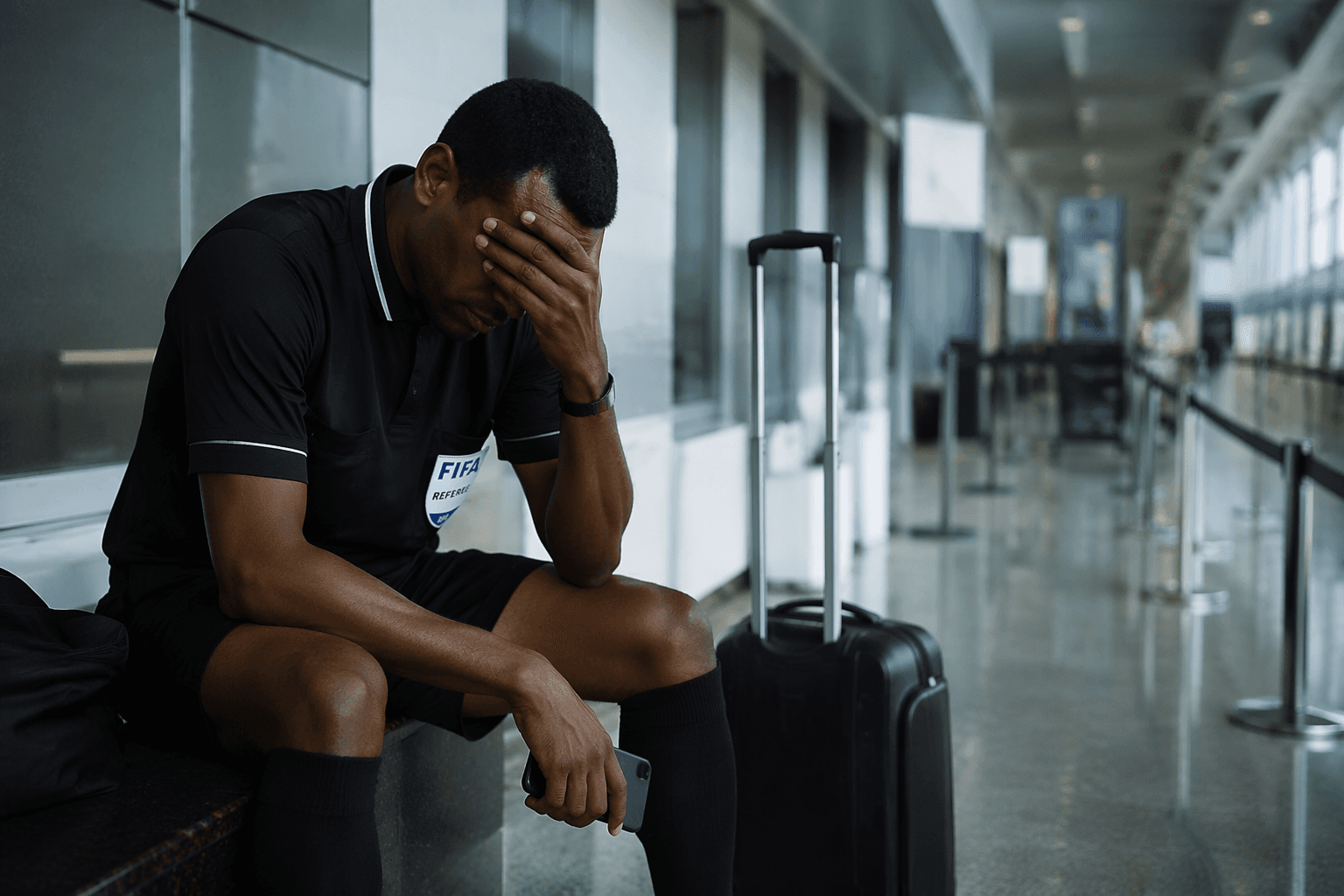
That closeness has now collided with immigration policy. In June 2026, FIFA confirmed that Omar Abdulkadir Artan, a 34-year-old referee from Somalia, had been denied entry to the United States and would not be able to train or officiate at the World Cup. Artan had just been named the Confederation of African Football’s 2025 Male Referee of the Year, and he would have been the first Somali referee at a men’s World Cup. U.S. authorities turned him away over “vetting concerns,” while Reuters reported that the Trump administration was enforcing full or partial travel restrictions on 39 countries, including Somalia.
The episode sharpened the institutional tension at the heart of FIFA’s U.S. strategy. Of the 104 matches, 78 are scheduled to be played in the United States, making visa rules and border screening central to whether the tournament functions as promised. FIFA has said host governments ultimately decide visas and admission, but it had also insisted that approved players and officials would not be affected by heightened scrutiny. Artan’s case exposed the gap between those assurances and the reality of federal enforcement.
The stakes extend well beyond one referee. Lawmakers and local officials have already voiced skepticism about FIFA’s dependence on Trump, warning that it could leave the sport’s governing body exposed to immigration and security policy. Supporters argue the opposite: that Trump’s backing is indispensable because the World Cup depends on federal coordination, security planning and visa processing. Infantino has framed the partnership as necessary for a tournament that is safe and welcoming. The test now is whether FIFA’s wager on political access can survive the demands of running the world’s biggest sporting event.
This article was produced by Prism’s automated news system from verified source data, official records, and press releases, then run through automated quality and moderation checks before publishing. The system is built and supervised by the people who set the standards it runs under. Read our full AI policy.
Did this article answer your question?