Finland lifts ban on nuclear weapons to bolster NATO defense
Finland’s parliament voted 125-61 to drop its nuclear-weapons ban, a sharp shift for a NATO country on an 830-mile border with Russia.

Finland’s parliament voted 125 to 61 to lift its long-standing ban on nuclear weapons, a major security policy break for a country that joined NATO in April 2023 and shares an 830-mile border with Russia. The change underscored how much Europe’s defense assumptions have shifted since Russia’s full-scale invasion of Ukraine pushed Finland to abandon decades of military non-alignment.
The law amends Finland’s 1987 Nuclear Energy Act and related criminal provisions that had categorically barred the import, transport, possession, manufacture and detonation of nuclear weapons on Finnish soil. Under the new rules, nuclear weapons may be brought, transported, supplied or possessed in Finland when required for national defense, while all other cases remain strictly prohibited.
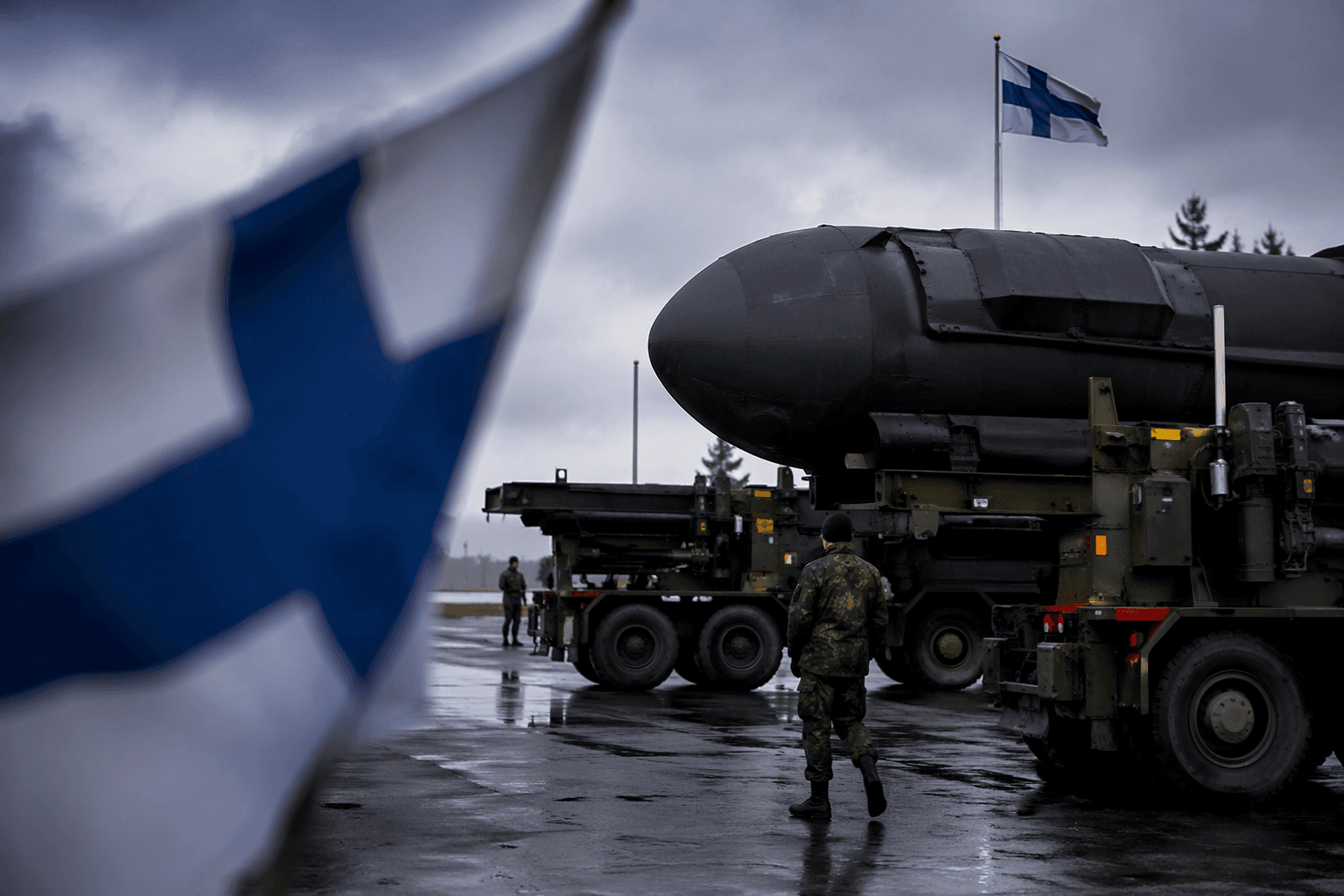
The Finnish government has said it does not currently plan to host nuclear weapons. But the vote gives Helsinki legal room to align more closely with NATO’s deterrence policy, a significant change for a state that had treated nuclear arms as wholly off-limits for nearly four decades. Defense Minister Antti Häkkänen declined to outline specific scenarios in which nuclear weapons might be brought into Finland, citing the classified nature of NATO nuclear policy.
The decision has wider implications for alliance planning because Finland sits on one of NATO’s longest frontiers with Russia. It signals that frontline members are recalibrating not just troop deployments and air defenses, but also the legal framework around deterrence, burden-sharing and the movement of strategic assets in wartime or crisis conditions. For Finnish defense policy, the new law removes a domestic obstacle that could have complicated coordination with allies in an emergency.
The shift also marks a clear turn from Finland’s postwar tradition of neutrality. What was once a categorical prohibition has now been recast as a contingency for national defense, reflecting a more unpredictable security environment and the pressure Russia’s posture has placed on Nordic states. In practical terms, the law does not mean nuclear weapons are coming to Finland now. It does mean Helsinki has rewritten the rules so NATO can plan with fewer legal constraints if deterrence on the alliance’s northeastern edge is tested.
This article was produced by Prism’s automated news system from verified source data, official records, and press releases, then run through automated quality and moderation checks before publishing. The system is built and supervised by the people who set the standards it runs under. Read our full AI policy.
Did this article answer your question?


