Fire Destroys Homes in Seoul's Gangnam Shantytown, Hundreds Evacuated
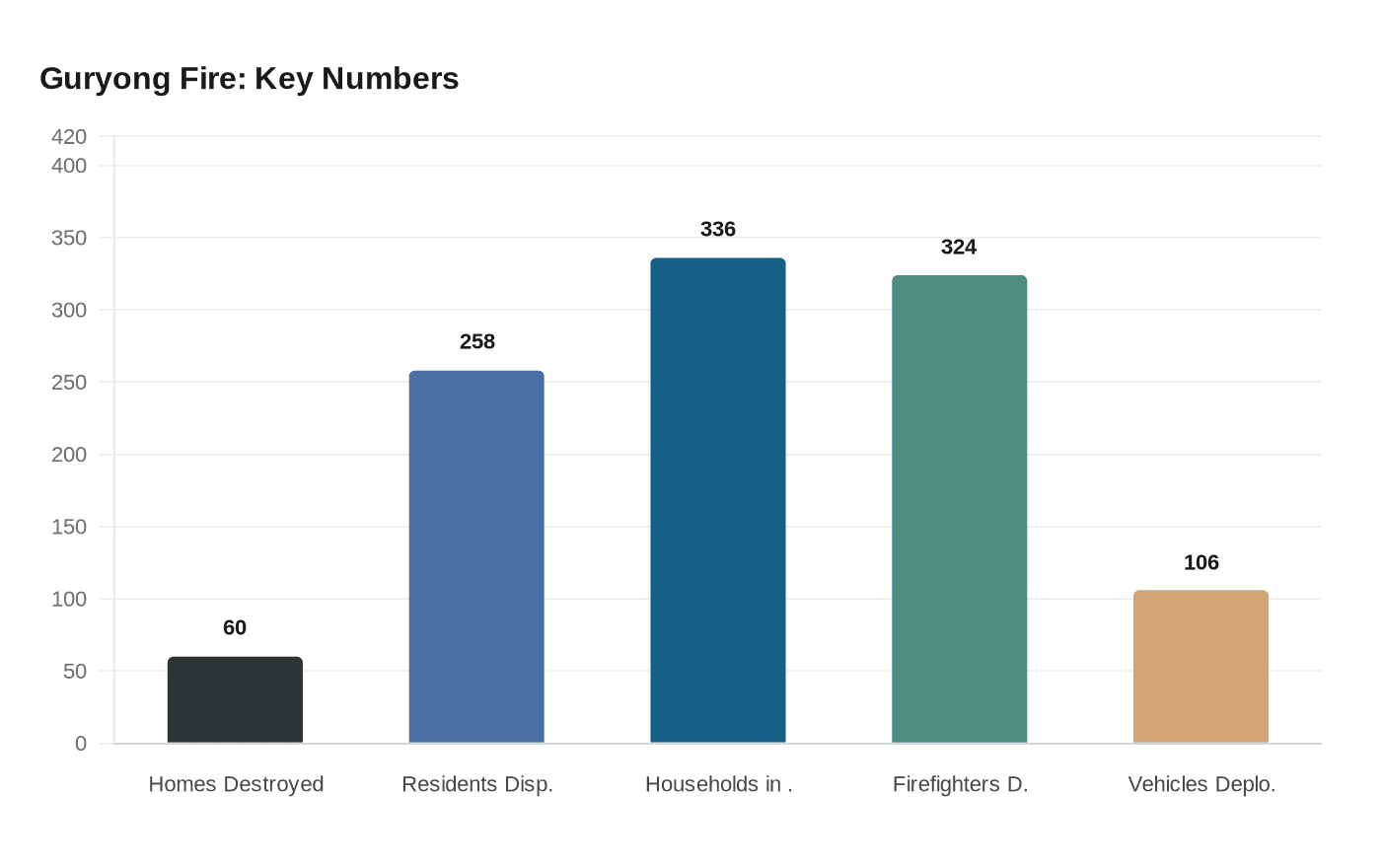
Kim Ok-im, 69, fled through smoke as fire consumed at least 60 homes in Guryong, Seoul's last shantytown hidden beside Gangnam's luxury towers, displacing 258 residents.
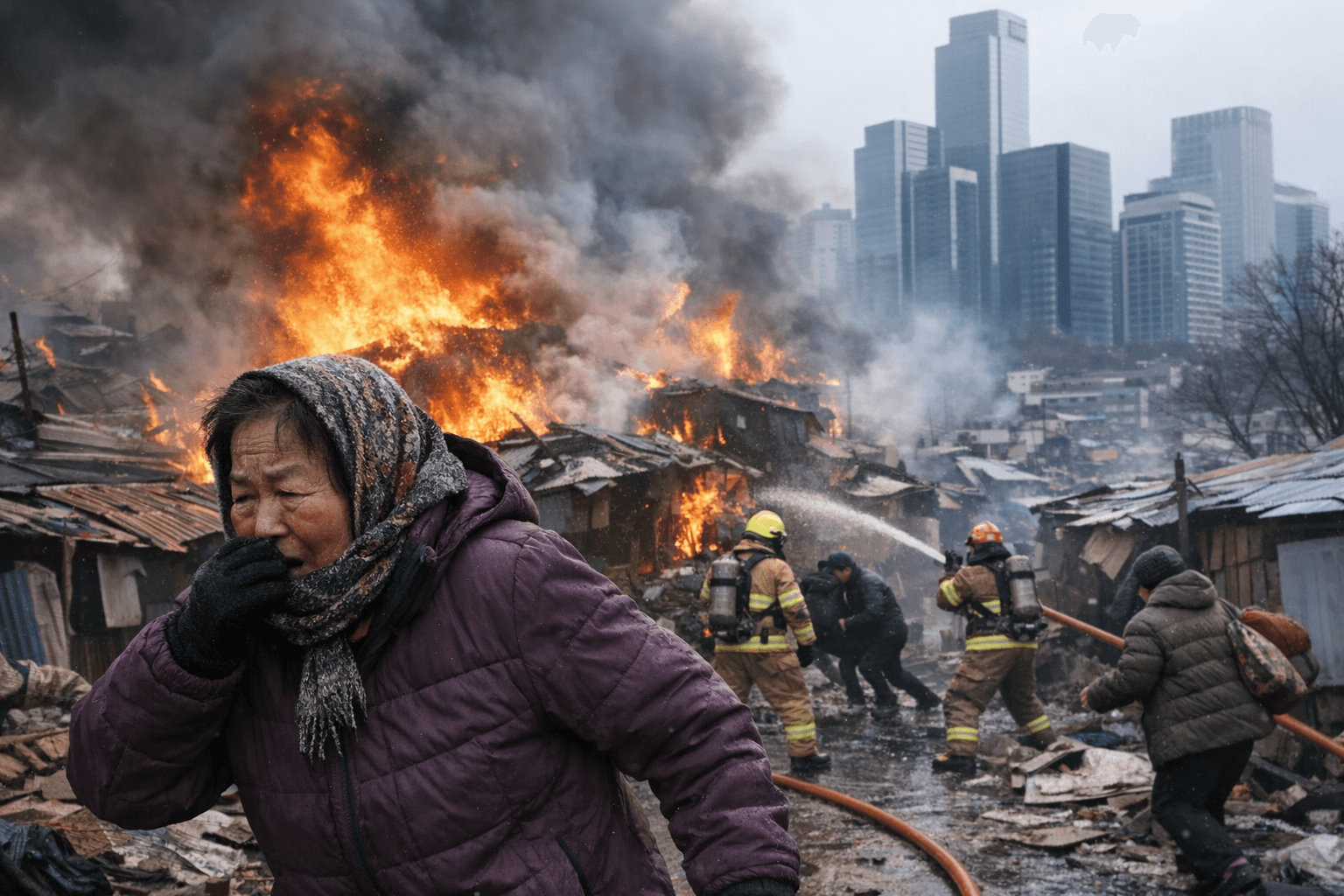
Kim Ok-im was asleep when a neighbor's phone call jolted her awake just after 5 a.m. on January 16. She ran outside to find Guryong Village already burning. "I ran out and saw the flames already spreading," the 69-year-old, who has lived in the area for nearly 30 years, told Reuters. The fire that swallowed her neighborhood that morning razed at least 60 homes and displaced 258 residents before it was finally extinguished more than eight hours later.
The blaze tore through Guryong Village, which sits on the fringe of Gangnam, Seoul's wealthiest district, a neighborhood of glittering skyscrapers and some of the highest real estate prices in South Korea. A six-lane highway is all that physically separates the two worlds. The fire was fully extinguished at 1:28 p.m., according to South Korea's National Fire Agency, which confirmed no fatalities. "We are relieved that we were able to extinguish the fire without any casualties," the agency said.
The response was massive. South Korea deployed 324 firefighters and 106 vehicles to contain the blaze. Yonhap News Agency reported that 85 fire trucks were dispatched, while a firefighting helicopter was grounded due to poor visibility. Safety Minister Yun Ho-jung ordered officials to "mobilise all available personnel and equipment to focus fully on rescuing lives and extinguishing the fire." Bloomberg reported at least 60 homes were destroyed, though an official damage assessment had not been released by the time the National Fire Agency declared the fire out.
Guryong's vulnerability was not a surprise to anyone who had looked closely. A fire department assessment following a separate blaze in 2023 found that the settlement's makeshift homes are densely packed and built from highly flammable materials: vinyl sheets, plywood and Styrofoam. The same conditions that make Guryong cheap to inhabit make it catastrophic when flames take hold.
The village is a relic of displacement. In the 1970s and 1980s, low-income families forced out of their homes by government redevelopment projects, including construction for the Asian Games and the 1988 Seoul Olympics, settled on the edge of Gangnam without permits. The homes they built were flimsy by necessity: plywood walls, scrap metal frames, roofs of plastic sheeting. "Here, most residents are elderly people over the age of 70," Lee Young-man, a residents' community leader, told Yonhap News Agency in 2017.
About 336 households remain in Guryong, according to the Gangnam District city planning department. Most others have already left ahead of a long-promised redevelopment. In May 2022, Gangnam District announced the area would be demolished and replaced with an "eco-friendly luxury residential complex." The timeline for that transformation has never been fixed, and the January fire, which left hundreds without shelter in a neighborhood surrounded by wealth, sharpened a question Seoul has deferred for decades: what becomes of those still waiting.
This article was produced by Prism’s automated news system from verified source data, official records, and press releases, then run through automated quality and moderation checks before publishing. The system is built and supervised by the people who set the standards it runs under. Read our full AI policy.
Did this article answer your question?


