First tariff refunds begin reaching businesses after Supreme Court ruling
First refunds are landing for importers as Washington faces a tariff bill that could top $166 billion, with the Supreme Court’s ruling also curbing presidential trade power.
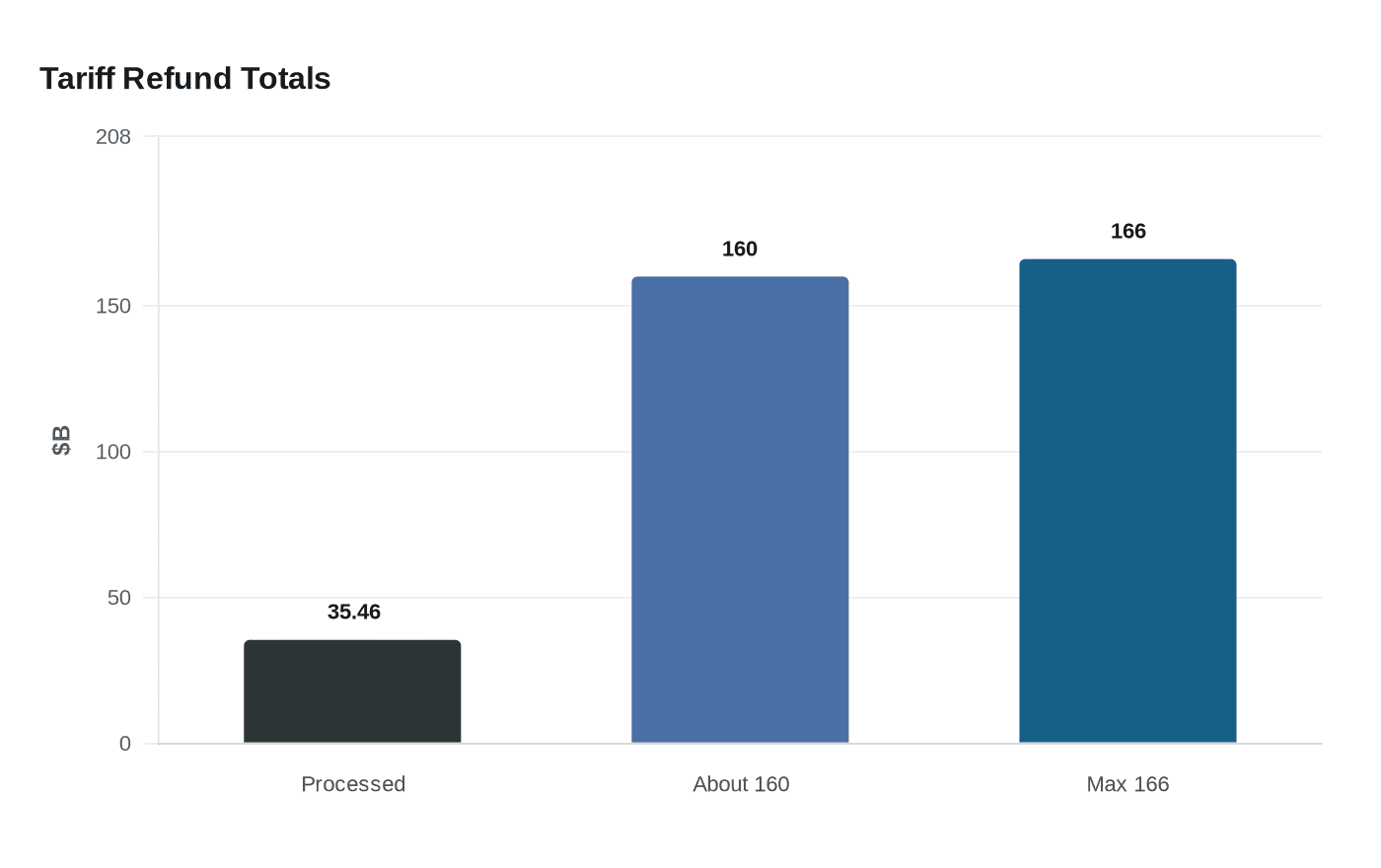
The first tariff-refund payments have started reaching businesses, opening the door to a federal payout that could total about $160 billion plus interest and reach as much as $166 billion if more claims are approved. Oshkosh Corporation has begun receiving payments, and Basic Fun, the toy maker behind Care Bears and Tonka trucks, said it had started getting refunds as well.
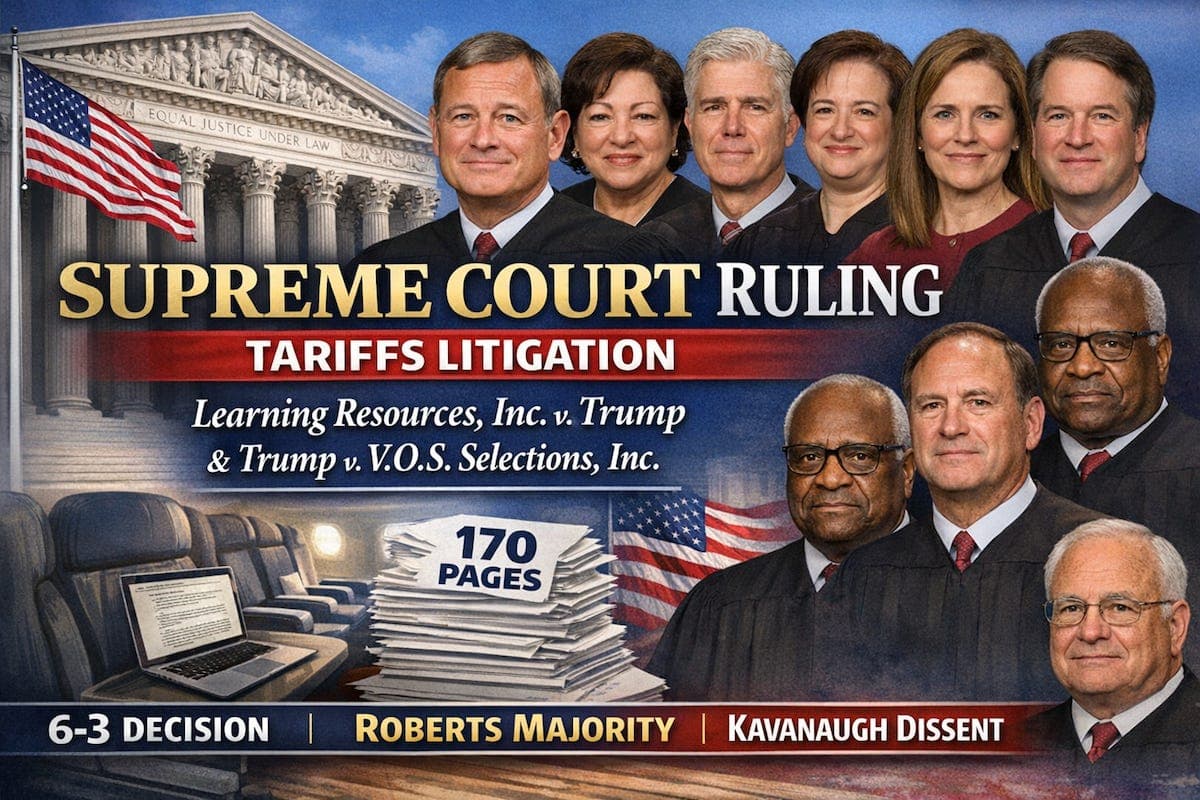
The refunds follow the Supreme Court’s February 20, 2026, 6-3 ruling in Learning Resources, Inc. v. Trump and Trump v. V.O.S. Selections, Inc., which held that the International Emergency Economic Powers Act does not authorize the president to impose tariffs. The duties struck down in that case included a 25% tariff on most Canadian and Mexican imports, a 10% tariff on most Chinese imports tied to drug-trafficking claims, and reciprocal tariffs of at least 10% on imports from all trading partners.
U.S. Customs and Border Protection responded by building a refund portal called the Consolidated Administration and Processing of Entries. By May 11, the agency had received 126,237 refund applications, validated 86,874 of them covering 15.1 million eligible entries, and finalized 8.3 million shipments for refund calculation. The refunds already processed, including interest, totaled $35.46 billion. The first phase covers entries CBP finalized within the past 80 days, and the agency said the earliest electronic payments would begin going out May 12.
For businesses, the timing matters as much as the amount. Basic Fun chief executive Jay Foreman said the early payment represented only about 5% of the company’s total claim. UPS, FedEx and DHL have all said they plan to file for refunds on behalf of customers, and UPS chief executive Carol Tome has said the company intends to pass the money back once it receives it from the government. Major importers, from carmakers to Under Armour, are also expected to see a profit lift from the reimbursements.
The political and legal fight is not finished. Trump called the refund process “crazy” in a May 12 radio interview and said, “We’ll fight that,” arguing the tariffs had brought in fortunes from countries and companies he described as hostile. After the Supreme Court ruling, he imposed a temporary 10% global tariff under Section 122 of the Trade Act of 1974, but the U.S. Court of International Trade ruled on May 7 that move unlawful. That decision was limited to Washington state and two companies, Burlap & Barrel and Basic Fun, so it did not stop the tariff nationwide, and the administration has appealed. The result is a test of how far a president can go in setting trade policy alone, and whether the refunds will reach businesses quickly enough to offset months of higher import costs.
This article was produced by Prism’s automated news system from verified source data, official records, and press releases, then run through automated quality and moderation checks before publishing. The system is built and supervised by the people who set the standards it runs under. Read our full AI policy.
Did this article answer your question?