Five Iranian players flee team in Australia, claim asylum and protection
Five members of Iran’s women’s national soccer team left their camp in Australia and are reported safe with police as calls grow to grant asylum and block their return.
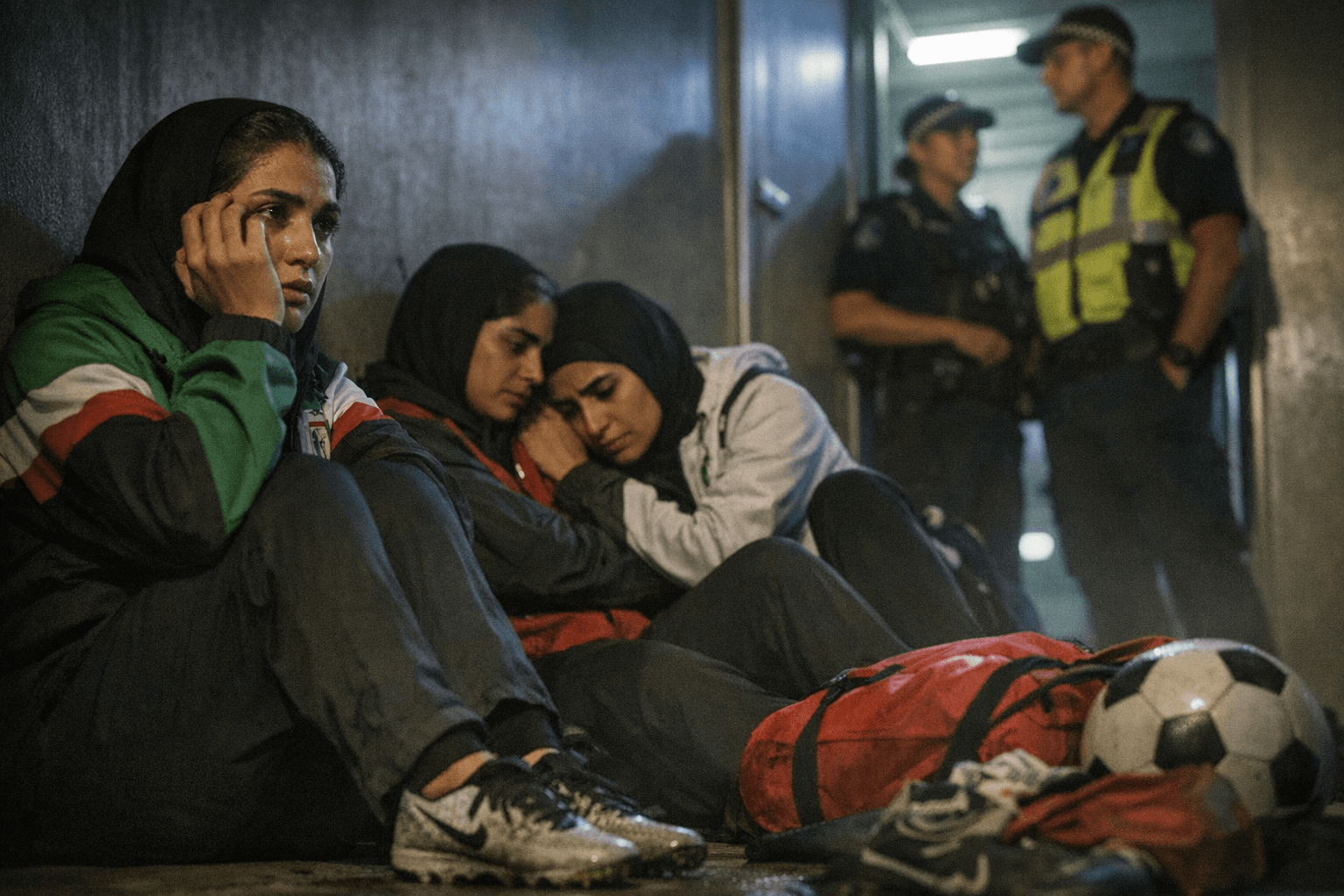
Five members of Iran’s national women’s soccer team have left the team’s hotel in Queensland and are in police care after seeking asylum, Reza Pahlavi’s office said, heightening an international dispute over the safety of athletes who defy Tehran. The players named by Pahlavi are Fatemeh Pasandideh, Zahra Ghanbari, Zahra Sarbali, Atefeh Ramezani Zadeh (also spelled Atefeh Ramazanzadeh) and Mona Hamoudi, and his statement said they “have managed to leave the team's camp and seek asylum in Australia.”
The departures follow a sequence of events on the pitch and off it. Before their opening Women’s Asian Cup match against South Korea the players declined to sing or salute the national anthem, and rights advocates say the team later sang and performed a military salute under pressure during subsequent matches. Alireza Mohebbi, an Iran International correspondent in Australia, said the security detail “forced them to sing the anthem... the regime pushed them not just to sing the anthem but to do the military salute.” Coach Marziyeh Jafari, speaking at a post-match press conference, said she was “keen to return home” and wanted to be “with my compatriots and family.”
The team was eliminated after a 2-0 loss to the Philippines at Gold Coast Stadium, where footage and eyewitness accounts show supporters surrounding the team bus and banging on its side as it left. Fans were reported to be chanting “let them go.” Activists also said at least one player made a “help” hand signal through a window; that image and the claim remain unverified but have circulated widely and intensified public pressure in Australia.
Global figures have pushed Australia to act. U.S. President Donald Trump criticized Canberra, saying it was “making a terrible humanitarian mistake” if the players were returned, and was reported to have told Australia’s prime minister that “He’s on it! Five have already been taken care of, and the rest are on their way.” Israel’s minister Gila Gamliel wrote to the Australian ambassador urging that the players be allowed to stay, saying they face “a real threat to their freedom and even to their lives.” Human-rights advocate and former Socceroos captain Craig Foster said, “We all have very reasonable and serious concerns for their safety.”
Domestic pressure in Australia has sharpened. More than 66,000 people have signed a petition urging the government not to allow the team to be sent home while credible fears for players’ safety remain. The NSW Anti-Slavery Commissioner has called for an urgent probe into possible coercion of remaining team members, and the regional football union said it had been unable to contact several players to discuss their wishes.
Australian Federal Police and the Department of Home Affairs have been contacted for comment, and authorities face a legal and diplomatic knot: there is no public confirmation that formal asylum applications have been lodged or granted for the five players, and the exact status of the delegation’s security detail has not been independently verified. Iranian state media has branded the athletes “traitors,” language that increases the risk they could face punishment on return.
The case now tests Australia’s obligations under refugee and human-rights law and the protections tournament organizers owe to competitors. The immediate question is practical: will Australian authorities prevent the team’s departure and process asylum claims, or allow the delegation to return with players who say they fear persecution? The decision will set a precedent for how democracies respond when athletes fleeing repression seek sanctuary on foreign soil.
This article was produced by Prism’s automated news system from verified source data, official records, and press releases, then run through automated quality and moderation checks before publishing. The system is built and supervised by the people who set the standards it runs under. Read our full AI policy.
Did this article answer your question?