Fiverr freelancers embrace AI to create Christian content and Bible videos
Fiverr’s Christian-content market is filling with AI-made sermons, devotionals and Bible videos, blurring the line between ministry and mass-produced content.

Faith content is now part of the gig economy’s industrial scale-up. On Fiverr, freelancers are advertising fast-turn Christian articles, sermons, devotionals, blog posts, YouTube scripts and AI Bible-story videos, turning spiritual messaging into a product category built for speed, volume and low-cost delivery.
The marketplace now shows thousands of listings tied to Christian content and related AI services, including pages for Christian content, Christian article, AI content writing, AI generated and AI Bible story videos. That visibility matters because the work is designed to look personal and handcrafted while often being assembled with generative tools and light editing, a workflow that compresses writing, video production and script development into a single transaction.

Fiverr’s own rules show how normalized the practice has become. The company allows AI-generated content, but says freelancers must have the rights to the material and must follow copyright, trademark, privacy and consumer-protection rules. It also says AI output has to be customized for each order, cannot be delivered in bulk to multiple clients, and cannot be used for misinformation, deepfakes, fake accounts or AI-generated imposters for unlawful, sexual or misleading purposes. Fiverr says clients should clearly state if they want work made without generative AI, and it says misuse can lead to content removal or permanent suspension.

The business incentives are moving in the same direction. In February 2025, Fiverr announced new AI features and a Fiverr Go program that would let some freelancers train AI on their previous work and sell access to it. By February 2026, the company said 2025 revenue had risen 10.1% to $430.9 million and that adjusted EBITDA margin reached 21.3%. It also said spend per buyer increased 13.3% year over year and gross merchandise value from transactions over $1,000 climbed 22.8%, suggesting the platform is leaning harder into larger and more profitable work. Fiverr has described the strategy as a shift toward trust, quality and AI-native capabilities.

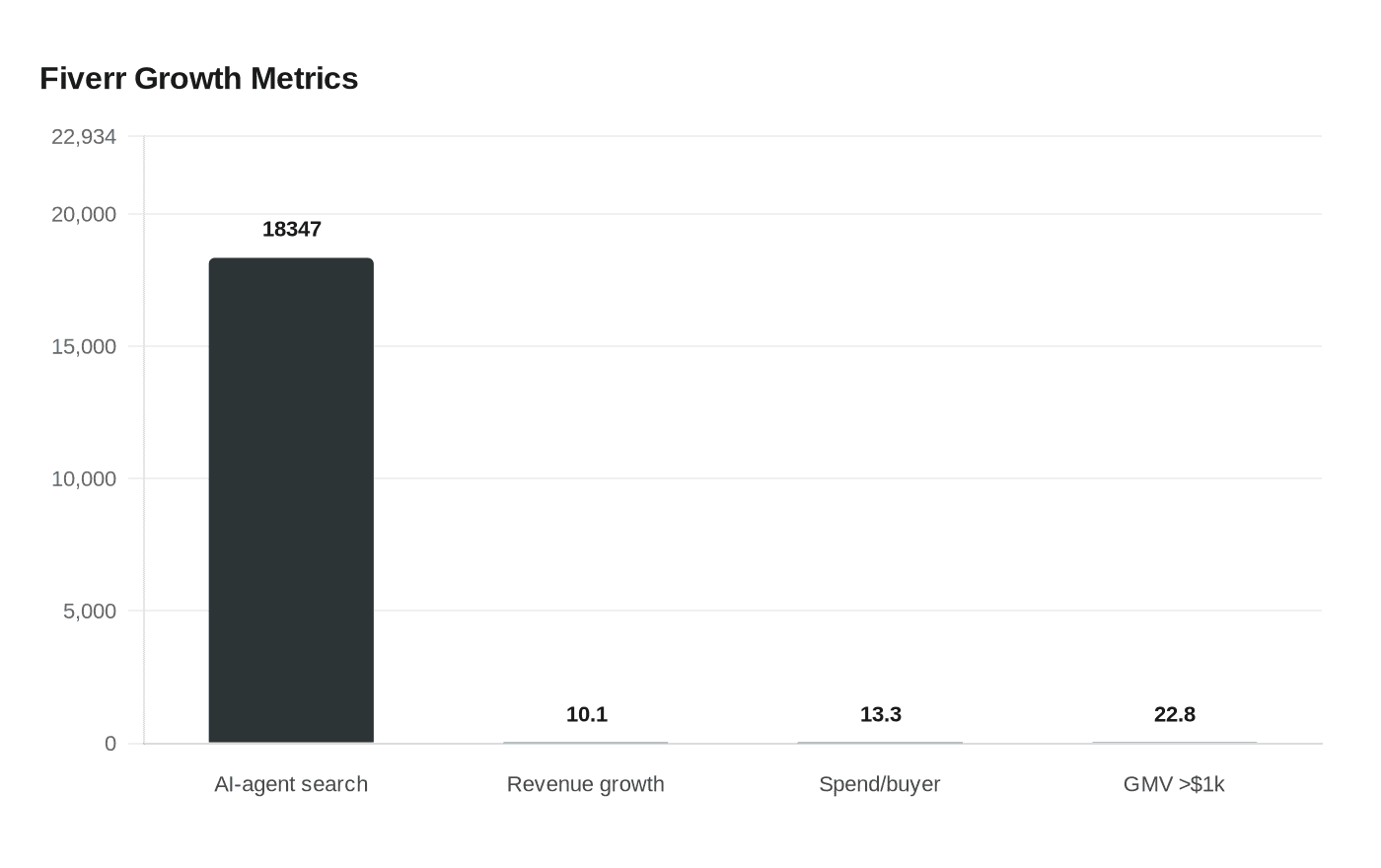
That shift is visible in the search data too. In May 2025, Fiverr said searches for AI-agent-related freelancer services had surged 18,347% over six months, while searches for humanizing AI content also rose sharply. In practice, that leaves Christian content in a revealing middle ground: some creators want cheap, abundant material that can be posted daily, while audiences still expect the tone of prayer, testimony and scripture to feel sincere. As AI tools spread through the creator economy, the pressure is no longer just to publish more faith content. It is to make industrial output sound like a personal calling.
This article was produced by Prism’s automated news system from verified source data, official records, and press releases, then run through automated quality and moderation checks before publishing. The system is built and supervised by the people who set the standards it runs under. Read our full AI policy.
Did this article answer your question?