Florida Redistricting and Georgia Runoff Deadlines Loom Amid Partisan Uncertainty
Florida's April 20 redistricting session may open without the Supreme Court ruling that DeSantis used to justify it; Georgia's 14th runoff voted Tuesday in Marjorie Taylor Greene's vacant seat.
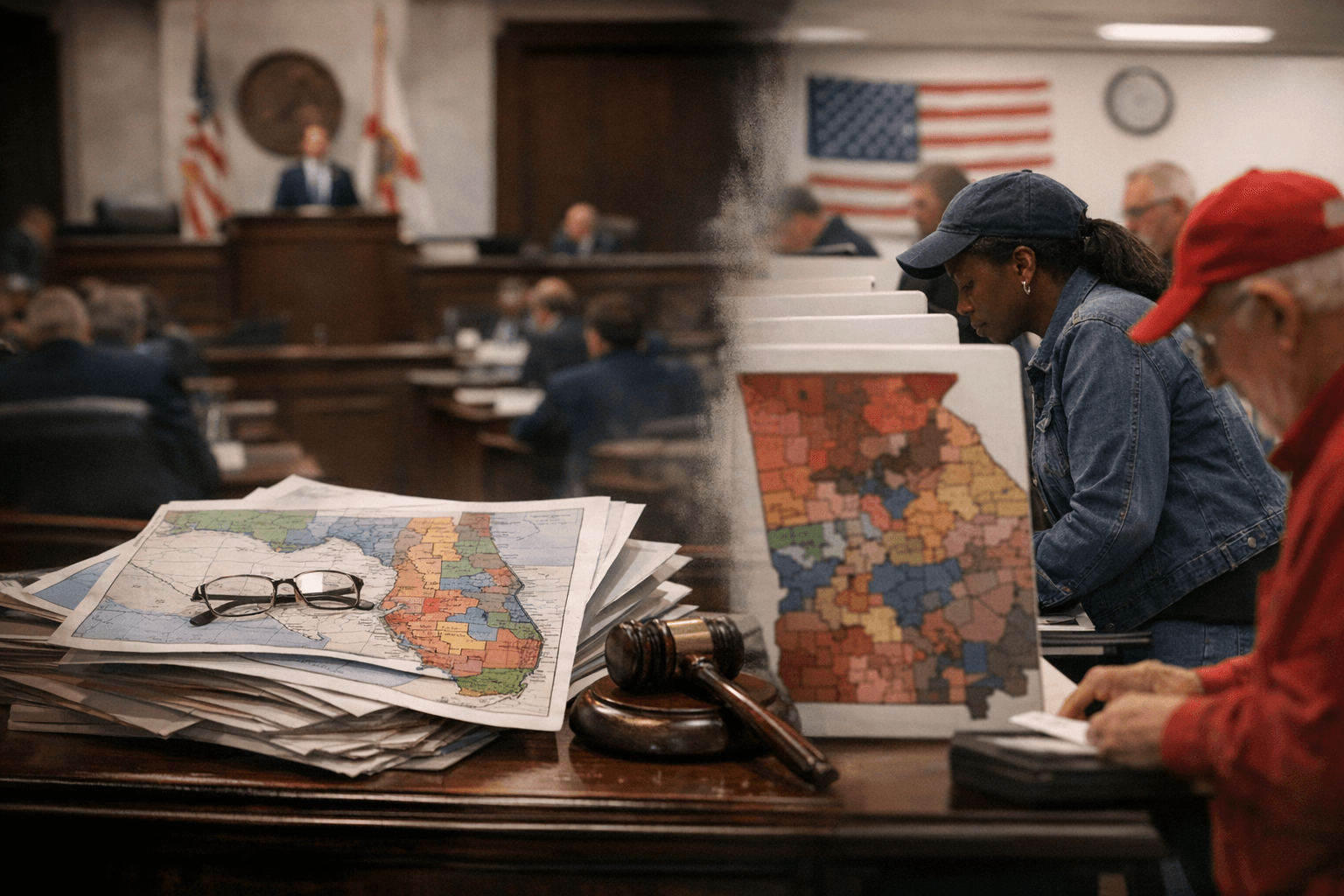
The Supreme Court ruling that Gov. Ron DeSantis said would force Florida to redraw its 28 congressional districts may not arrive before the special legislative session he scheduled to address it, casting a legal shadow over one of the most consequential redistricting contests of the 2026 midterm cycle.
DeSantis scheduled lawmakers to convene in Tallahassee from April 20 to April 24, with the Legislature's sole mandate being to redraw the state's congressional map. His stated justification centers on a pending high court decision in Louisiana vs. Callais, a case examining key provisions of the 1965 Voting Rights Act. "We will be forced to do it because the Supreme Court's VRA decision is going to impact the current map," DeSantis said when announcing the session. The problem: the court has yet to issue that ruling, and with the session now less than two weeks away, Florida's legislature could convene without the legal foundation the governor told them they needed.
The constitutional exposure compounds the political risk. Florida's constitution explicitly bans partisan gerrymandering, and Democrats and voting rights advocates have already characterized the coming session as an illegal attempt to entrench Republican advantages across a delegation that covers 28 seats. DeSantis, aware of that argument, insisted lawmakers "are not allowed to use the partisan data" when drawing new lines. Whether courts accept that assurance, especially absent the Supreme Court guidance he promised, remains the central question hanging over any map the Legislature produces in April.
Thirteen hundred miles away, voters in northwest Georgia settled a different kind of partisan calculation Tuesday. Republican Clayton Fuller, a former district attorney whom President Donald Trump endorsed in February, faced Democrat Shawn Harris, a retired Army brigadier general, in the runoff for Georgia's 14th Congressional District. The seat became vacant on January 5 after Marjorie Taylor Greene resigned following a public falling out with Trump. Because no candidate topped 50 percent in the March 10 special election across a crowded field, Georgia law required a separate runoff contest.
The 14th is deep-red territory, and Republicans expected to reclaim it without difficulty. That Harris, a Democrat, survived to a runoff at all reflects how Greene's chaotic exit and the fractured primary field created an opening that would not exist under normal circumstances. The winner serves through January 3, 2027, adding or holding a vote in a House chamber where the majority margin has left little room for error on either side.
The collision of these two deadlines captures the broader tension reshaping the 2026 electoral map: redistricting ambitions drawn up in state capitals crashing against court calendars, election logistics, and candidate dynamics that refuse to cooperate with partisan blueprints. If Florida produces a new congressional map before courts can intervene, election administrators could be forced to manage candidate filings and voter notifications under boundaries that are simultaneously being litigated. If the Supreme Court ruling arrives after the session concludes, any map drawn in its absence faces an immediate legal challenge grounded in the very statute DeSantis cited to call the session in the first place.
This article was produced by Prism’s automated news system from verified source data, official records, and press releases, then run through automated quality and moderation checks before publishing. The system is built and supervised by the people who set the standards it runs under. Read our full AI policy.
Did this article answer your question?

