Maine Supreme Court Blocks Ranked-Choice Voting Expansion as Unconstitutional
Maine's top court unanimously blocked LD 1666, ruling the state constitution's plurality requirement bars ranked-choice voting in governor and legislative races.
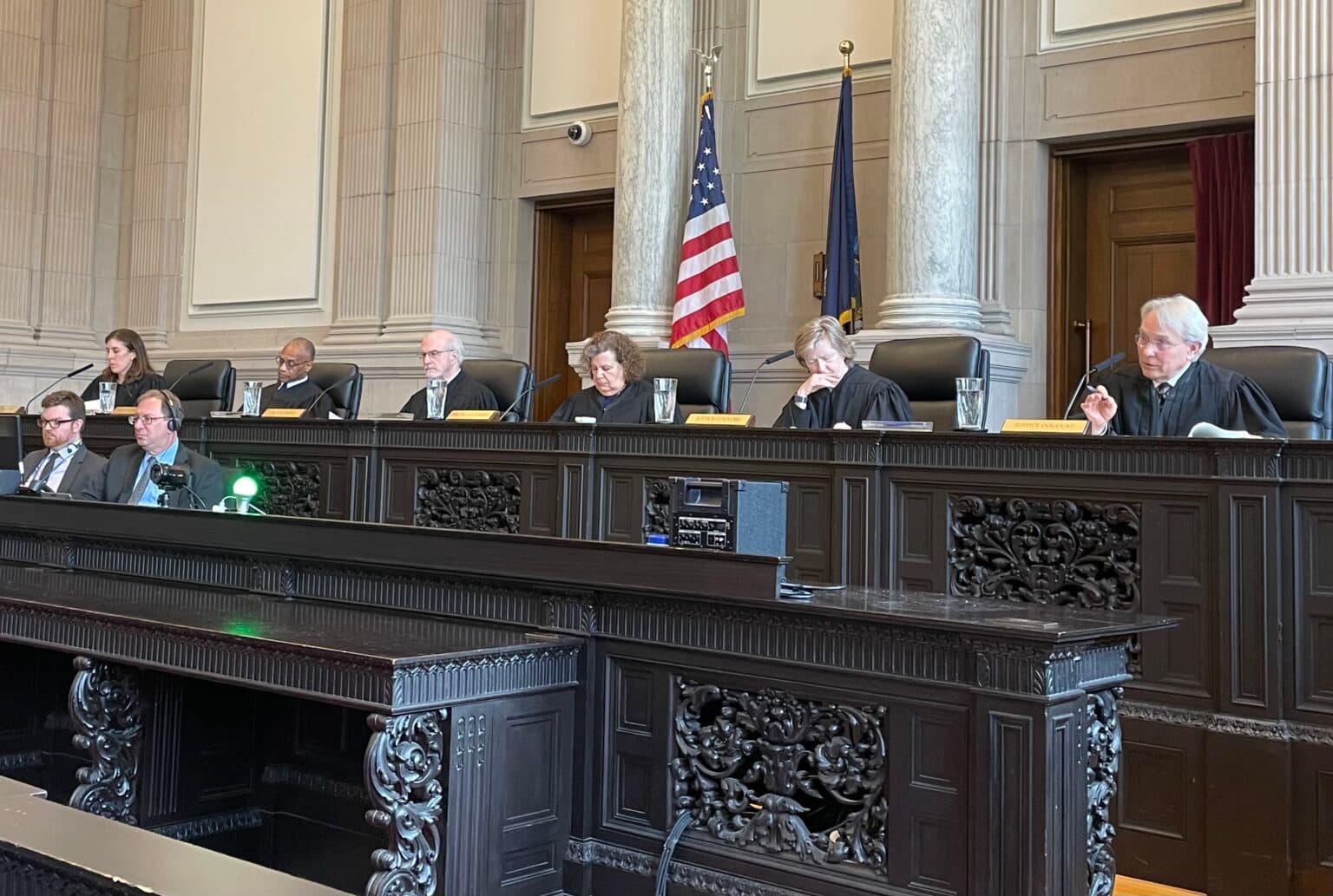
Maine's highest court unanimously ruled that expanding ranked-choice voting to state general elections is unconstitutional, blocking a Democratic push to extend the reform to races for governor and the Legislature.
The Maine Supreme Judicial Court issued its opinion on April 6, 2026, finding that LD 1666, a bill sponsored by Sen. Cameron Reny of Bristol, would violate the Maine Constitution's requirement that winners of general elections for governor and legislative seats be determined by plurality. The justices were unambiguous: "Based on the language and structure of the Constitution itself, we conclude that L.D. 1666... would, if enacted, violate the Maine Constitution."
The constitutional problem runs deeper than a drafting fix. LD 1666's central legal strategy was to define the final RCV winner as the "plurality winner," an attempt to reconcile the voting method's sequential-round tabulation with the Constitution's plain text. The court rejected that approach, reasoning that the plurality provision does not contemplate different methods of arriving at a plurality. RCV, by design, can eliminate the candidate who initially received the most first-choice votes through successive redistribution of lower-ranked preferences, and the justices found that reality irreconcilable with the Constitution's structure. The ruling reinforced a 2017 advisory opinion in which the same court found RCV inconsistent with constitutional text when applied to certain state offices.
The bill had cleared the Legislature along party lines. The Maine House passed it 71-52, with all 71 yes votes coming from Democrats and 51 Republicans opposed, before the Senate approved it 19-13. The bill was then recalled from Gov. Janet Mills' desk before it could be signed or vetoed, as lawmakers sought the court's advisory opinion first.

Adding political complexity to the ruling, Maine's own Democratic Attorney General, Aaron Frey, had argued against the bill's constitutionality. "The statutory wordsmithing proposed by LD 1666 cannot change the fact that ranked-choice voting is fundamentally a process that requires 'sequential rounds' of tabulation," Frey wrote in his brief, arguing the method could oust a candidate who initially received the most votes. The Republican National Committee filed a brief on the same side, while the League of Women Voters of Maine argued in support of LD 1666.
Reny said Monday that the outcome was not what she had hoped for, but that raising the question had been worthwhile. Maine voters originally approved RCV at the ballot box in 2016, and subsequent referendums expanded its application. The method is now used in Maine for primary elections for governor and the Legislature, as well as for all federal races including U.S. Senate and House contests. The persistent gap between its federal and state general election applications has frustrated reform advocates for years.
The path forward for RCV proponents now narrows considerably. A constitutional amendment would require a two-thirds vote from both chambers of the Legislature, followed by majority statewide voter approval. Absent that, the statutory reframing the court rejected cannot be revived. The decision carries weight beyond Maine's borders as other states continue to evaluate ranked ballots, demonstrating that even where the reform commands popular support, it can collide with constitutional architecture that predates the movement by more than a century.
This article was produced by Prism’s automated news system from verified source data, official records, and press releases, then run through automated quality and moderation checks before publishing. The system is built and supervised by the people who set the standards it runs under. Read our full AI policy.
Did this article answer your question?

