Ford Replaces Electric-Vehicle Chief, Bets on Ex-Tesla Engineer to Lead Push
Ford is shifting its EV and software strategy again as Doug Field exits, raising fresh doubts about whether its turnaround still has a clear roadmap.

Ford’s electric-vehicle reset took another turn as Doug Field stepped down from the role that made him the architect of the company’s software-heavy EV push, and Alan Clarke, an ex-Tesla engineer, moved up to lead the next phase. The change comes at a moment when Ford is trying to prove that its EV strategy still has enough focus to compete with Tesla and fast-moving Chinese makers.
Ford said Clarke will become vice president of advanced development projects and will keep leading the California-based Advanced Electric Vehicle Development team, the skunkworks group behind the company’s efficient, affordable Universal Electric Vehicle platform. That platform is central to Ford’s next wave of EVs, including a $30,000 pickup expected next year, and Ford said it will support future vehicle and technology programs through a fully zonal architecture with in-house software controls and advanced driver-assistance systems.
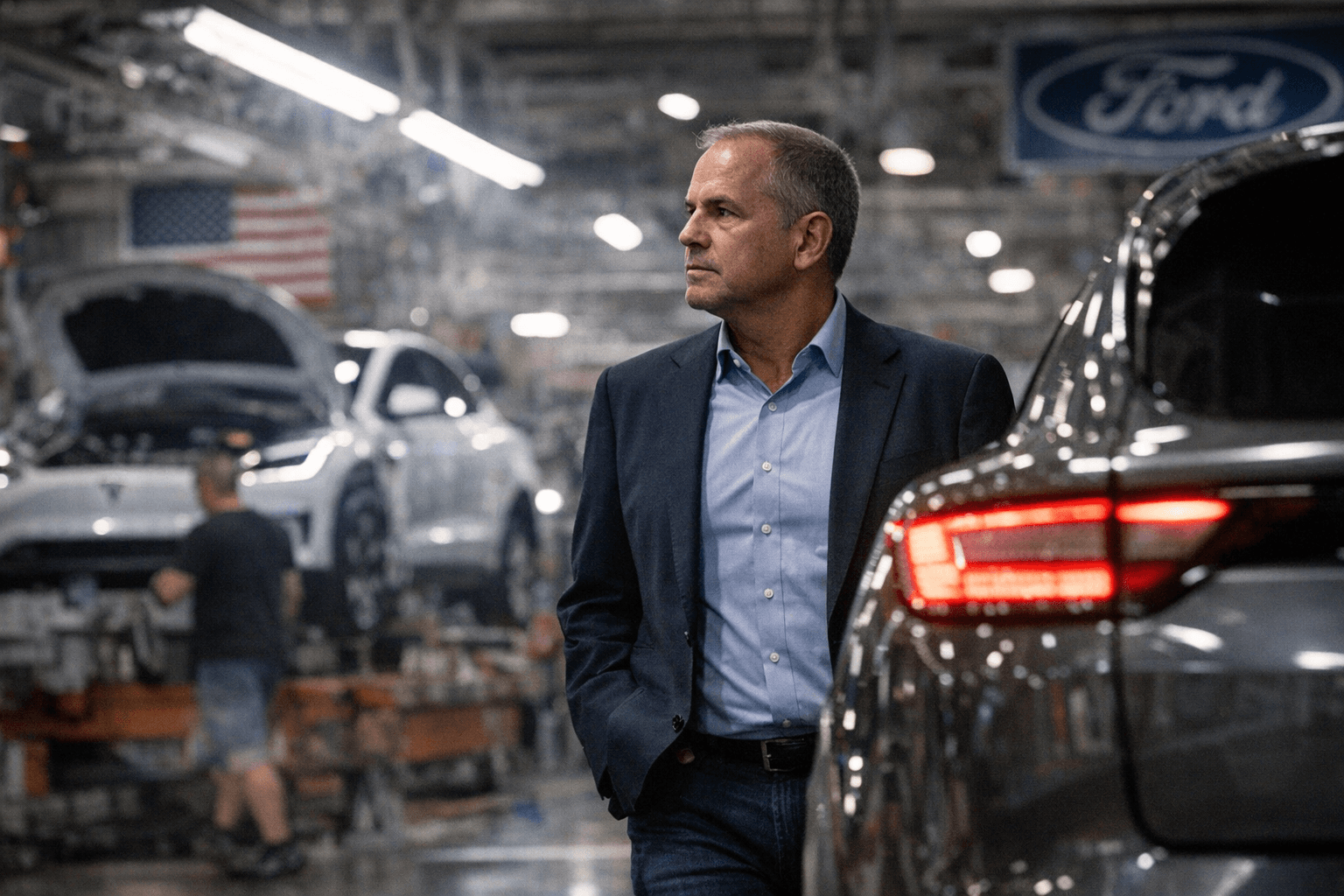
The leadership shake-up landed alongside a broader reorganization under chief operating officer Kumar Galhotra. Ford is creating Product Creation and Industrialization, a new end-to-end organization that combines advanced technology and global industrial teams. Jim Farley said the move is meant to create a “modern Ford” that can scale software-defined vehicles across different propulsion choices while adding more personalized digital features. Ford tied the new structure to its Ford+ plan and an 8% adjusted EBIT margin target by 2029.
The stakes are high because Ford has already paid a steep price for its EV reset. In December 2025, the company recorded a $19.5 billion writedown as it stepped away from several electric-vehicle programs. Reuters reported that policy changes and weaker-than-expected demand had forced Ford to cancel several next-generation EVs and an advanced electrical architecture that had been intended to serve as the vehicle’s “brain.” That left Field’s unit with a narrower but still crucial mandate: build a leaner EV roadmap that can actually make money.
Field’s departure also raises questions about continuity at a time when software matters as much as hardware. Farley credited Field with attracting tech talent and cutting complexity, while Field said his time at Ford was about “building the team, capabilities, and culture.” That legacy may matter most now, because Ford needs more than a new title in Dearborn. It needs proof that the company can turn a costly retreat into a coherent product strategy before Tesla and Chinese rivals widen the gap.
This article was produced by Prism’s automated news system from verified source data, official records, and press releases, then run through automated quality and moderation checks before publishing. The system is built and supervised by the people who set the standards it runs under. Read our full AI policy.
Did this article answer your question?

