Foreign Physicians in 39 Countries Face U.S. Hospital Work Barriers
Thousands of immigrant doctors are losing hospital work authorization as a U.S. visa freeze sidelines physicians from 39 countries, canceling clinics and stretching already thin rural care.
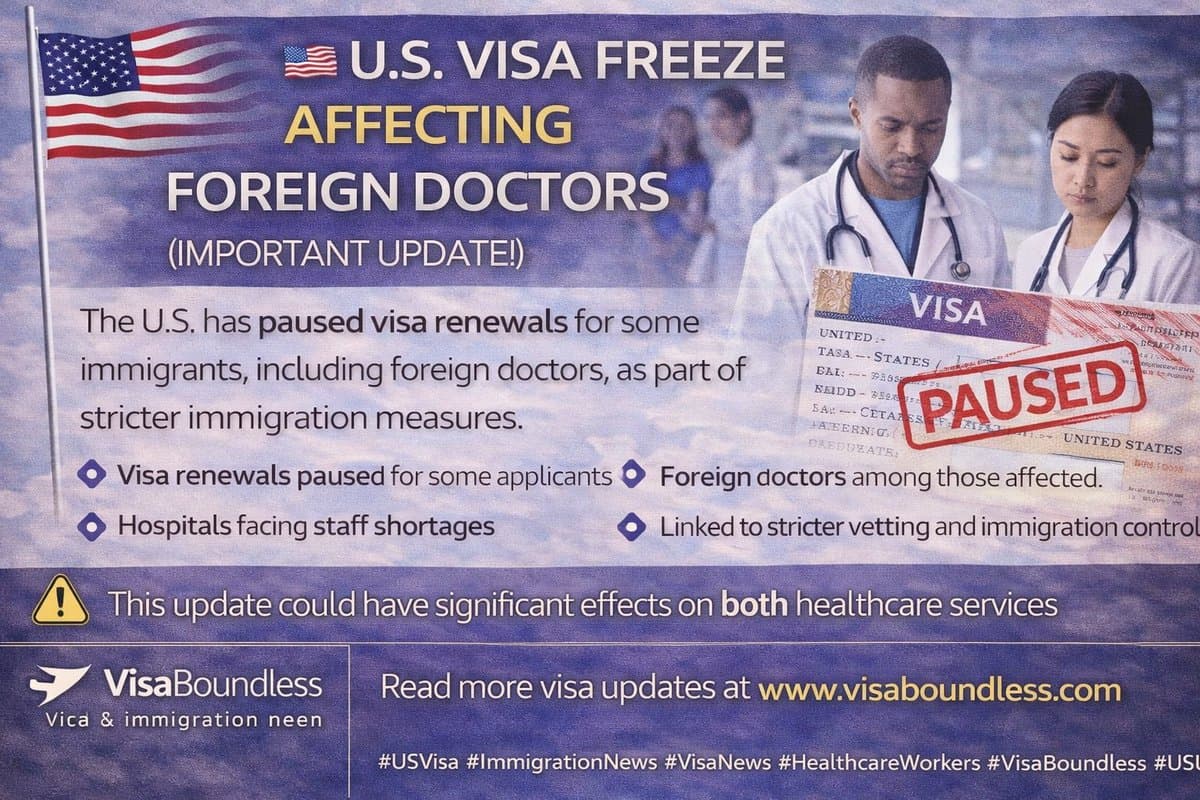
Clinics are being cancelled. Emergency-room schedules are being reshuffled. And thousands of foreign-born physicians who have practiced in American hospitals for years are sitting at home, unable to work because the federal government has frozen the immigration paperwork that keeps them legally employed.
The Department of Homeland Security quietly froze adjudication of nearly every immigration benefit for nationals of 39 countries it has designated as posing "elevated vetting risk." Since late January, the hold has stopped U.S. Citizenship and Immigration Services from renewing work authorizations, approving H-1B extensions, and issuing green cards for thousands of foreign-born physicians already practicing in the United States.
Hospitals in Ohio, Pennsylvania, and Michigan have begun cancelling clinics and re-routing emergency-room coverage because doctors cannot clock in once their immigration status lapses. The disruption traces directly to Presidential Proclamation 10998, which took effect January 1, 2026, and fully or partially suspended entry and visa issuance to nationals of 39 countries.
The mechanics of the freeze have caught even well-prepared hospitals off guard. H-1B visa holders normally have a 240-day grace period to continue working while a renewal is pending. But the freeze has scrambled those arrangements, forcing doctors to take unpaid absences from their jobs. Payroll systems in some facilities have automatically terminated physicians whose documentation expired, regardless of the grace period.
The patient toll is already measurable. An Ohio physician said his clinic patients had to be rescheduled to other doctors when his work authorization ran out in February. Those patients may wait months for a new appointment, while other doctors absorbed his on-call shifts, stretching their own workloads. The American Medical Association wrote to the Department of Homeland Security that one doctor's work suspension alone left more than 900 patients without sufficient care.
The doctors affected, from countries including Nigeria, Venezuela, and Cuba, often work in rural and underserved areas where American physicians are in short supply. Those physicians, numbering in the thousands, are finding themselves with no way to remain because USCIS has withheld visa renewals. Nationally, immigrants account for roughly 25 percent of the physician workforce, and that share nears 40 percent in rural counties that struggle to recruit U.S.-trained doctors.
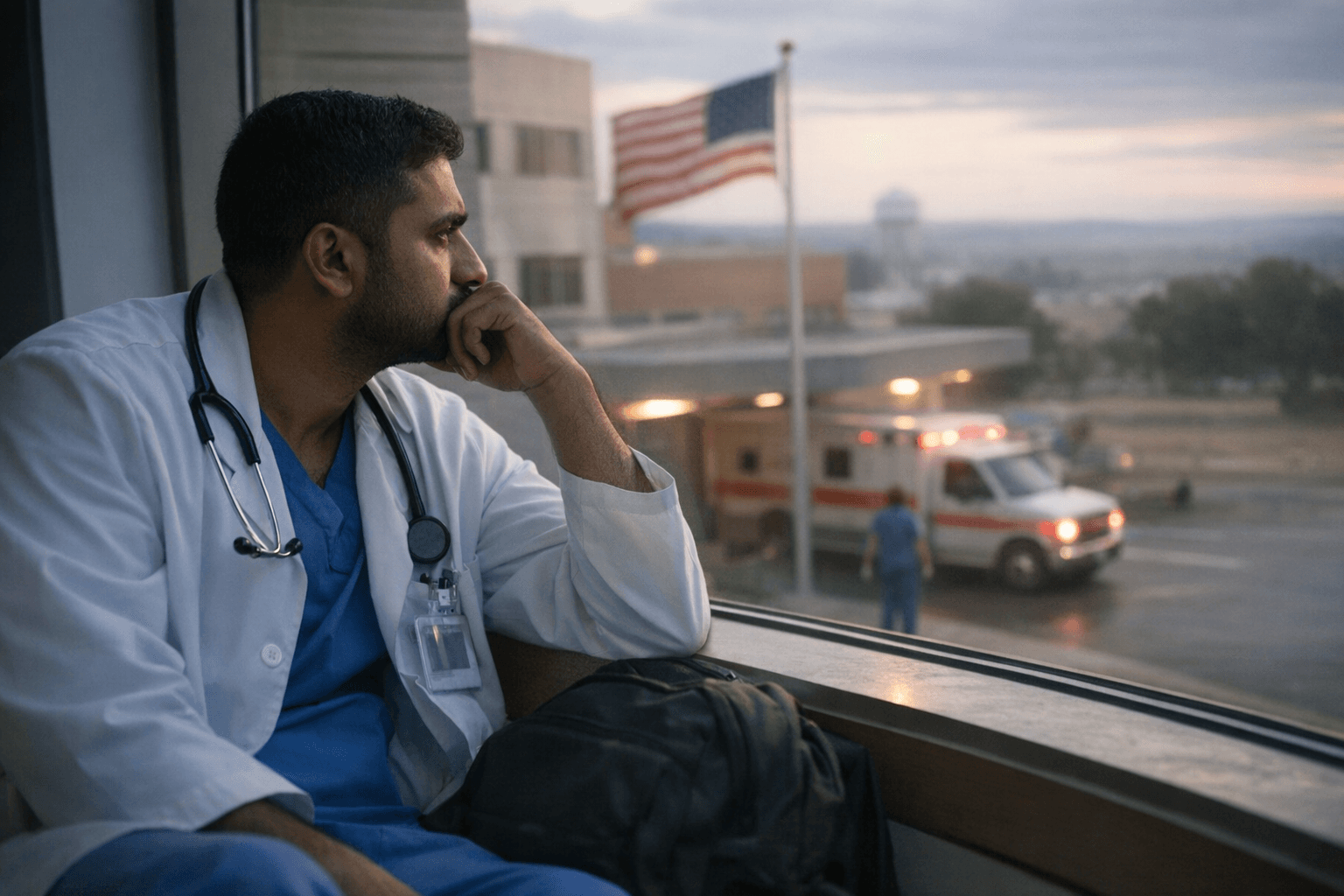
"You have a bunch of physicians, well-trained, who are just sitting at home doing nothing," said a Pennsylvania physician from Nigeria whose H-1B has expired. A Michigan doctor whose visa runs out in July put the stakes plainly: "It's not just an immigration issue. It's a patient care issue that's hiding in plain sight."
A Pennsylvania resident working in an underserved community described the weight of scheduling follow-up appointments he feared he would never keep. "Some of them were, like, doc, I'm going to see you in three months," he said. "Deep in my mind, I knew [they] might not."
Homeland Security said the freeze is necessary because officials believe the Biden administration did not properly vet visa holders from the 39 countries in the first place. The department did not respond to questions about how long the pause would last, or whether it is considering a national interest exemption for physicians, as the AMA and the American College of Physicians have publicly urged. A January memo indicates individuals may qualify for exemptions, but affected doctors say they have not been able to determine how to apply.
Researchers, physicians, and scientists filed multiple lawsuits challenging the benefit freeze, and plaintiffs sought a preliminary injunction in a case before the Northern District of California. Dr. Marjan Azin, a postdoctoral research fellow at Massachusetts General Hospital and one of more than 30 plaintiffs, said the pause had already upended her path to residency. Meanwhile, lawmakers who have appealed directly to USCIS on behalf of hospitals in their districts have not moved the agency to accelerate processing.
A new $100,000 H-1B visa fee compounds the pressure on hospitals still attempting to sponsor international physicians through legitimate channels, narrowing options precisely where the need is greatest.
This article was produced by Prism’s automated news system from verified source data, official records, and press releases, then run through automated quality and moderation checks before publishing. The system is built and supervised by the people who set the standards it runs under. Read our full AI policy.
Did this article answer your question?