Former Chilean Secret Police Agent in Australia Accused of Seven Murders
A former Pinochet secret police agent who fled Chile to Bondi lost her final Australian extradition appeal over seven 1976 murders, including that of a five-months-pregnant woman.
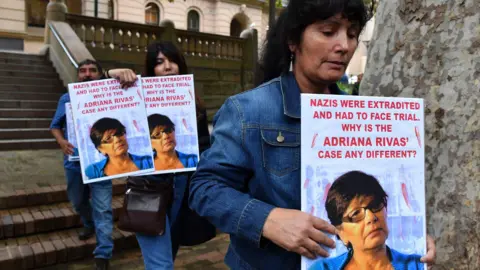
An Australian federal court cleared the path for the extradition of Adriana Elcira Rivas, a dual Chilean-Australian citizen accused of participating in the kidnapping and murder of seven people during Augusto Pinochet's dictatorship, after dismissing her final appeal in Sydney. The ruling ends seven years of legal resistance by Rivas, now in her 70s, who had lived openly in the Sydney beachside suburb of Bondi as a nanny and cleaner for decades while Chilean courts sought to hold her to account for crimes allegedly committed in 1976.
Justice Michael Lee of the Federal Court of New South Wales rejected Rivas's arguments following a two-day hearing, finding that her contention that the offences had been mischaracterised was "misconceived." He also dismissed her claim that the Australian government had failed to consider she could be sentenced for a crime other than kidnapping, finding "no basis to conclude Chile sought to prosecute her for other alleged crimes." Chile's government lawyer Trent Glover had told the court: "If Ms Rivas is returned, surrendered to Chile, there cannot be any charge of a crime against humanity."
The seven people Rivas is accused of helping kidnap and disappear are Fernando Ortiz, Fernando Navarro, Lincoyán Berrios, Horacio Cepeda, Héctor Veliz, Víctor Díaz and Reinalda Pereira, who was five months pregnant at the time of her disappearance. All are presumed murdered. Díaz was then-secretary-general of the Chilean Communist Party. The cases are known collectively as the "Conference cases."
Rivas served as secretary to Alejandro Burgos and as assistant to Manuel Contreras, DINA's director and Pinochet's second-in-command, between 1973 and 1977. She is specifically accused of membership in the Lautaro Brigade, an elite DINA unit established to eliminate Communist Party activists, where she operated under the alias "La Chani." The brigade was based at the Simón Bolívar barracks on the outskirts of Santiago, a clandestine site used for torture and extermination.
She left Chile for Australia in 1978, settling in Bondi where she worked as a nanny and cleaner. When she returned to visit relatives in Chile in 2006, she was arrested and detained for three months before being released on bail with conditions that barred her from leaving the country. In 2010, she crossed Chile's land border into Argentina and flew back to Australia, evading justice for nearly a decade until NSW Police arrested her in 2019 at the request of the Chilean government.
In a 2013 interview with SBS Spanish, Rivas denied involvement in illegal activities but offered a candid defence of torture. "It's the only way to break people," she said, describing her years with DINA as "the best years" of her youth and saying she had no regrets about working for the organisation.
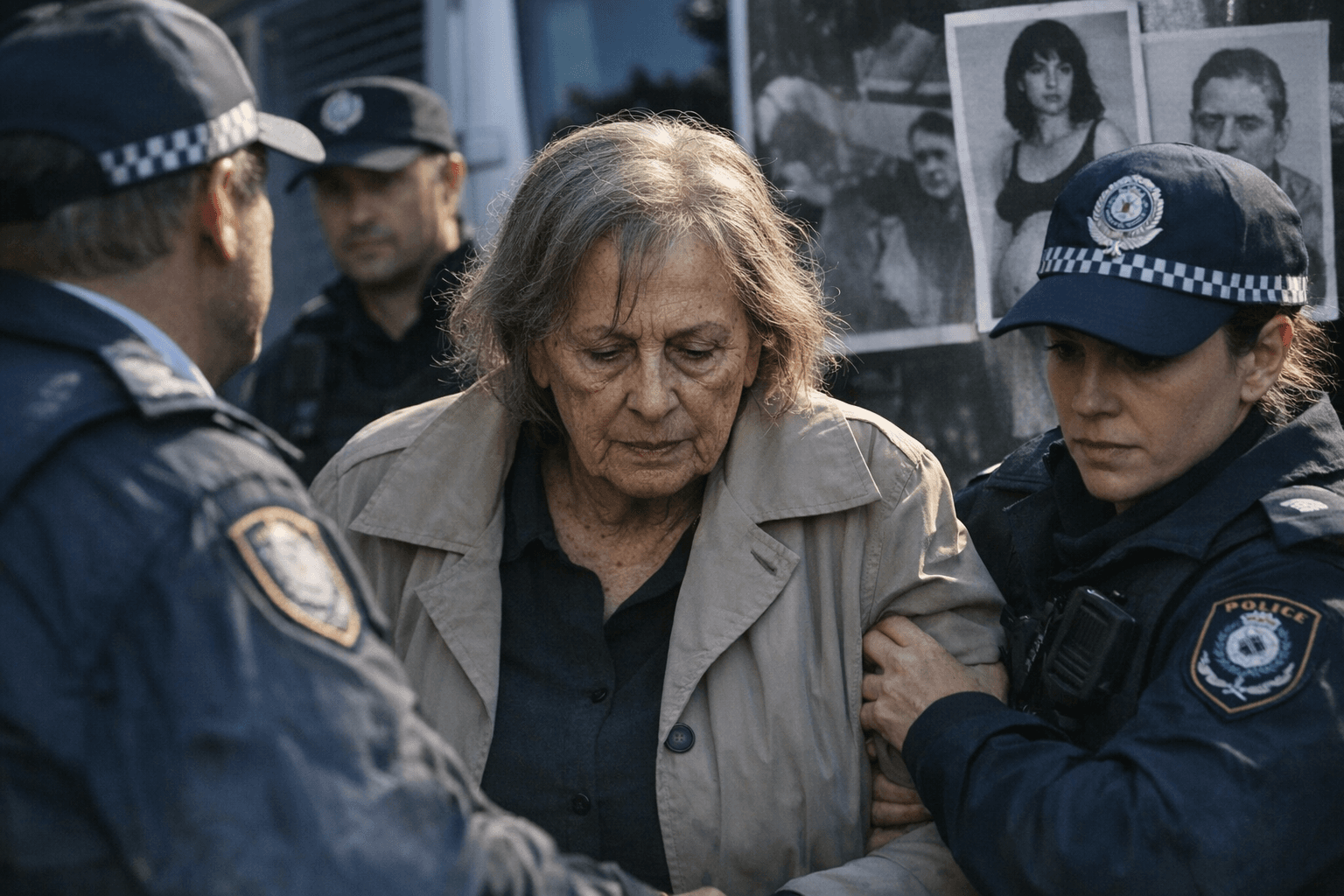
Her legal team had argued across multiple proceedings that the allegations were political and therefore not extraditable, and that the seven victims had been legitimately arrested rather than kidnapped. At every stage, Australian courts rejected those arguments and found her eligible for extradition. Chile's Ambassador Beatriz De La Fuente and Consul-General Francisco Tello Cardone were present in the courtroom for Justice Lee's ruling, as were families of Pinochet regime victims. Lawyer Adriana Navarro, who represents those families in Australia, said they were relieved to have an outcome "15 years after Rivas allegedly fled to Australia to avoid charges."
Rivas retains one remaining avenue of appeal: she may still lodge a challenge with the Full Federal Court.
The case is rooted in one of the most violent episodes in Latin American history. On September 11, 1973, Pinochet overthrew the democratically elected socialist government of President Salvador Allende in a military coup. The dictatorship that followed lasted until 1990; Chile's Rettig and Valech Commissions documented 27,255 people tortured and 2,279 executed, with official figures placing the total toll of the regime at 40,175 victims. The investigation into the Lautaro Brigade's crimes was substantially advanced by a single witness: Jorgelino Vergara, a former DINA waiter who exposed the Simón Bolívar torture centre and whose testimony led to the conviction of more than 70 DINA agents and regime officials.
Half a century after those disappearances, the prospect of a trial in Santiago would represent one of the most significant accountability proceedings to emerge from the Pinochet era, pursued through extradition law against a suspect who spent decades living anonymously in Sydney's eastern suburbs.
This article was produced by Prism’s automated news system from verified source data, official records, and press releases, then run through automated quality and moderation checks before publishing. The system is built and supervised by the people who set the standards it runs under. Read our full AI policy.
Did this article answer your question?


