Former IRS agent gets life for wife’s murder plot in Virginia
Brendan Banfield was sentenced to life without parole after a Fairfax County jury found he plotted his wife’s murder and tried to frame Joseph Ryan.
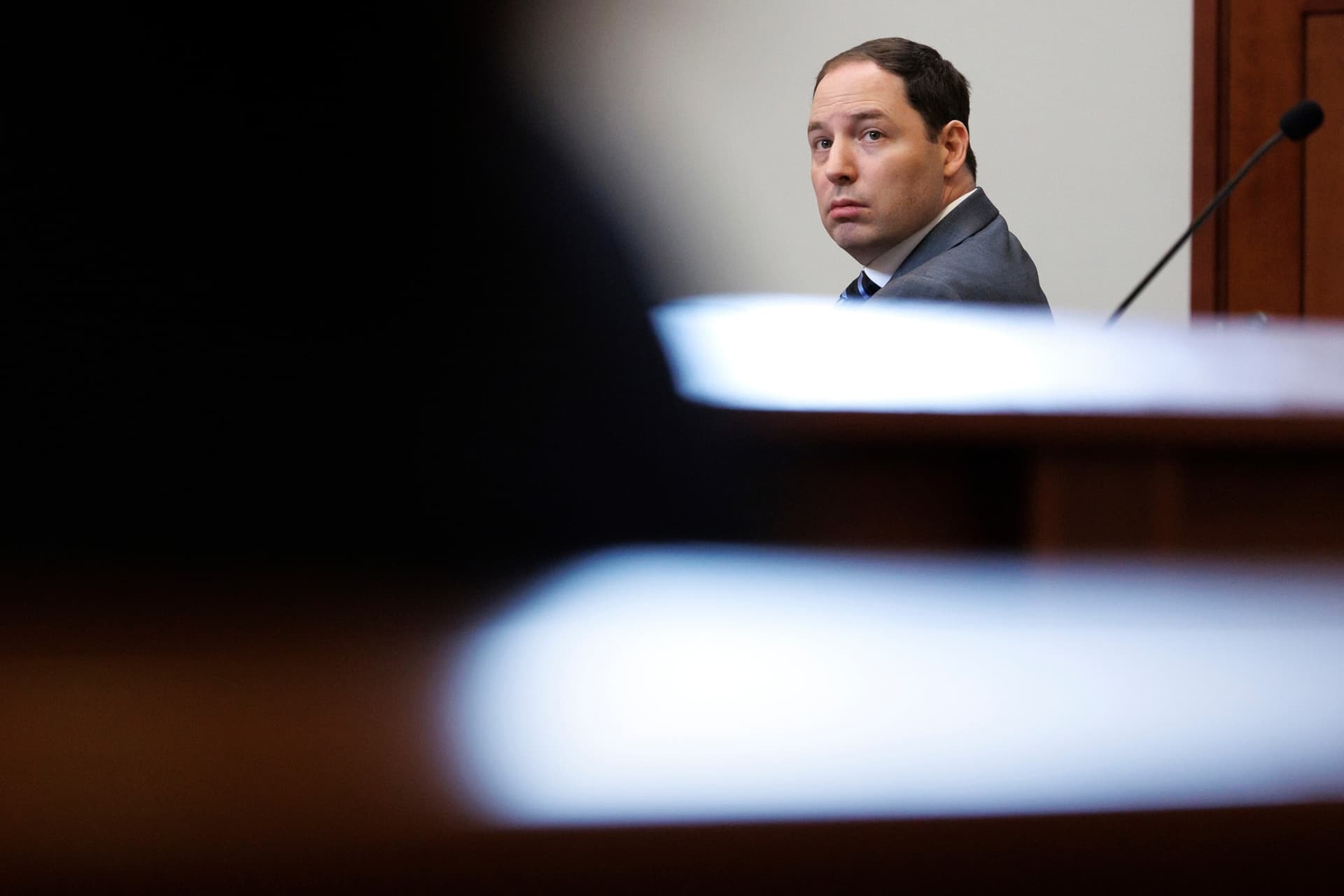
Brendan Banfield was sentenced Friday to life in prison without parole for orchestrating the killing of his wife, Christine Banfield, in a plot prosecutors said involved the family’s au pair and an effort to pin the crime on Joseph Ryan. The sentence capped a case that turned an affluent Reston household into the center of a murder investigation built on digital evidence, intimate relationships and a staged crime scene.
A Fairfax County jury convicted Banfield on Feb. 2 of aggravated murder in the Feb. 24, 2023 killings of Christine Banfield, 37, and Joseph Ryan, 39, inside the Banfields’ Reston home. The panel found him guilty of four felonies: two counts of aggravated murder, one count of use of a firearm in the commission of a felony and one count of child endangerment. NBC News identified Banfield as a former IRS agent.
The case drew intense attention because of the role prosecutors said Juliana Peres Magalhães, the family’s au pair, played in the plot. The affair became widely known in coverage as the “au pair affair,” a label that captured the contrast between the Banfields’ suburban image and the calculated violence prosecutors described in court. Prosecutors also alleged that Banfield had “catfished” Ryan on a fetish website before Ryan was brought into the home and killed.
At sentencing, Banfield maintained his innocence and argued that he had been defending his home and himself when he fired the shots, according to NBC News. Family members and loved ones of Christine Banfield and Joseph Ryan delivered emotional victim impact statements during the hearing, and the courtroom turned visibly tense as the consequences of the killings were laid out in personal terms.
The verdict and sentence give the case a broader resonance beyond the tabloid shorthand that attached to it early on. It showed how a domestic setting, one that looked ordinary from the outside, could conceal a layered plan involving online contact, coercion and a fatal attempt to redirect blame onto a stranger. It also underscored how investigators and prosecutors increasingly build homicide cases through digital traces, relationship evidence and the reconstruction of behavior before and after the shooting.
This article was produced by Prism’s automated news system from verified source data, official records, and press releases, then run through automated quality and moderation checks before publishing. The system is built and supervised by the people who set the standards it runs under. Read our full AI policy.
Did this article answer your question?