Four Dead After Migrants Swept Away Boarding Taxi-Boat off Northern France
Four migrants drowned wading into the sea off Boulogne to board a smuggler's taxi-boat, as French beach crackdowns push crossings into deeper, deadlier water.
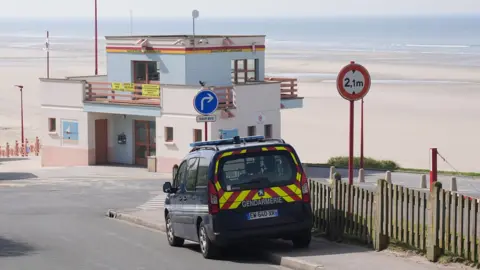
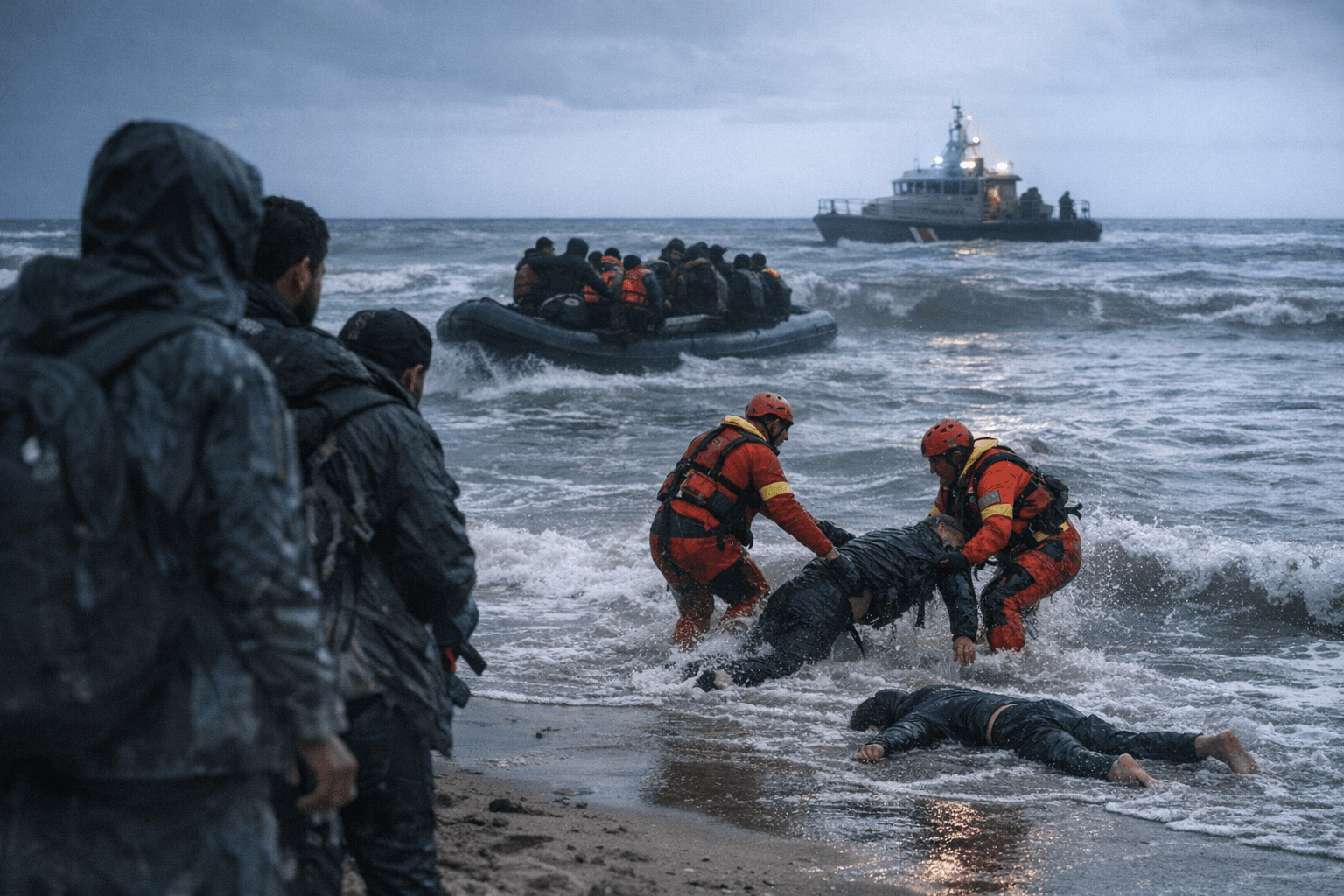
They were waiting in the water. That is what the taxi-boat model requires: migrants wading out from the northern French shoreline, beyond the reach of police patrols, until a motorised inflatable swings by to collect them. On Thursday morning, between the beaches of Équihen and Écault south of Calais, strong currents swept four of them away before they could board. Two men and two women died.
Emergency services arrived at the scene at 07:30 local time. Pas-de-Calais prefect François-Xavier Lauch confirmed the deaths at a press conference on Equihen Beach while rescue operations were still under way, describing the toll as "provisional." At least 42 people were rescued during the course of the incident; 37 were taken to hospital, one with hypothermia. Around 30 others completed their journeys to the UK.
The taxi-boat tactic has emerged directly from intensified French policing on departure beaches. Instead of inflating dinghies in the dunes, where patrols have slashed boats with knives, smuggling gangs now launch craft from hidden locations, sometimes dozens of kilometres away, and cruise along the coastline picking up paying passengers who wait in the surf. Campaign groups have repeatedly warned that this displacement effect raises the physical risk to migrants, forcing them into open water with no guarantee the boat will arrive, or that currents will permit boarding when it does.
Just over a week before Thursday's deaths, two more migrants, a Sudanese man and an Afghan man, died in a separate crossing attempt near Gravelines. A court later heard that French authorities had not intercepted that boat because it was "too full." The same period saw the average number of migrants per boat climb to 63 per craft across January through March 2026, a record high, even as the total number of crossings fell 28% compared with the same period in 2025, with 4,903 people reaching the UK between January 1 and April 7.
Fewer arrivals has not translated into safer crossings. French authorities intercepted only 2,064 of 6,233 attempted crossings in the most recent reporting period, an interception rate of roughly 35% and the lowest in recent years. The UK had pushed for a target of 80%. France rejected it. On March 31, UK Home Secretary Shabana Mahmood signed a temporary £16.2 million extension deal, worth approximately £2 million a week, to maintain additional French beach patrols while longer-term negotiations over a new arrangement continue. France has also rejected Mahmood's separate proposal to deploy British Border Force vessels in the Channel to intercept and return small boats. The existing overall UK-France cooperation arrangement is valued at close to £500 million; British taxpayers additionally funded nearly £20 million for a helicopter used by elite French riot police.
A UK government spokesperson said authorities would "continue working relentlessly with the French and our partners overseas to prevent these perilous journeys," adding that French authorities were leading the response to Thursday's incident.
Imran Hussain, director of external affairs at the Refugee Council, argued the deaths underscored a structural failure in the approach. "A lack of safe routes to the UK has left people feeling they have no other choice to rebuild their lives," he said. "Policing the Channel alone is not enough to prevent dangerous crossings." Since 2018, 147,568 people have arrived in the UK by small boat, with 95% going on to claim asylum. At least 24 died making the attempt in 2025, after a record 82 deaths in 2024, a toll that included 14 children.
The smuggling model has adapted to every enforcement escalation. The bodies recovered off Équihen beach are the latest evidence of where that adaptation leads.
This article was produced by Prism’s automated news system from verified source data, official records, and press releases, then run through automated quality and moderation checks before publishing. The system is built and supervised by the people who set the standards it runs under. Read our full AI policy.
Did this article answer your question?


